

Hair Transplant Surgeon Credentials: The 7 Qualifications That Actually Matter
A troubling statistic demands attention: according to the International Society of Hair Restoration Surgery’s 2025 Practice Census, the average percentage of repair cases due to previous black market hair transplants reached 10% in 2024, up from 6% in 2021. Behind every repair surgery lies a patient who trusted the wrong provider—someone who may have had a medical degree but lacked the specialized training necessary for hair restoration.
The shocking reality is that any physician with an MD can legally perform hair transplants regardless of training or experience in the field. With the hair transplant market valued at $6.98 billion in 2026 and projected to reach $10.64 billion by 2031, unqualified providers are flooding the market, drawn by lucrative opportunities rather than genuine expertise.
This comprehensive guide provides a definitive framework for evaluating hair transplant surgeon credentials. Understanding these seven essential qualifications separates patients who achieve natural, lasting results from those who become repair statistics.
The Dangerous Reality: Why Any Doctor Can Call Themselves a Hair Transplant Surgeon
The hair restoration field operates with minimal regulation. No specialized licensing exists beyond a general medical license, meaning a physician trained in any specialty—or no specialty at all—can legally offer hair transplant services. This regulatory gap creates a dangerous landscape for patients seeking treatment.
The “turn-key clinic” problem has become increasingly prevalent. Doctors purchase hair transplant devices and hire unlicensed technicians to perform the actual procedures while the physician merely supervises—sometimes overseeing multiple rooms simultaneously. These technicians may determine graft numbers, design hairlines, inject anesthesia, extract grafts, create recipient sites, and plant grafts without any formal medical training.
Internationally, the situation becomes even more alarming. Black market clinics operated by individuals with no medical background whatsoever have proliferated. Reports indicate that in some overseas locations, taxi drivers and refugees perform surgical procedures on unsuspecting patients, resulting in devastating complications and disfiguring outcomes.
The International Society of Hair Restoration Surgery (ISHRS) recognized this crisis and launched the “Fight the FIGHT” campaign—Fight the Fraudulent, Illicit & Global Hair Transplants—to address the growing threat of unlicensed practitioners. The rising repair procedure rates directly correlate with the influx of unqualified providers entering the market.
Given this landscape, patients must become their own quality control. Understanding what qualifications actually matter is the first defense against becoming another repair statistic.
The 7 Qualifications That Actually Matter When Choosing a Hair Transplant Surgeon
The following checklist represents the gold standard in the hair restoration industry. Prospective patients should evaluate every potential surgeon against all seven criteria—not just one or two. Each qualification builds upon the others to create a comprehensive picture of surgical competence.
1. Board Certification in a Relevant Surgical Specialty
Board certification represents the foundational credential every hair transplant surgeon should possess. This certification requires a minimum of six years of surgical training following medical school, demonstrating mastery of surgical principles and patient care.
The relevant specialties for hair restoration include plastic surgery (certified by the American Board of Plastic Surgery), dermatology, or facial plastic surgery. These specialties provide the anatomical knowledge, surgical technique, and aesthetic understanding essential for successful hair restoration.
It is critical to distinguish between a general medical license and specialized surgical board certification. Any physician can obtain a medical license, but board certification in a relevant surgical specialty requires years of rigorous residency training, examination, and ongoing education.
Post-graduate training in plastic surgery or dermatology matters for hair restoration because these specialties develop the precise surgical skills and aesthetic judgment that hair transplantation demands. However, while board certification is the foundation, it is not sufficient alone—additional hair-specific qualifications are essential.
2. ABHRS Certification (The Gold Standard)
The American Board of Hair Restoration Surgery (ABHRS) stands as the only certifying board specifically for hair transplant surgeons. This voluntary certification represents the highest level of demonstrated expertise in the field.
The requirements for ABHRS certification are rigorous: candidates must document a minimum of 150 cases over three years, submit 50 detailed operative reports, and pass both written and oral examinations. The certification process evaluates not only technical proficiency but also patient selection, treatment planning, and complication management.
The exclusivity of this certification speaks to its significance. Over 200 surgeons worldwide have achieved Diplomate status. When a surgeon holds ABHRS certification, it demonstrates a commitment to excellence that goes far beyond basic surgical training.
Because ABHRS certification is voluntary, surgeons who pursue it demonstrate dedication to their craft and accountability to professional standards. Patients can verify a surgeon’s ABHRS certification through the official ABHRS registry.
3. Specialized Fellowship Training in Hair Restoration
Fellowship training provides skills that general residency programs cannot offer: specialized techniques for graft harvesting, recipient site creation, hairline design, and the artistic judgment necessary for natural-appearing results. This training bridges the gap between general surgical competence and hair restoration expertise.
Surgeons who complete fellowship training demonstrate commitment to specialization rather than simply adding hair transplants as an ancillary service. This distinction matters significantly—a surgeon who devoted nearly a year exclusively to learning hair restoration will approach procedures differently than one who attended a weekend course.
4. Extensive Clinical Experience (10-15 Years Minimum)
Clinical experience cannot be replaced by credentials alone. The recommended benchmark is 10 to 15 years of dedicated hair transplantation experience. This timeframe allows surgeons to develop pattern recognition, refine their artistic approach, and learn to manage the full spectrum of complications.
Patients should inquire about total procedures performed and years focused exclusively on hair restoration. The International Alliance of Hair Restoration Surgeons (IAHRS) requires a 500-minimum case log for membership, establishing a baseline for meaningful clinical experience.
There is a significant difference between surgeons who perform occasional hair transplants among other procedures and those dedicated exclusively to the field. A surgeon who has spent 18 years focused solely on hair transplantation brings depth of experience that cannot be replicated by someone who completed a weekend training course and purchased equipment.
5. Membership in Recognized Professional Organizations
Membership in key professional organizations—including ISHRS, IAHRS, and ABHRS—indicates ongoing engagement with the professional community. These memberships require meeting specific criteria and maintaining standards of practice.
IAHRS membership, for instance, requires the 500-case minimum mentioned above. This threshold ensures members have substantial clinical experience. Organizational membership also requires adherence to ethical standards and peer accountability.
Beyond initial qualification, these memberships demonstrate commitment to continuing education and staying current with evolving techniques. Patients can verify memberships through organization websites, distinguishing legitimate affiliations from meaningless credentials.
6. Direct Surgeon Involvement in All Critical Phases
Perhaps no qualification matters more than confirming the surgeon personally performs all critical phases of the procedure. The turn-key clinic model, where unlicensed technicians perform surgery while the surgeon supervises from another room, compromises patient outcomes.
Critical phases requiring direct surgeon involvement include hairline design, recipient site creation, and graft placement. These steps demand medical judgment, surgical skill, and artistic vision that only a trained physician can provide.
Unlike physicians who take an oath to prioritize patient interests, technicians have no such professional obligation nor the medical training to evaluate surgical candidacy or respond to complications. Patients should ask specific questions: Who will design the hairline? Who will create recipient sites? Who will place grafts?
Practices where the consultation occurs with the surgeon but the actual surgery is performed by staff should raise immediate concerns.
7. Transparent Track Record with Documented Results
A legitimate track record includes before-and-after photographs of actual patients, detailed case studies, and documented outcomes. Surgeons should willingly share results that match a prospective patient’s hair type, loss pattern, and ethnicity.
Red flags include stock photos, results that appear too perfect, and reluctance to provide documentation. Patient testimonials and reviews from verified patients offer additional insight into the patient experience and outcomes.
Qualified surgeons welcome requests for patient references. They understand that transparency builds trust and demonstrates confidence in their work.
Red Flags That Should Disqualify a Hair Transplant Surgeon
Certain warning signs should immediately disqualify a surgeon from consideration:
- High-pressure sales tactics and unrealistic promises about results
- Inability to provide credentials and certifications upon request
- Consultations with sales staff rather than the operating surgeon
- Significantly lower prices than market average, suggesting corner-cutting
- Vague answers about who performs each procedure phase
- No hospital privileges or surgical facility accreditation
- Limited documentation of their own work
- Multiple procedures scheduled simultaneously under one surgeon
- Lack of professional organization membership
- Pressure to proceed immediately without adequate evaluation
How Hair Doctor NYC’s Team Exemplifies These Standards
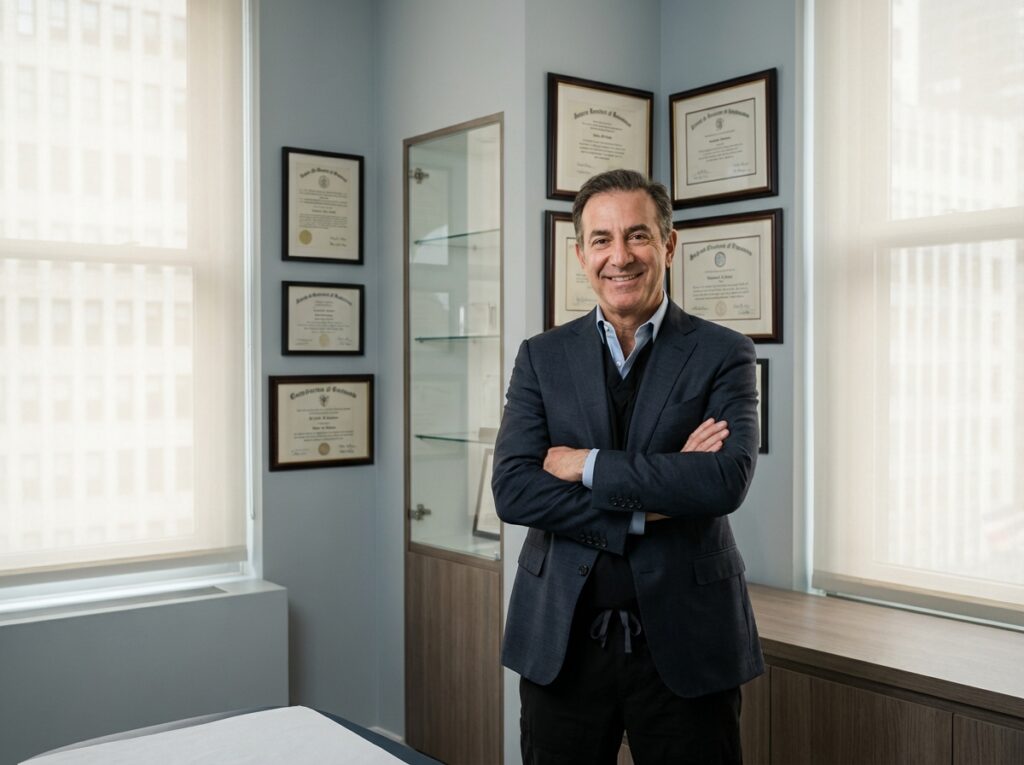
Hair Doctor NYC provides an example of how these seven qualifications manifest in a qualified practice. Dr. Roy B. Stoller, the lead physician, holds double board certification, brings over 25 years of experience, has performed more than 6,000 successful procedures, and is recognized as a leader in the field.
Dr. Louis Mariotti, also double board-certified in facial plastic surgery, focuses on surgical precision and facial harmony—essential elements for natural-appearing results. Dr. Christopher Pawlinga has dedicated 18 years exclusively to hair transplantation, demonstrating the specialized focus that distinguishes true experts.
The team approach at Hair Doctor NYC—featuring multiple highly credentialed surgeons rather than a single-practitioner model—ensures patients receive care from physicians whose qualifications align with every criterion outlined above. Their Madison Avenue facility reflects the commitment to excellence that qualified surgeons demonstrate.
Questions to Ask During a Consultation
Every consultation should include these essential questions:
- What are the surgeon’s board certifications and when were they obtained?
- Is the surgeon ABHRS certified?
- How many years has the surgeon been performing hair transplants exclusively?
- How many procedures has the surgeon personally performed?
- What professional organizations is the surgeon a member of?
- Who will design the hairline, create recipient sites, and place grafts?
- Will the surgeon personally perform all critical phases of the procedure?
- Can the patient see before/after photos of patients with similar hair loss patterns?
- How many procedures does the surgeon perform simultaneously?
- Can the surgeon provide references from previous patients?
- What is the surgeon’s repair procedure rate?
- What post-operative care and follow-up does the surgeon provide?
Conclusion
The alarming lack of regulation in hair restoration surgery, combined with rising repair procedure rates, makes credential verification essential. The seven qualifications outlined in this guide represent the gold standard for patient safety and outcome quality.
Price should never be the primary factor when surgery is involved. Verifying credentials requires time and effort, but this investment prevents the physical, emotional, and financial devastation of a botched procedure.
Qualified surgeons welcome credential verification and detailed questions. They understand that informed patients make the best surgical candidates. Using the framework and questions provided here, prospective patients can evaluate any surgeon and make decisions based on evidence rather than marketing.
Choosing a properly qualified hair transplant surgeon is the single most important factor in achieving natural, lasting results. The seven qualifications matter—all of them.
Ready to Meet With Qualified Hair Restoration Specialists?
Hair Doctor NYC invites prospective patients to schedule a consultation with their team of board-certified surgeons. Every consultation includes a transparent discussion of credentials, experience, and personalized treatment approaches—with the actual operating surgeon, not sales staff.
Patients are encouraged to bring this qualification checklist and ask every question. The state-of-the-art Madison Avenue facility provides a no-pressure environment to verify credentials and determine if Hair Doctor NYC is the right fit for individual hair restoration goals.
Contact Hair Doctor NYC today to schedule a consultation and take the first step toward natural, lasting results with surgeons whose qualifications meet the highest standards in the industry.