

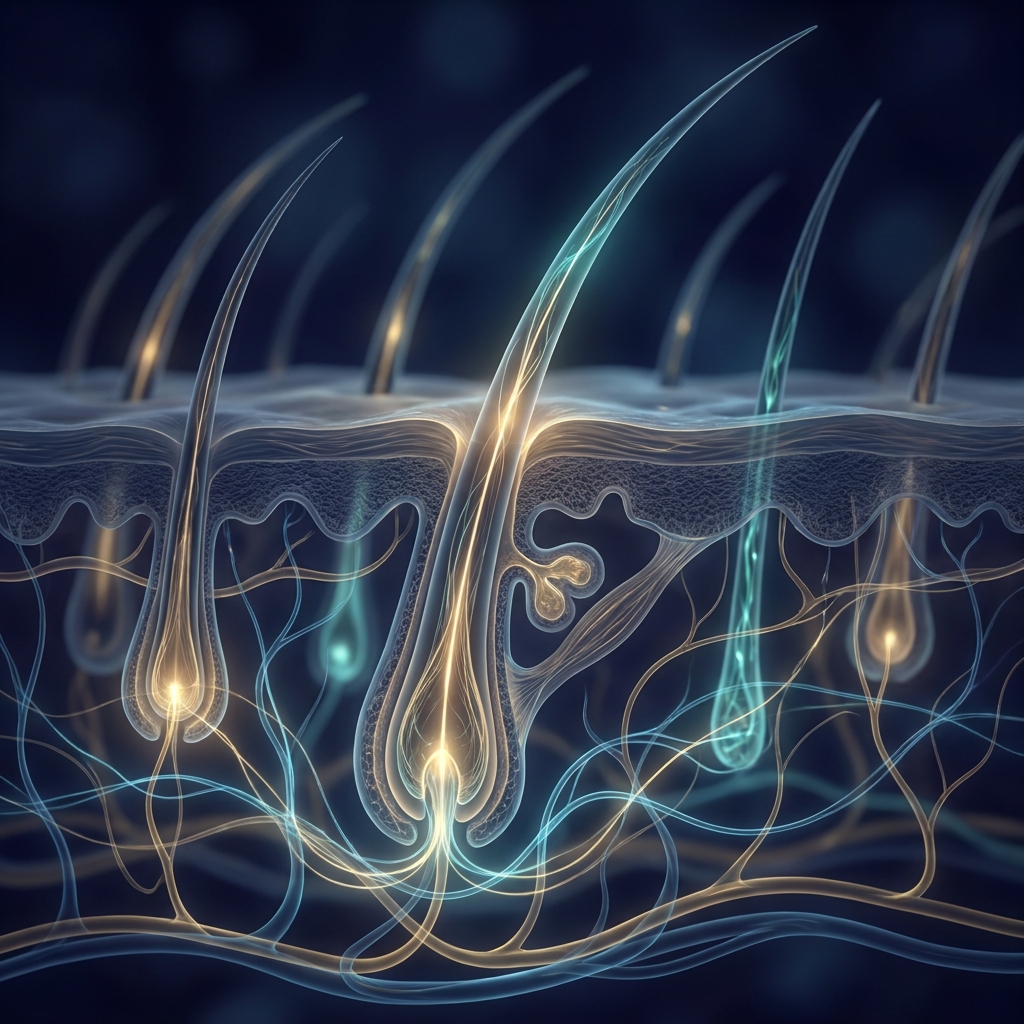
Hair Transplant Itching During Healing: The Phase-by-Phase Biology Guide
Introduction: Why Your Scalp Itches After a Hair Transplant — And Why the Standard Answer Isn’t Enough
Post-transplant itching is universal, expected, and biologically complex. The standard explanation of “histamine and scabs” barely scratches the surface of what patients actually experience during recovery. For the analytically minded patient seeking clinical precision rather than generic reassurance, understanding the true nature of post-operative pruritus requires a deeper examination.
Itching after hair restoration surgery is not a static event. It is a dynamic biological process that changes in character, intensity, and origin across distinct healing windows. The sensation a patient experiences on day three differs fundamentally from what occurs on day eight or month three, because each phase involves different molecular and cellular events.
The intensity of itching maps precisely to identifiable biological mechanisms: histamine cascades, IL-31 cytokine activity, nerve fiber regeneration, scab detachment, and follicular emergence. Each of these processes produces a distinct itch profile with specific management implications.
Beyond the physical sensation, persistent pruritus carries a psychological toll that deserves acknowledgment. Sleep disturbance, procedural anxiety, and the constant vigilance required to protect grafts create a burden that extends beyond simple discomfort.
This guide addresses the full picture. Surgical technique variables, including FUE versus FUT and robotically assisted site creation, meaningfully influence itching incidence. These details rarely appear in standard patient education materials, yet they directly affect the recovery experience.
The Biology of Post-Transplant Itch: A Molecular Foundation
Itching, clinically termed pruritus, is not a side effect in the pejorative sense. It is a direct readout of active tissue repair. Understanding this distinction transforms the patient’s relationship with the sensation from frustration to informed management.
The primary driver is mast cell degranulation. When surgical trauma occurs, mast cells release histamine at the surgical sites. This histamine binds to H1 receptors on peripheral sensory nerve endings, generating itch signals transmitted to the brain via C-fiber neurons. This mechanism explains why antihistamines provide partial relief.
However, histamine is only part of the story. Interleukin-31 (IL-31) plays a crucial role in post-transplant itch. Released by activated T-helper cells, IL-31 binds to receptors on dorsal root ganglia neurons, amplifying the itch signal independently of histamine. This explains why antihistamines alone do not eliminate itching entirely.
The broader cytokine cascade involves TNF-α, IL-4, and IL-13, which contribute to the inflammatory milieu that sensitizes peripheral itch receptors (pruriceptors). These cytokines lower the threshold for itch stimulation, meaning less stimulus produces more sensation.
Nerve fiber damage and regeneration constitute a distinct itch mechanism. Surgical micro-trauma severs small-diameter sensory nerve fibers. As these fibers regenerate, they fire aberrant signals interpreted by the brain as itch, tingling, or hypersensitivity. This process continues for weeks after the initial histamine response subsides.
Reduced sebum production post-surgery also contributes. Disrupted sebaceous gland activity leads to scalp dryness, which activates TRPV1 and TRPA1 ion channels on sensory neurons. These represent additional pruriceptive pathways beyond the classical histamine model.
A 2026 Frontiers in Medicine systematic review confirms that pruritus is primarily attributed to crust formation, scalp dryness, and epithelial regeneration in FUE patients.
Phase 1: Days 1–4 — The Inflammatory Surge
This phase represents the acute inflammatory response. Neutrophils and macrophages flood the surgical sites, releasing pro-inflammatory cytokines and initiating tissue debridement.
Itching is typically absent or minimal in the first 48 to 72 hours. The surgical anesthesia (tumescent lidocaine) continues to suppress sensory nerve activity post-operatively, creating a window of relative comfort.
Early itch onset occurs around days three to four as mast cell histamine release intensifies and initial scab formation begins around each graft site. The scalp may feel tight, tender, or numb rather than classically itchy during this window, reflecting nerve fiber disruption rather than regeneration.
The donor area, whether FUE punch sites or FUT suture line, may begin to itch slightly earlier than the recipient area due to different wound geometries.
Itching intensity at this stage typically rates one to two out of ten. Patients often describe it as a mild tingling or pressure sensation rather than true itch.
The critical clinical consideration: graft anchoring is at its most tenuous. Grafts are held in place by fibrin clot alone, making any scratching or rubbing potentially catastrophic for graft survival.
Phase 2: Days 5–10 — Peak Pruritus and the Scab Maturation Window
This is the most intense itching phase, typically rated three to five out of ten by patients. Most describe it as a persistent, distracting itch rather than severe pain.
The biological explanation for peak intensity involves scab maturation. Scabs are now fully formed and firm around each graft, maximizing mechanical stimulation of underlying sensory nerve endings. Simultaneously, IL-31 cytokine activity reaches its highest levels as the adaptive immune response peaks.
The itch-scratch cycle becomes a significant risk. Scratching causes micro-lacerations that trigger additional mast cell degranulation and histamine release, perpetuating and intensifying the itch through a positive feedback loop that clinicians actively work to interrupt.
This phase coincides with maximum graft vulnerability. Grafts remain dislodgeable through day ten, making scratch avoidance clinically critical rather than merely precautionary.
In the donor area, FUE punch sites heal as multiple small circular wounds, each generating localized inflammatory responses. The aggregate effect produces diffuse donor area itch. The FUT suture line creates a single linear zone of concentrated itch as wound edges heal and suture material creates a mild foreign body response.
According to prospective cohort data from Kathmandu Medical College, approximately 4.61% of patients report significant itching at two months post-transplant. This contextualizes that most patients’ peak pruritus resolves well before this point.
Phase 3: Days 11–21 — Scab Detachment and Epithelial Closure
Itching typically begins to diminish as scabs naturally detach between days twelve and fourteen, removing the primary mechanical stimulus on sensory nerve endings.
The biological event driving improvement is keratinocyte migration across the wound surface (re-epithelialization). This restores the epidermal barrier, reducing transepidermal water loss and the dryness-driven itch stimulus.
Nerve fiber regeneration continues during this phase. Some patients experience intermittent “electric” or “shooting” sensations as regenerating axons make new synaptic contacts. These sensations are distinct from the diffuse itch of earlier phases.
Itching intensity typically drops to one to two out of ten by day fourteen to twenty-one in uncomplicated cases.
Patients with seborrheic dermatitis, eczema, or dry skin may experience itching extending to four to eight weeks due to impaired barrier function and elevated baseline inflammatory tone. The Koebner phenomenon can trigger psoriatic plaques to emerge on healing areas in predisposed patients, causing itching that outlasts normal healing timelines and requires specific dermatological management.
Grafts are substantially more secure after day ten, reducing the catastrophic risk of scratching, though gentle handling remains advisable.
Phase 4: Weeks 3–12 — The Dormancy Period and Residual Nerve Hypersensitivity
During the shedding phase (telogen effluvium of transplanted hairs, weeks two through eight), most transplanted hairs shed as follicles enter a protective dormancy phase. This is normal and expected.
Itching during this period is typically minimal but may persist as intermittent tingling or hypersensitivity due to ongoing small-fiber nerve regeneration. Scalp sensation may remain altered, with areas of numbness, hypersensitivity, or paresthesia common as nerve fibers continue to regenerate.
The psychological dimension deserves attention. The combination of hair shedding, scalp sensitivity, and the absence of visible growth can generate significant patient anxiety during this “ugly duckling” phase.
Lichen planopilaris (LPP), though rare and affecting approximately 1% of the general population, can be triggered by hair transplantation and may cause persistent itching, burning, and perifollicular erythema during this window. This represents a red flag requiring dermatological evaluation.
Importantly, there are no recorded cases of permanent post-transplant itching. Sensory disturbances from nerve involvement resolve within weeks to months in virtually all patients.
Phase 5: Months 3–4 — The Secondary Itch Wave and Follicular Emergence
The secondary itch wave at approximately three to four months is a distinct, clinically recognized phenomenon that surprises many patients who were told itching would resolve within two weeks.
The biological mechanism involves follicular re-entry into anagen (active growth phase). As transplanted follicles begin producing new hair shafts that push through the epidermis, they mechanically stimulate the surrounding dermis and trigger a localized inflammatory response. This represents a miniature version of the original healing process.
This secondary itch is typically milder than the peak phase (one to two out of ten), more localized, and often accompanied by the visible emergence of fine new hairs. It is a positive prognostic sign.
Patients who were not warned about this secondary wave often interpret it as a complication or sign of poor healing. Proactive education dramatically reduces anxiety.
No graft protection measures are needed at this stage. Grafts are fully integrated, and the secondary itch requires only symptomatic management if bothersome.
FUE vs. FUT: How Surgical Technique Shapes the Itching Experience
The surgical method fundamentally alters the wound geometry, healing kinetics, and therefore the character and distribution of post-operative itching.
FUE itching profile: Multiple small circular punch wounds (0.8 to 1.0mm diameter) distributed across the donor area create a diffuse, widespread itch pattern. Each site undergoes its own independent inflammatory cycle. The aggregate effect produces the sensation of generalized scalp itch.
FUT itching profile: A single linear incision creates a concentrated zone of itch along the suture line. The suture material itself acts as a mild foreign body stimulus. Itching is more localized but can be intensely focused. Suture-line itch typically resolves within seven to ten days post-suture removal.
FUT typically produces less widespread itching than FUE due to the single wound geometry, but the suture line creates a more concentrated and sometimes more intense localized itch experience.
In the recipient area, itching patterns are broadly similar between FUE and FUT, as the site creation technique (not the donor harvesting method) drives recipient area pruritus.
Research has noted pruritus in 12.9% of cases following robotically assisted recipient site creation. This finding suggests that the precision and depth consistency of robotic incisions may influence the inflammatory response profile, though further research is needed.
Graft count (session size) is an independent variable. Megasessions of 4,000 or more grafts produce proportionally more wound surface area, more scab formation, and typically more intense and prolonged itching than smaller sessions.
Risk Stratification: Which Patients Experience More Intense or Prolonged Itching?
Understanding risk factors enables proactive management rather than reactive treatment.
Seborrheic dermatitis represents the most significant risk factor for prolonged post-transplant itching. The malassezia-driven inflammation synergizes with surgical inflammation, and disruption of the scalp microbiome during healing can trigger flares.
Eczema and atopic dermatitis patients have impaired epidermal barrier function and elevated baseline IL-31 and IL-4 activity. This creates a primed itch response that amplifies surgical pruritus.
Psoriasis patients face the risk of Koebner phenomenon, where new psoriatic plaques emerge on healing areas. This requires pre-surgical discussion and potentially prophylactic management.
Dry or sensitive skin means reduced baseline sebum production and less natural scalp lubrication post-surgery, amplifying dryness-driven itch.
Large graft sessions (4,000 or more grafts) correlate with greater wound surface area, more scab burden, and longer healing timelines.
Delayed washing protocols allow greater scab accumulation, which mechanically intensifies itch. Early, gentle washing protocols (starting day three to five) demonstrably reduce itching incidence.
Environmental factors such as hot, dry climates and winter indoor heating reduce ambient humidity, accelerating scalp dryness and intensifying itch.
Evidence-Based Management: A Phase-Matched Protocol
Management should be phase-specific rather than one-size-fits-all. All topical applications should be cleared with the surgical team before use.
Days 1–5: Saline, Elevation, and Antihistamine Foundation
Saline spray serves as the frontline tool. Frequent application (every 30 to 60 minutes in the first 48 hours if permitted) keeps grafts moist, reduces crust formation, and provides evaporative cooling that soothes sensory nerve endings. Refrigerating the saline spray provides additional vasoconstriction and sensory nerve cooling.
Antihistamine options include cetirizine (10mg, non-sedating) for daytime use and chlorphenamine (4mg, sedating) at night. The sedating nighttime antihistamine serves a dual purpose: itch suppression and sleep facilitation.
Head elevation (45 degrees) during sleep reduces scalp edema, which decreases pressure on sensory nerve endings. Cold compress application to the forehead or back of the head (never directly on grafts) provides reflex inhibition of itch signals.
Days 5–14: Gentle Washing, Targeted Topicals, and Itch-Scratch Cycle Interruption
Gentle washing (typically permitted from day three to five per the surgeon’s protocol) with a sulfate-free, fragrance-free shampoo removes scab debris and reduces the mechanical itch stimulus. Research supports washing at least five to six times per week once permitted.
Twice-daily irrigation of the recipient area combined with appropriate topical care on the suture line has been shown to markedly decrease itching incidence.
Ketoconazole shampoo offers anti-inflammatory properties beyond antifungal activity. Applying it for six minutes before rinsing maximizes its effect.
Hydrocortisone cream (1 to 2.5%) can be effective for persistent localized itch but must be limited to a maximum of five days. Prolonged application suppresses collagen synthesis and can slow wound healing.
Weeks 3–12: Moisturization, Scalp Health Maintenance, and Sensory Normalization
Bepanthen (dexpanthenol/panthenol) cream can be introduced after day ten when grafts are secure. Panthenol penetrates the epidermis and is converted to pantothenic acid, supporting keratinocyte proliferation and barrier repair.
Aloe vera gel is appropriate after day seven to ten when grafts are anchored, providing soothing, anti-inflammatory, and mild antimicrobial effects.
Maintaining scalp hydration through adequate water intake and topical moisturizers is advisable. Using a humidifier in dry indoor environments and avoiding direct sun exposure on the healing scalp further supports recovery.
Months 3–4: Managing the Secondary Itch Wave
The secondary itch wave associated with follicular emergence is expected, mild, and self-limiting. Gentle scalp massage can help manage the mechanical itch of emerging hair shafts. Documenting and photographing new hair emergence provides powerful reassurance and helps patients contextualize the sensation positively.
Red Flags: When Itching Signals a Complication
Normal post-transplant itching follows a predictable trajectory of onset, peak, and resolution. Deviation from this pattern warrants clinical evaluation.
Worsening after day 5: Itching that intensifies rather than plateaus or begins to resolve suggests an abnormal inflammatory response, possible infection, or contact dermatitis.
Pustules or pimples around graft sites: Folliculitis is the most common post-transplant complication. A multicenter study reported 12.1% incidence, typically presenting within weeks one to four and requiring antibiotic treatment.
Purulent discharge: Any discharge from graft sites or the donor area indicates possible infection. Though post-transplant infection is rare (below 1% incidence) due to the scalp’s rich vascular supply, it requires prompt evaluation.
Fever: Systemic fever accompanying scalp symptoms suggests a spreading infection requiring urgent medical attention.
Persistent itching beyond 8 weeks with perifollicular redness or scaling: This may indicate lichen planopilaris or other inflammatory scalp conditions triggered by surgical trauma.
Itching accompanied by significant pain: Pain is not a feature of normal post-transplant itch. Its presence suggests nerve entrapment, infection, or an inflammatory complication.
Patients should contact their surgical team immediately if any of these red flags are present rather than waiting for a scheduled follow-up.
How Hair Doctor NYC’s Surgical Approach Minimizes Post-Operative Itching
The biological and technical factors that drive itching are directly influenced by surgical precision, protocol design, and post-operative support.
Experienced, specialized surgeons make a measurable difference. Dr. Christopher Pawlinga’s 18 years of exclusive focus on hair transplantation and Dr. Roy B. Stoller’s 25 or more years of experience in facial plastic surgery, with over 6,000 procedures performed, represent the kind of technical mastery that minimizes surgical trauma, reduces wound surface area per graft, and optimizes healing conditions. Patients can review before and after results to evaluate the standard of outcomes achieved.
Precise graft placement matters. Consistent depth and angle of recipient site creation reduces tissue trauma and the inflammatory burden that drives itching. This represents a direct argument for choosing surgeons with exceptional technical precision.
Hair Doctor NYC’s comprehensive post-operative protocol, including appropriate washing timelines, saline spray guidance, and antihistamine recommendations, is a meaningful differentiator in minimizing itching incidence and duration.
The Madison Avenue clinical environment provides access to the full medical team for post-operative questions and red flag evaluation. This responsive support prevents minor itching concerns from becoming anxiety-provoking uncertainties.
Conclusion: Itching Is a Map, Not a Mystery
Post-transplant itching is not a uniform, undifferentiated nuisance. It is a phase-specific biological readout of identifiable molecular and cellular events, each with distinct management implications.
The phase-by-phase framework provides clarity: histamine cascade and early inflammation (days one to four), IL-31 cytokine peak and scab maturation (days five to ten), epithelial closure and nerve regeneration (days eleven to twenty-one), dormancy and residual hypersensitivity (weeks three to twelve), and the secondary follicular emergence wave (months three to four).
Understanding the biology transforms the patient experience. Itching that is anticipated, explained, and mapped is manageable. Itching that is unexpected and unexplained generates anxiety that amplifies the sensation.
Graft protection in the first ten days is non-negotiable. The biological case for scratch avoidance is compelling, not merely precautionary.
The vast majority of patients experience itching that resolves completely, leaves no lasting sensory disturbance, and is followed by the visible emergence of natural, permanent hair.
Ready to Understand Every Stage of Your Hair Restoration Journey?
Patients who appreciate clinical precision deserve a surgical team that operates at the same standard. Hair Doctor NYC invites prospective patients to schedule a consultation on Madison Avenue, where Dr. Stoller, Dr. Mariotti, and Dr. Pawlinga provide personalized assessments of hair loss, surgical candidacy, and individualized post-operative protocols.
A consultation at Hair Doctor NYC includes a thorough discussion of the healing process, itching timeline, risk stratification based on the patient’s specific skin and health profile, and a clear post-operative care plan. Patients enter surgery informed, not anxious.
The practice’s differentiators speak directly to patients seeking this level of care: over 6,000 procedures performed, 18 or more years of exclusive hair transplant specialization, double board-certified surgeons, and a state-of-the-art Midtown Manhattan facility.
Schedule a consultation at Hair Doctor NYC at hairdoctornyc.com.
Excellence Meets Elegance. Because your results, and your recovery, deserve nothing less.