

Beard Transplant NYC Appointment: The Decision-to-Booking Blueprint
Introduction: You’ve Done the Research — Now It’s Time to Book
The decision has been made. The research phase is complete. Understanding what a beard transplant entails, how the procedure works, and the transformative results it delivers is no longer the question. The question now is simpler and more consequential: which surgeon and which clinic will perform the procedure?
This article serves as the bridge between decision and confirmed appointment. For men who have already determined that a beard transplant aligns with their goals, the consultation appointment itself represents a high-stakes decision point. The surgeon and clinic selected at this stage determines everything about the outcome.
The stakes are real. According to the ISHRS 2025 Practice Census, repair cases from failed or black-market transplants rose to 6.9% of all hair transplant procedures in 2024, with 10% of those linked to unlicensed providers. Choosing the wrong clinic does not simply mean suboptimal results; it can mean corrective surgery, permanent donor area damage, or visible scarring on the face.
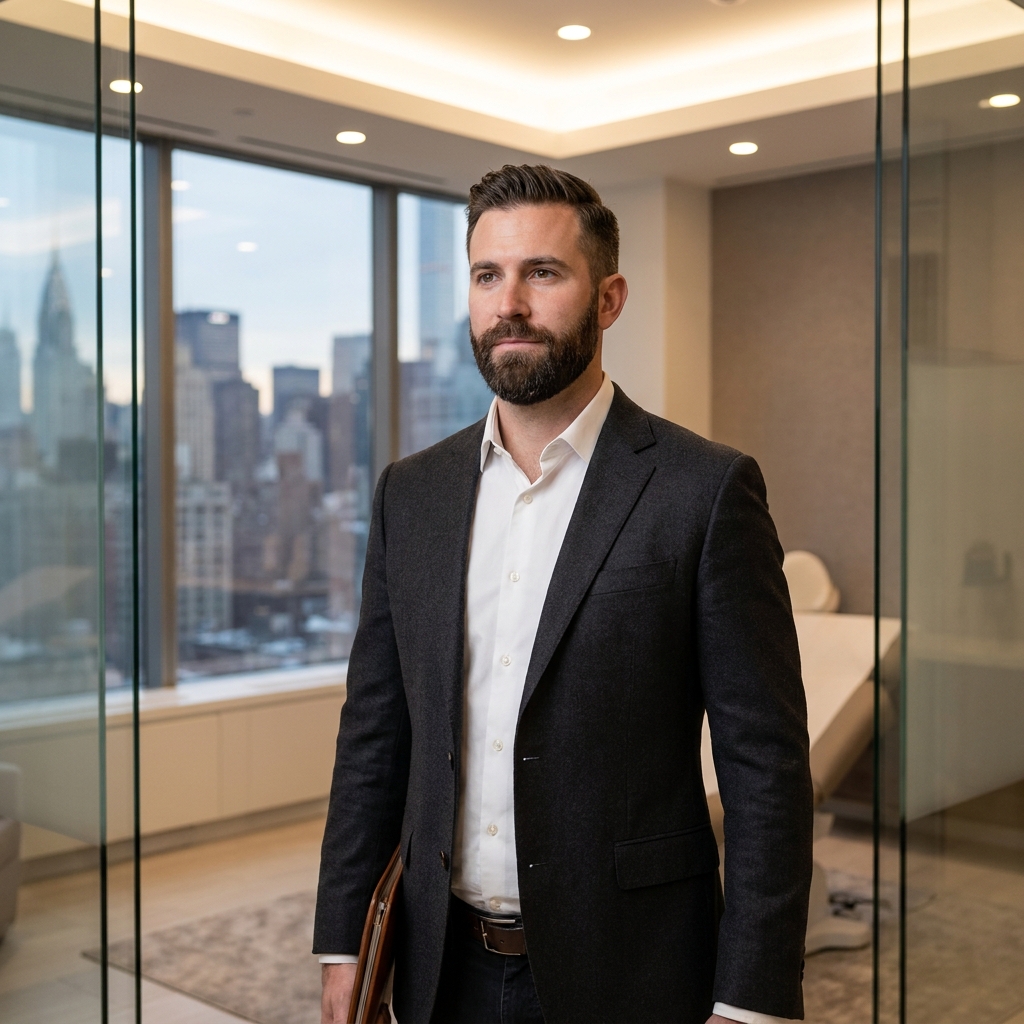
Hair Doctor NYC’s team of double board-certified facial plastic surgeons, operating from a state-of-the-art Madison Avenue facility, represents the credentialed benchmark against which any NYC beard transplant provider should be evaluated. What follows is a step-by-step blueprint covering what to prepare before making contact, what to expect during the consultation, how to evaluate surgeon fit for facial skin specifically, and the questions most patients never think to ask.
Before You Pick Up the Phone: What to Prepare
Preparation before the first contact call or online inquiry separates informed patients from those who receive generic responses. Clinics respond differently to patients who arrive with clarity about their goals, realistic expectations about their donor supply, and specific questions that demonstrate serious intent.
This preparation phase positions a patient as a serious, qualified candidate and extracts maximum value from every interaction with the clinic.
Define Your Beard Goals With Precision
Clinics will ask immediately which zones require treatment. Patients should identify whether they seek full beard coverage, a goatee, mustache enhancement, sideburn restoration, cheek fill, sub-jawline density, or a combination of these areas.
Collecting reference images of beard styles that reflect the desired outcome proves more useful than arriving with a single celebrity photo. Zone-by-zone visual references for sideburns, cheek beard, mustache, and goatee allow the surgeon to understand specific aesthetic priorities. A beard density hair transplant zone guide can help patients articulate their goals with precision before the consultation.
Facial structure, bone definition, and existing hair pattern should inform design goals. A board-certified facial plastic surgeon evaluates facial harmony, not just gap-filling. The beard design should enhance overall facial aesthetics, not simply add hair where it is currently sparse.
Density expectations require honest self-assessment. A typical beard transplant requires 1,500 to 3,000 grafts, while full beards may require up to 5,000. Understanding the scope of the goal helps the clinic provide an accurate estimate and timeline.
Assess Your Donor Supply Honestly
The occipital zone (the back and sides of the scalp) serves as the dominant donor site for beard transplants, accounting for 91.7% of donor hair per ISHRS 2025 data. These grafts are finite.
Men aged 22 to 35 face a critical consideration that competitors rarely discuss: using scalp grafts for beard restoration now may limit future scalp restoration options if male pattern baldness progresses. The maximum harvestable grafts for most patients is approximately 6,000 lifetime. Responsible donor area management is a hallmark of an ethical, experienced surgeon, and this trade-off should be raised directly during the consultation. Understanding hair transplant age considerations is especially important for younger patients weighing this decision.
For patients with strong existing beard growth, beard-to-beard harvesting from the underside of the chin or neck offers an alternative with superior color and texture match. Patients should ask whether this technique applies to their case.
Ideal candidates have approximately 2,000 to 2,500 healthy donor follicles available, are at least 22 years old, and have no active alopecia areata or uncontrolled systemic conditions.
Gather Medical and Lifestyle Information
A comprehensive list of current medications, supplements, and any blood thinners affects surgical eligibility and pre-procedure protocols. Any history of skin conditions, scarring disorders, or previous hair restoration procedures (including unsatisfactory results requiring repair) should be documented.
Professional considerations matter for recovery planning. Public-facing roles, media appearances, or client-facing work require different timelines than remote or office-based positions. Patients should have this context ready.
Beard transplants require one to two days of downtime, with visible redness and small scabs for seven to ten days. Identifying a preferred procedure window before calling demonstrates serious intent and allows the clinic to provide specific scheduling guidance.
Patients seeking beard transplants for scar camouflage (acne, burns, cleft palate surgery) or as part of gender-affirming care should note this, as it affects technique selection and may have insurance implications. Beard transplants are typically not covered by insurance but may qualify under gender-affirming care or trauma cases, and many cosmetic surgeons offer financing options to help patients manage out-of-pocket costs.
How to Evaluate a NYC Beard Transplant Clinic Before You Book
The booking process is itself a screening process. The best clinics expect and welcome scrutiny. Hair Doctor NYC’s double board-certified facial plastic surgeons represent the credentialed standard: board certification in facial plastic surgery is directly relevant to beard transplants in a way that general hair restoration certification is not.
Credentials That Matter Specifically for Facial Hair
Beard transplants are technically more demanding than scalp transplants. Facial hair follicles must be placed at precise 30 to 45 degree angles on thinner, more mobile facial skin. Improper angulation is the most common aesthetic failure, according to peer-reviewed research cited by Hair Doctor NYC.
Double board certification in facial plastic surgery indicates training in facial anatomy, skin behavior, and aesthetic harmony that general hair restoration practitioners may lack. Dr. Roy B. Stoller and Dr. Louis Mariotti at Hair Doctor NYC hold this credential.
Patients should ask specifically: Is the surgeon performing the procedure board-certified in facial plastic surgery, or only in a general specialty? Who physically performs the graft placement: the surgeon or a technician?
The ISHRS explicitly warns patients to verify that a licensed physician, not an unlicensed technician, will perform their surgery. This is a non-negotiable standard to confirm before booking.
Technique Transparency: FUE vs. DHI for Facial Skin
FUE (Follicular Unit Extraction) accounts for over 85% of male hair restoration procedures globally and is the standard technique. However, not all FUE is equal for facial applications. A thorough review of FUE hair restoration advantages and disadvantages helps patients understand what to expect from this approach.
DHI (Direct Hair Implantation using the Choi Implanter Pen) is emerging as a preferred technique specifically for beard procedures due to superior angle control on thinner, more mobile facial skin. This differentiating clinical detail is often overlooked in competitor content.
Hair Doctor NYC utilizes advanced FUE techniques for facial hair sculpting. During the consultation, patients should ask whether DHI with the Choi Implanter Pen is offered and whether it is appropriate for their specific case.
A clinic that cannot clearly explain the difference between FUE and DHI for facial skin, or that offers only one approach without explanation, represents a yellow flag.
Patients should ask to see before-and-after photos organized by zone: sideburns, cheek beard, mustache, goatee, and sub-jawline. Zone-by-zone analysis reveals surgical precision in a way that single full-beard photos do not.
Volume, Track Record, and Repair Experience
Dr. Roy B. Stoller has performed over 6,000 successful hair transplant procedures. Surgical volume at this level indicates both technical proficiency and the pattern recognition that comes from managing diverse cases.
Patients should ask whether the clinic has experience with corrective or repair beard transplants. Repair cases now account for 6.9% of all hair transplants, and a surgeon who has corrected others’ mistakes understands what failure looks like and how to avoid it.
Inquiring about the clinic’s experience with specific patient profiles matters: ethnic background, skin type, beard density goals, and any scar camouflage requirements. NYC’s patient population is among the most diverse globally, and technique must adapt accordingly.
A 25-plus year track record in facial plastic surgery, combined with a team-based model featuring multiple specialists, provides a depth of experience that single-practitioner clinics cannot replicate.
What Happens During the Beard Transplant Consultation
The consultation appointment should be demystified so patients arrive prepared, confident, and able to evaluate the quality of the interaction itself. The consultation is a two-way evaluation: the surgeon assesses candidacy, and the patient assesses the surgeon’s expertise, communication style, and alignment with stated goals.
The Medical and Donor Area Assessment
The surgeon reviews medical history, current medications, and any contraindications to local anesthesia or surgical procedures.
Donor area evaluation examines the occipital zone for follicle density, hair caliber, and estimated harvestable graft count. This determines whether goals are achievable and at what cost.
For patients aged 22 to 35, a qualified surgeon should proactively discuss the donor supply trade-off. If this topic is not raised, the patient should raise it.
Skin type and facial skin characteristics will be assessed. Thinner, more mobile facial skin requires different technique than scalp, and the surgeon should articulate this distinction clearly.
Facial Structure Analysis and Beard Design
A double board-certified facial plastic surgeon analyzes facial structure, bone definition, proportions, and existing hair pattern to design a beard that enhances facial harmony rather than simply filling gaps. The approach to facial hair sculpting transplant zone by zone is a key differentiator in achieving natural-looking results.
The consultation should include a personalized beard design plan: which zones will be addressed, at what density, and with what hairline shape. This should be a collaborative conversation, not a one-size-fits-all template.
Graft count estimation, based on goals and donor supply, typically ranges from 1,500 to 3,000 for partial beards and up to 5,000 for full coverage.
Technique selection (FUE vs. DHI) should be explained in the context of specific facial skin characteristics and density goals, not presented as a default.
The Procedure, Recovery, and Timeline Discussion
The surgeon should walk through the full procedure timeline: local anesthesia, extraction phase, graft preparation, and implantation. Total procedure time is typically two to eight hours depending on graft count.
Profession-specific recovery guidance matters. Public-facing professionals, executives, or anyone with media appearances should discuss timing openly. A qualified clinic helps patients plan around their schedules.
Practical post-procedure details that many clinics omit include: a soft food diet for two to three days to minimize jaw movement, sleeping position protocols to protect grafts, and a graduated shaving timeline.
The Questions Most Patients Never Think to Ask
These questions signal to the surgeon that the patient is serious and educated. The quality of the answers reveals the clinic’s standards.
Questions About Surgical Standards and Team
- “Who physically performs the graft extraction and implantation: you, or a technician?” Any hesitation on this answer is disqualifying.
- “What is your specific experience with beard transplants versus scalp transplants, and how does your technique differ for facial skin?”
- “Have you performed corrective beard transplants for patients who had unsatisfactory results elsewhere? What were the most common failure modes you corrected?”
- “What is your protocol if I am unhappy with the density or angulation of my results at 12 months?”
- “Is DHI with the Choi Implanter Pen an option for my case, and why or why not?”
Questions About Specific Candidacy and Long-Term Planning
- “Given my age and current scalp hair density, how does using these grafts for my beard affect my future options if I experience scalp hair loss?”
- “What is your honest assessment of what I can realistically achieve with my donor supply?”
- “Do you see any factors in my medical history, skin type, or facial structure that would make me a higher-risk candidate?”
- “What is the maximum number of grafts you would recommend harvesting in a single session, and why?”
- “If I wanted a second session in the future to increase density, would that still be feasible given the grafts used today?”
Questions About Cost, Financing, and Scheduling
NYC beard transplant costs typically range from $5,000 to $18,000 or more depending on graft count and surgeon expertise. Understanding exactly what is included prevents surprises.
- “Is the quoted price all-inclusive, or are there additional fees for anesthesia, follow-up appointments, or touch-up procedures?”
- “Do you offer financing options, and if so, through which providers?”
- “What is your current wait time for procedure scheduling?”
- “What deposit is required to hold a procedure date, and what is your cancellation policy?”
How to Evaluate the Consultation Itself as a Quality Signal
The consultation is not just an information exchange; it is a demonstration of the clinic’s standards, communication quality, and patient-centered approach.
Green flags: The surgeon proactively raises the donor supply trade-off for younger patients, discusses realistic timelines honestly, shows zone-by-zone before-and-after cases, and welcomes questions without deflection.
Red flags: Pressure to book immediately, vague answers about who performs the surgery, inability to explain DHI vs. FUE for facial skin, no discussion of revision policy, or a consultation that feels like a sales pitch rather than a medical evaluation.
The facility itself signals investment in the patient experience. A state-of-the-art clinic on Madison Avenue reflects the standard of care.
Hair Doctor NYC’s multi-surgeon team provides a depth of specialized expertise that a single-practitioner clinic cannot match. Dr. Stoller brings 25-plus years and 6,000-plus procedures. Dr. Mariotti specializes in facial harmony. Dr. Pawlinga has dedicated 18 years exclusively to hair transplantation. Michael Ferranti, P.A., contributes 25-plus years in aesthetic dermatology and licensed SMP expertise.
The Appointment Process at Hair Doctor NYC: What to Expect
Booking Your Consultation
Consultations can be initiated through hairdoctornyc.com. The process matches patients with the appropriate specialist based on their goals.
Patients should come prepared with beard zone priorities, reference images, a medical history summary, and the questions outlined in this article. The more specific the inquiry, the more productive the consultation.
Given steady year-over-year growth in beard transplant demand (now 5% of all male hair restoration procedures per ISHRS 2025) and NYC’s position as a leading urban market, scheduling promptly is advisable.
What the Hair Doctor NYC Team Brings to Your Consultation
Dr. Roy B. Stoller: Globally recognized leader with 25-plus years in facial plastic surgery and over 6,000 successful hair transplant procedures. The combination of surgical volume and facial plastic surgery expertise is directly relevant to beard transplant precision.
Dr. Louis Mariotti: Double board-certified facial plastic surgeon with a focus on surgical detail and facial harmony, critical for designing a beard that enhances overall facial aesthetics.
Dr. Christopher Pawlinga: 18 years dedicated exclusively to hair transplantation, representing a level of specialization that encompasses virtually every variation of donor supply, graft behavior, and outcome scenario.
Michael Ferranti, P.A.: 25-plus years in aesthetic dermatology and plastic surgery, licensed SMP specialist, relevant for patients who may benefit from a combined surgical and non-surgical hair restoration approach.
Conclusion: The Appointment Is the First Step Toward a Permanent Result
The booking decision is not a formality. It is the most consequential choice in the entire beard transplant process because the surgeon and clinic selected determines everything about the outcome.
The blueprint is clear: prepare goals and medical information before calling, evaluate credentials with facial plastic surgery specifically in mind, ask the questions most patients never raise, and treat the consultation itself as a quality signal.
Beard transplants in NYC represent a significant financial and physical commitment. The right surgeon is not the cheapest option or the most convenient, but the most qualified to deliver a natural, permanent result.
Double board-certified facial plastic surgeons with deep specialization in hair restoration, performing procedures in a state-of-the-art Madison Avenue facility, represent the credentialed benchmark against which any NYC provider should be measured.
The research is done. The standard is clear. The next step is a single conversation with the right team.
Schedule Your Beard Transplant Consultation at Hair Doctor NYC
For men who have completed their research and are ready to act, Hair Doctor NYC on Madison Avenue in Midtown Manhattan offers consultations with a team of double board-certified facial plastic surgeons, 25-plus years of combined experience, and over 6,000 successful procedures.
The Hair Doctor NYC team translates informed decisions into precise, permanent results. Visit hairdoctornyc.com to initiate a consultation and take the next step toward achieving the beard that matches the vision.
Financing options are available for qualified patients.