

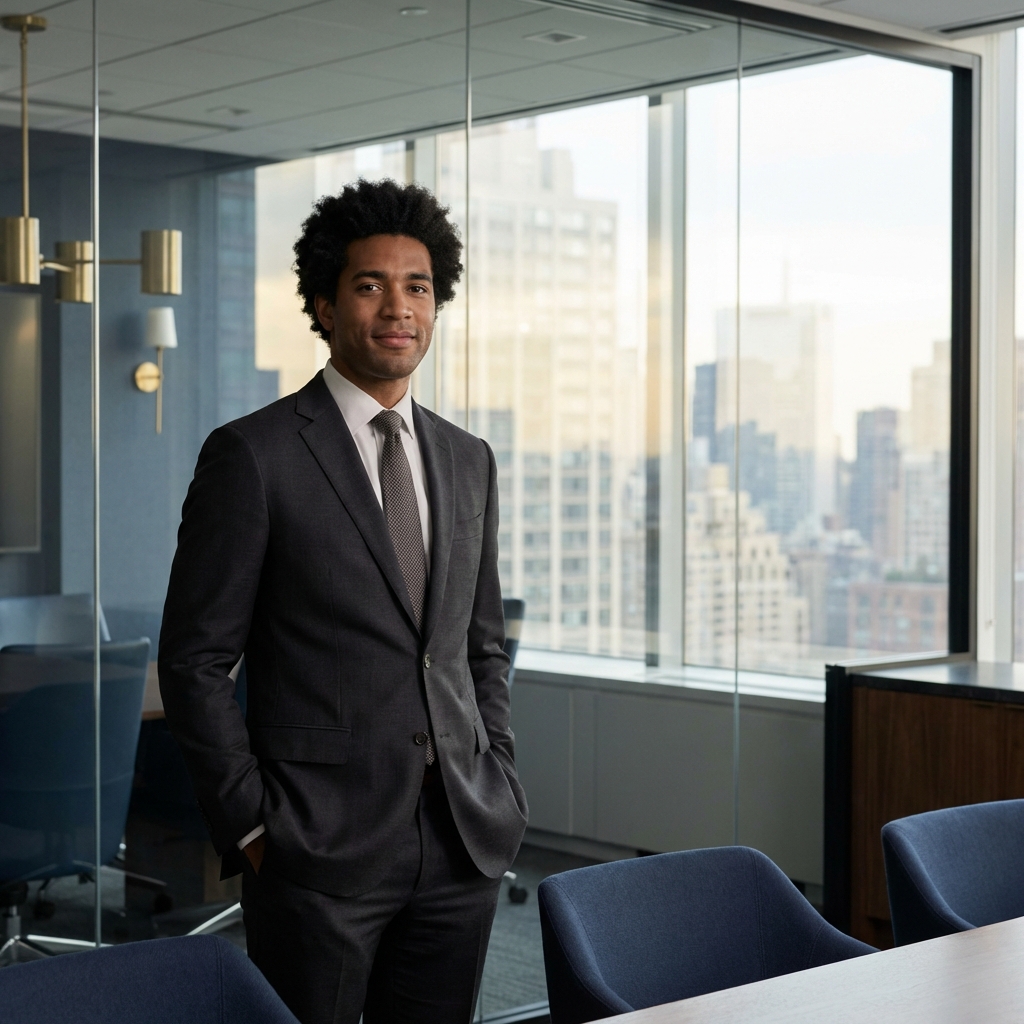
FUE Hair Transplant No Shave: The Professional’s Discretion Playbook
Introduction: When Your Hairline Is Part of Your Professional Brand
A trial attorney stands three weeks from closing arguments. A news anchor prepares for Monday’s broadcast. A surgeon walks into the operating room where patients expect consistency and competence. All three face the same dilemma: meaningful hair loss with zero tolerance for visible downtime.
No-shave FUE—also called Unshaven FUE, UFUE, Shaveless FUE, or Long Hair FUE—is a technique engineered specifically for this professional reality. The procedure extracts and implants individual follicles without shaving the donor or recipient areas, preserving the patient’s existing hairstyle throughout.
However, “no-shave FUE” is not a single procedure. It encompasses a spectrum with two distinct variants, each carrying different trade-offs in graft capacity, procedure time, and cost. This article maps those variants to specific career profiles, providing honest, archetype-specific guidance on which approach fits which professional.
The promise is straightforward: readers will understand what the graft ceiling means for their restoration goals and exactly what a colleague or camera will see at Day 3, Day 7, and Week 2. For discerning professionals in Manhattan seeking this level of personalized care, Hair Doctor NYC on Madison Avenue serves exactly this demographic of public-facing, appearance-conscious individuals.
Clearing Up the Two-Variant Confusion: What ‘No-Shave FUE’ Actually Means
The term “no-shave FUE” is used loosely across the industry, covering two meaningfully different procedures—a confusion that clinics rarely address directly.
Variant 1 — Completely Unshaved FUE (UFUE)
No hair is cut anywhere, neither in the donor nor the recipient area. This approach offers maximum discretion with a graft ceiling typically capped at 1,500 per session (up to 3,000 over two sessions). Procedure time runs 6–10 hours, demanding the highest level of surgical precision.
Variant 2 — Partially No-Shave / Hybrid FUE
The recipient area remains fully unshaved while the donor area receives a minimal, concealed trim or a thin strip shave hidden beneath surrounding longer hair. This variant accommodates 1,500–3,000+ grafts with slightly more surgical visibility—a middle ground balancing discretion with yield.
By contrast, traditional shaved FUE involves a full donor shave, yields 2,000–4,000+ grafts per session, carries maximum surgical visibility, and costs less ($7,500–$15,000 in the U.S.), but requires 2–4 weeks of visible recovery.
The ISHRS (International Society of Hair Restoration Surgery) formally acknowledges unshaven FUE as a valid, technically demanding technique, noting that it allows real-time monitoring of donor area thinning to avoid over-harvesting.
One additional clarification: “long hair FUE” can also refer to the outcome—growing transplanted hair long post-procedure—rather than the technique itself. That concept falls outside this article’s scope.
Key takeaway: Choosing the right variant is not about preference alone. It requires matching graft needs to career constraints.
The Graft Ceiling Trade-Off: What It Means for Real Restoration Goals
Context matters when evaluating graft numbers. The ISHRS Practice Census reports an average of 2,262 grafts per standard FUE case—a benchmark that completely unshaved FUE’s 1,500-graft ceiling falls below.
The ceiling exists for specific technical reasons: limited surgical visibility through existing hair slows extraction, increases transection risk (approximately 8% higher partial transection rate versus shaved FUE), and physically constrains the number of grafts safely harvestable in a single session. Understanding your surgeon’s FUE hair transplant precision transection rate is an important part of evaluating no-shave candidacy.
What 1,500 grafts can achieve:
- Hairline refinement
- Early crown thinning
- Norwood Scale 1–3 presentations
What 1,500 grafts cannot achieve:
- Advanced baldness (Norwood 4–7)
- Extensive coverage requirements
The hybrid approach serves as a ceiling-raiser. By allowing minimal donor trimming, surgeons gain visibility and can push toward 3,000 grafts while still concealing the donor work under longer surrounding hair.
For patients requiring more extensive restoration, completely unshaved FUE can be staged across two sessions (up to 3,000 total grafts), though this doubles cost and time commitment. Professionals must weigh this against a single hybrid session.
An honest assessment: if hair loss requires 3,500+ grafts, no-shave FUE in any variant is likely not the right primary solution. Traditional FUE or FUT should be discussed.
Donor hair must be at least 6–8 cm (roughly 2.5–3 inches) long for any no-shave variant to be technically feasible.
The Professional Archetype Playbook: Matching Career Profile to the Right Variant
The following framework presents five professional archetypes, each mapped to the variant, graft range, scheduling strategy, and appearance standard most relevant to their career demands. The right choice depends on the intersection of hair loss severity, public exposure frequency, schedule flexibility, and tolerance for any visible recovery sign.
Trial Attorneys and Litigators
Appearance stakes: Jury perception, judicial credibility, and opposing counsel dynamics mean any visible alteration during trial can become a distraction or perceived vulnerability.
Scheduling reality: Trial calendars are set months in advance. The ideal window falls immediately post-verdict or during a scheduled recess of two or more weeks.
Best variant: Hybrid no-shave FUE (partial donor trim, unshaved recipient) when 2,000–3,000 grafts are needed; completely unshaved when needs fall under 1,500 grafts and the attorney cannot tolerate any donor-area evidence.
Practical tip: Scheduling the procedure on Thursday or Friday maximizes the weekend buffer before Monday court appearances.
What colleagues see: With existing hair covering the donor and recipient areas, Day 3–5 redness and scabbing remain largely concealed. A conservative hairstyle or slight styling adjustment handles the rest.
On-Camera Journalists and News Anchors
Appearance stakes: HD cameras and studio lighting are unforgiving—any scalp redness, scabbing, or asymmetry is magnified. Anchors are contractually expected to maintain a consistent on-air appearance.
Scheduling reality: Broadcast schedules rarely allow more than a 3–5 day absence. A procedure requiring 2–4 weeks of visible recovery is simply not viable.
Best variant: Completely unshaved FUE for anchors with mild loss (Norwood 1–2) who need under 1,500 grafts and cannot show any donor evidence on camera. Hybrid no-shave for those with moderate loss who can take a full week off.
Camera-specific consideration: Makeup and HD-ready concealers can address residual redness at Day 5–7, but the underlying concealment provided by existing hair is the primary defense.
The “shock loss” phase (Weeks 2–4) sees transplanted hairs shed temporarily—this is normal and does not compromise discreet appearance, since native hair remains intact and continues to provide coverage. For a deeper explanation of this process, see our guide on hair transplant shock loss explained.
Surgeons, Physicians, and Healthcare Professionals
Appearance stakes: Patients place enormous trust in their physicians’ judgment and competence. A visibly altered appearance can inadvertently raise questions about the physician’s own decision-making or health.
Scheduling reality: Surgical schedules can sometimes be blocked in advance, but OR commitments and on-call rotations limit flexibility. A procedure with 1–3 days of concealed recovery is far more compatible than one requiring weeks.
Best variant: Hybrid no-shave FUE is often optimal—physicians typically have the financial means for the premium cost and the scheduling discipline to plan a long-weekend procedure window.
Specific concern: Surgeons who scrub in must consider that the scalp must be kept dry and clean for 7–10 days post-procedure. OR environments and sweat exposure require careful post-operative planning.
Politicians and Elected Official
Appearance stakes: Political opponents, media, and constituents scrutinize every aspect of a politician’s appearance. A sudden change in hairline or visible scalp work can become a news story or social media moment.
Scheduling reality: Election cycles create predictable windows—post-election periods and legislative recesses—that can be used strategically. Campaign periods are the worst time for any visible procedure.
Best variant: Completely unshaved FUE during a recess period for politicians with mild loss; hybrid no-shave during a longer recess for those needing 2,000–3,000 grafts.
Strategic advantage: The ability to return to public appearances within 3–5 days with no visible evidence of a procedure is the defining benefit for this archetype.
C-Suite Executives and Board-Level Leaders
Appearance stakes: Executive presence is a documented factor in leadership perception. Board meetings, investor presentations, and media appearances demand a consistent, authoritative appearance.
Scheduling reality: Executives often have more scheduling flexibility than other archetypes but face unpredictable demands. A procedure with minimal visible recovery is a strategic asset.
Best variant: Hybrid no-shave FUE is the most common fit—executives typically present with moderate hair loss (Norwood 2–3), need 1,500–2,500 grafts, and can absorb the premium cost ($15,000–$25,000) without financial strain.
ROI framing: The professional return on maintaining a consistent, authoritative appearance—avoiding awkward explanations to colleagues and sustaining confidence in high-stakes settings—is a legitimate factor in the cost-benefit analysis.
The Day-by-Day Visibility Guide: What a Colleague or Camera Would Actually See
This timeline assumes existing hair is of sufficient length (6–8+ cm) to provide coverage and that styling is managed thoughtfully.
Days 1–3: The Immediate Post-Procedure Window
Donor area: Existing longer hair conceals extraction points and any minor redness. A close inspection in direct light might reveal small dots, but nothing is apparent at conversational distance.
Recipient area: Mild swelling and redness are largely hidden by surrounding native hair. Some patients experience minor forehead swelling that peaks at Day 2–3—this is the most visible sign and can be managed with cold compresses and head elevation.
Colleague/camera verdict: With thoughtful styling, most observers at normal social distance will notice nothing. HD cameras at close range may pick up slight redness—concealer is appropriate.
Days 4–7: Scab Formation and Early Healing
Small scabs form around transplanted grafts. In no-shave FUE, these are covered by existing hair and are not visible to colleagues at normal distance. Redness begins to subside, and any residual swelling resolves by Day 5–6 in most patients.
Colleague/camera verdict: Day 5–7 is the realistic return-to-work window for most no-shave FUE patients. A professional hairstyle that avoids parting directly over the recipient area is the primary management tool.
Critical: Scabs must not be picked or scratched—premature removal can dislodge grafts.
Weeks 2–4: The Shock Loss Phase
Transplanted hairs enter a temporary shedding phase (telogen effluvium). This is biologically normal and does not indicate graft failure.
Critical distinction for no-shave patients: The shedding of transplanted hairs does not create visible bald patches because the native hair in the recipient area remains intact and continues to provide coverage.
Colleague/camera verdict: Weeks 2–4 are actually the easiest period visually—scabs have resolved, swelling is gone, and native hair conceals the dormant follicles.
Month 3 Through Month 12: The Growth Arc
- Month 3: Early new growth begins with fine, thin hairs emerging
- Months 4–6: Density increases noticeably; hair texture normalizes
- Months 9–12: Final results settle with permanent, DHT-resistant growth
The gradual, incremental nature of the growth arc means the change is never dramatic enough to attract attention—colleagues perceive a natural improvement rather than a sudden transformation. Patients curious about what to expect can review examples of natural-looking hair transplant results to calibrate realistic expectations.
Candidacy: Is No-Shave FUE the Right Procedure?
Ideal candidates include:
- Mild-to-moderate hair loss (Norwood Scale 1–3)
- Sufficient donor density
- Medium-to-long hair (minimum 6–8 cm)
- Need for fewer than 3,000 grafts
- Professional or personal need for discreet recovery
Women represent a significant demographic: Female hair loss typically presents as diffuse thinning rather than defined bald patches, and shaving is rarely acceptable. No-shave FUE removes the primary barrier to female hair transplantation, as ISHRS notes that no-shave options are available for female FUE patients to further conceal the recovery process. Women considering this approach may also benefit from reviewing options specific to hair transplant for female pattern baldness.
Who is not a good candidate:
- Advanced baldness (Norwood 4–7)
- Very fine or short hair (under 6 cm)
- Patients requiring 3,500+ grafts in a single session
- Those with insufficient donor area density
Questions to ask at consultation:
- Does the surgeon perform both completely unshaved and hybrid variants?
- What is their per-session graft capacity for no-shave FUE?
- What instruments do they use?
- What is their transection rate for no-shave cases?
Cost, Time, and the Honest Trade-Off Summary
Cost: No-shave FUE in the U.S. typically ranges from $15,000–$25,000, compared to $7,500–$15,000 for standard FUE. Per-graft cost averages $5–$8, slightly elevated for no-shave due to added precision and procedure time.
Procedure time: 6–10 hours for no-shave FUE versus 4–6 hours for standard FUE, reflecting that long-hair extraction takes nearly twice as long as shaved FUE.
The trade-off spectrum:
- Completely unshaved FUE: Maximum discretion, lowest graft yield, highest cost per graft
- Hybrid no-shave: Moderate discretion, higher yield
- Traditional shaved FUE: Maximum yield, lowest cost, 2–4 weeks of visible recovery
For professionals whose income, reputation, or career advancement depends on consistent public appearance, the premium cost of no-shave FUE represents a rational investment rather than a vanity expense.
Selecting the Right Surgeon: What No-Shave FUE Expertise Actually Requires
Not all FUE surgeons offer no-shave variants. The technique requires specialized instruments, advanced training, and significantly more procedure time. The distinction between hair loss doctor training versus experience is particularly relevant when evaluating surgeons for a technically demanding procedure like no-shave FUE.
Key credentials to verify:
- Board certification in facial plastic surgery or dermatology
- Specific experience with unshaved FUE cases
- Familiarity with both completely unshaved and hybrid variants
- Access to modern extraction technology
Hair Doctor NYC’s multi-surgeon model—including Dr. Stoller (25+ years of experience, 6,000+ procedures), Dr. Mariotti, and Dr. Pawlinga (18 years exclusively in hair transplantation)—provides a depth of expertise that single-practitioner clinics cannot match.
Conclusion: The Discretion Advantage Is Real — But Only With the Right Match
No-shave FUE is not a single procedure—it is a spectrum of variants with meaningfully different trade-offs. The right choice depends on the intersection of hair loss severity, career demands, and graft goals.
The technique was built for public-facing professionals who cannot afford visible downtime, but it requires honest candidacy assessment and a surgeon with specific expertise in the chosen variant. The graft ceiling is real, the cost premium is real, and the procedure time is real. For patients with advanced hair loss, no-shave FUE may complement—rather than replace—a staged restoration plan.
For the right candidate, no-shave FUE delivers permanent, natural-looking results that colleagues and cameras will never identify as a procedure—only as a natural improvement.
Ready to Find Out Which No-Shave FUE Variant Fits Your Career and Goals?
Hair Doctor NYC invites professionals to schedule a personalized consultation at their Madison Avenue clinic in Midtown Manhattan. The team will assess candidacy for both completely unshaved and hybrid no-shave FUE, provide an honest graft count estimate, and map a procedure and recovery schedule around professional commitments.
The practice understands that for many patients, the consultation itself must be discreet—the premium, private setting on Madison Avenue is designed for exactly this. With Dr. Stoller’s 6,000+ procedures, Dr. Pawlinga’s 18 years of exclusive hair transplant focus, and the practice’s double board-certified hair surgeon team, patients receive recommendations that genuinely fit their situation.
The consultation includes a candidacy assessment for all available options—FUE (shaved and no-shave variants), FUT for higher graft needs, and non-surgical SMP—ensuring every patient finds a path to restoration built around their professional life, not in spite of it.