

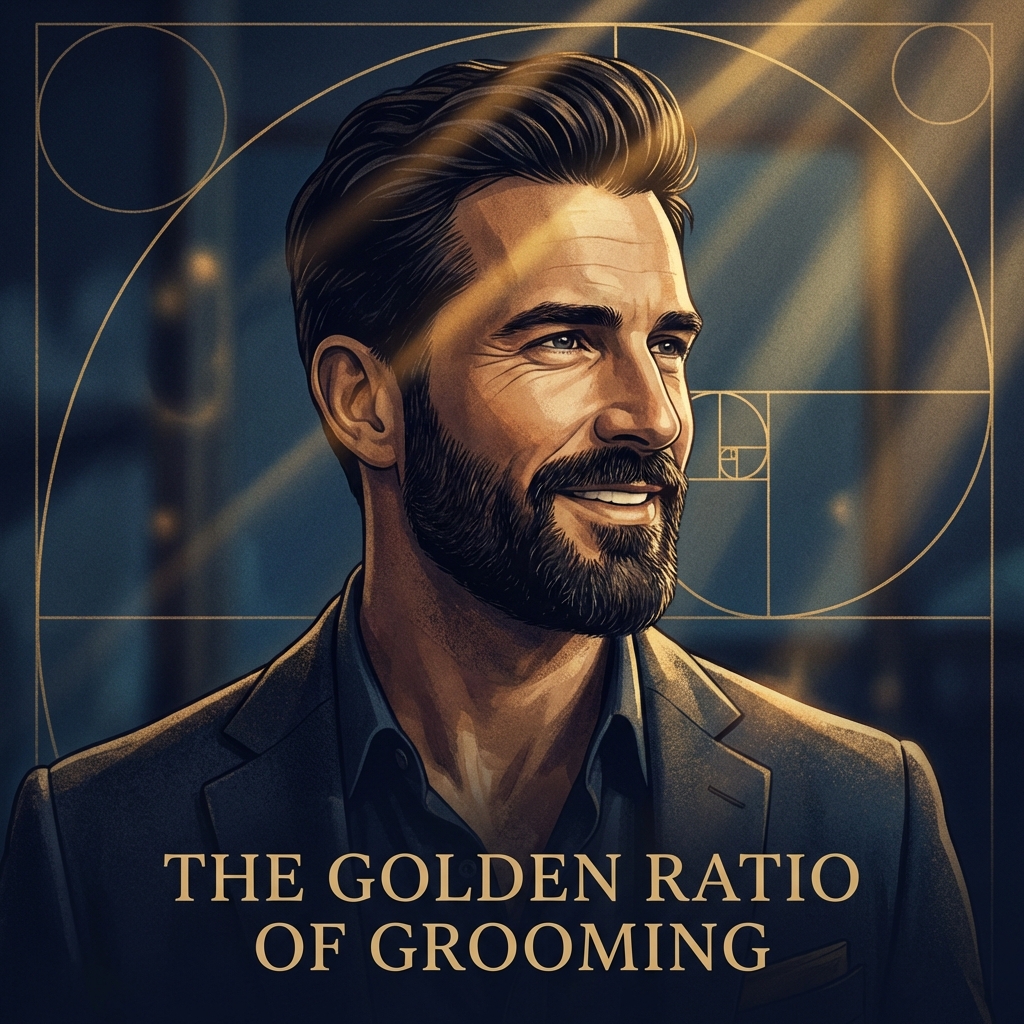
Hair Transplant for Male Hairline Perfection: The Masculine Proportion Blueprint
Introduction: The Hairline Is a Portrait Decision, Not a Technical Exercise
A man’s hairline is the most visible aesthetic element of his entire face. It frames every expression, anchors every photograph, and shapes every first impression before a single word is spoken. This is not hyperbole—it is anatomical reality. The hairline establishes the visual boundary of the face, and when that boundary erodes, the entire composition shifts.
The scale of this concern is substantial. Male pattern baldness affects approximately 65% of men by age 35 and 85% by age 50, making hairline restoration one of the most consequential aesthetic decisions a man can make. According to the ISHRS 2025 Practice Census, 90% of men who pursue hair transplantation do so to feel more attractive—a statistic that validates the profound emotional and social weight this decision carries.
Yet the distinction between an exceptional hairline restoration and a merely adequate one lies not in the number of grafts placed, but in a concept this guide calls calibrated imperfection. The finest masculine hairlines are not perfectly symmetrical. They are intentionally, artistically natural—designed to mirror the beautiful irregularity that nature itself produces.
This guide translates peer-reviewed proportion science into accessible language, exposes the long-term consequences of poor hairline design, and defines what truly exceptional masculine hairline work looks like. The standard is exemplified by practices like Hair Doctor NYC, where a surgeon-led, artistically driven philosophy transforms hair restoration from a technical exercise into a portrait decision.
What Makes a Masculine Hairline: Anatomy, Geometry, and the Architecture of Attraction
A natural masculine hairline is not a single line—it is an architectural system composed of distinct anatomical landmarks. Understanding these components is essential for any man evaluating his restoration options.
The midfrontal point (MFP) is the central apex of the hairline, typically positioned approximately 7–8 centimeters above the midglabella (the midpoint between the eyebrows). This measurement is not arbitrary; it is derived from facial skeletal structure and varies based on individual proportions.
The frontotemporal points (FTPs) and temporal peaks define the lateral boundaries where the hairline meets the temples. In men, these areas exhibit gentle recession, creating the characteristic M-shaped profile that distinguishes masculine from feminine hairlines. This recession is not a defect to be eliminated—it is a defining feature of male facial architecture.
The contrast with feminine hairlines is instructive. Female hairlines are typically rounder, lower, and form a more continuous arc across the forehead. Eliminating temporal recession entirely in a male patient produces a feminized or juvenile appearance that becomes increasingly incongruous with age.
Critically, the hairline is not a line at all. It is a transition zone—a gradual progression from bare scalp to full density achieved through deliberate graft placement strategy. The ISHRS Hair Transplant Forum International has published standardized anatomical landmarks and printable design templates that elite surgeons use to approach hairline creation with precision-mapped methodology.
The Rule of Thirds: Da Vinci’s Blueprint Applied to Modern Hair Restoration
Leonardo da Vinci’s facial proportion studies established a principle that remains foundational in aesthetic medicine five centuries later: the face is ideally divided into three equal vertical zones. The distance from hairline to brow should equal the distance from brow to nose base, which should equal the distance from nose base to chin.
Surgeons use this Rule of Thirds framework to determine the correct hairline height for each individual patient. This is not a universal measurement but a proportional calculation unique to each face. A man with a longer lower third may require a different hairline position than a man with a shorter mid-face—even if their foreheads appear similar in isolation.
The Rule of Thirds is a starting point, not a rigid formula. Bone structure, forehead height, facial width, and age trajectory all modify the final placement decision. Violating this principle produces predictable consequences: a hairline placed too low compresses the upper third, creating an unbalanced, unnatural appearance that becomes more pronounced with each passing decade.
At Hair Doctor NYC, surgeons integrate classical proportion science with modern facial mapping software and 3D imaging tools. The combination of Renaissance proportion principles with contemporary AI-driven scalp analysis represents the difference between a portrait-quality result and a merely adequate one.
Calibrated Imperfection: Why the Best Hairlines Are Intentionally Asymmetrical
A 2025 peer-reviewed study published in the Journal of Craniofacial Surgery analyzed 125 male subjects and discovered something counterintuitive: natural hairlines exhibit significant rightward asymmetry, averaging 22.2 degrees in hair growth direction. The study’s conclusion challenges conventional thinking—perfectly symmetrical hairline designs may actually look unnatural because nature itself does not produce bilateral symmetry in hair growth patterns.
Calibrated imperfection is the deliberate, artistically controlled incorporation of asymmetry, micro-irregularity, and directional variation into hairline design. This is the element that makes a result look grown rather than placed.
Elite surgeons achieve calibrated imperfection through specific techniques:
- Irregular zig-zag hairline borders rather than straight or uniformly curved lines
- Intentional variation in graft angle and direction across the hairline zone
- Subtle asymmetry in the positioning of the midfrontal point
- Randomized spacing patterns that mimic natural hair distribution
A classic PMC study on revision of unfavorable hair transplant results established that irregularity and asymmetry are critical components of a natural hairline. A perfectly straight hairline, even with small grafts, will look artificial.
Hair Doctor NYC’s artistic philosophy embraces this science. Their surgeons design hairlines that pass the “second glance test”—results that no observer would identify as transplanted because they mirror the beautiful imperfection of nature.
The Single-Hair Front Row: The Detail That Separates Elite Work from Mediocrity
The front row of the hairline demands single-hair follicular units exclusively. These grafts create the soft, feathered, gradual transition from bare scalp to density that characterizes a natural hairline.
Placing 2- or 3-hair grafts at the front hairline is a hallmark of inexperienced or rushed clinics. The result is a dense, pluggy, abrupt hairline that immediately signals a transplant to any observer.
The proper architecture follows a graft density gradient:
- Single-hair grafts at the very front
- 2-hair units in the row behind
- 3- and 4-hair units in the mid-scalp zone
Feathering technique—the intentional scattering and irregular spacing of single-hair grafts at the hairline border—softens the transition zone and eliminates any visible edge. Achieving this level of precision requires both surgical skill and the patience to place hundreds of individual grafts with exact angular control.
This time-intensive process distinguishes surgeon-led clinics from high-volume, technician-driven operations. Hair Doctor NYC’s team, with combined decades of experience and surgical leadership, ensures that every graft in the critical front row receives the precision and artistry this zone demands.
Temple Reconstruction: The Overlooked Cornerstone of Masculine Hairline Perfection
Most men and many clinics focus exclusively on the frontal hairline, overlooking the temples. This is a significant oversight. Temple reconstruction is essential for creating a closed, youthful, masculine facial frame.
Temple recession opens the upper facial frame, creates a widened and exposed appearance at the sides, and is often the first visible sign of hair loss that observers notice. Reconstructing the temporal peaks and frontotemporal angles restores the visual boundary between forehead and scalp, creating the framed, defined look associated with a full head of hair.
The technical demands of temple work are considerable. Hair in this region grows at extremely acute angles—nearly parallel to the scalp—requiring precise graft placement that only experienced surgeons can execute without visible scarring or unnatural growth direction.
Temple reconstruction must be designed in harmony with the frontal hairline. The two elements must form a unified, coherent frame, not two separately designed zones that meet awkwardly. Hair Doctor NYC’s surgeons, trained in facial plastic surgery and three-dimensional facial aesthetics, are uniquely equipped to design and execute temple reconstruction that integrates seamlessly with the overall hairline composition.
The Age-60 Test: Designing a Hairline That Honors the Future
Before finalizing any hairline design, an ethical surgeon asks a critical question: will this hairline still look natural, appropriate, and proportional when the patient is 60 years old?
The isolated island problem illustrates why this matters. When a hairline is placed too low or too aggressively in a man’s 20s or 30s, native hair behind the transplanted front continues to recede. Eventually, a fixed band of transplanted hair sits surrounded by bald scalp—an obviously artificial island that announces its surgical origin to every observer.
The ISHRS 2025 Census found that 95% of first-time hair restoration surgery patients in 2024 were between ages 20–35, making long-term planning more urgent than ever.
The donor area is a finite, irreplaceable resource. Most patients have a maximum of approximately 6,000 harvestable grafts—a resource that must be allocated strategically across a lifetime of potential hair loss progression, not spent entirely on an aggressive frontal hairline in one’s 30s. Approximately 42.7% of patients require more than one session, and the average number of procedures per patient is 1.5.
Hair Doctor NYC’s surgeons conduct long-term hairline trajectory planning as a standard part of the consultation process, using Norwood scale progression modeling to anticipate future loss and design a hairline that will remain coherent and natural across decades. For men considering their options, a hair loss treatment decision framework can help clarify which approach best aligns with their stage of loss and long-term goals.
Face Shape and the Masculine Proportion Blueprint: Designing for Specific Geometry
There is no universal “perfect” hairline. The ideal design is always a function of the individual patient’s facial geometry, bone structure, and proportional relationships.
Face-shape-specific hairline design guidance:
- Oval face: The most versatile canvas. A slightly M-shaped hairline with moderate temporal recession and a defined MFP maintains natural balance without over-squaring or over-rounding.
- Square face: A hairline with slightly softened corners and a less pronounced M-shape helps balance a strong jawline. Aggressive temporal recession amplifies the rectangular appearance and should be avoided.
- Round face: A more defined MFP and slightly more pronounced temporal recession adds vertical length and angular definition, creating the illusion of a more oval face shape.
- Heart/inverted triangle face: A wider, flatter hairline with minimal MFP definition and fuller temporal coverage helps balance a narrower chin and wider forehead.
Hair Doctor NYC’s surgeons use facial mapping software and 3D imaging to analyze each patient’s unique bone structure and facial proportions before designing a hairline. Face-shape analysis is only one input; hairline design also accounts for skin tone, hair texture, hair color, natural growth direction, and the patient’s personal aesthetic preferences. Surgeons also consider ethnic considerations in hair transplant design to ensure results are harmonious with each patient’s natural characteristics.
The Technology Behind Precision: AI Mapping, 3D Simulation, and the Modern Design Standard
AI-driven facial mapping software analyzes facial geometry, identifies proportional relationships, and generates data-informed hairline placement recommendations based on each patient’s unique bone structure.
AI-powered hair transplant simulators use deep learning models trained on thousands of real before-and-after images to generate photorealistic previews of hairline outcomes in under 60 seconds. These tools reduce patient anxiety and improve consultation quality by allowing visualization of results before committing to surgery.
3D imaging tools enable surgeons to evaluate hairline design from multiple angles and lighting conditions, catching potential asymmetries or proportion errors invisible in standard 2D consultation sketches. Scalp analysis technology assesses donor area density, hair caliber, and growth angle mapping—providing surgeons with a precise inventory of available grafts and their optimal placement zones.
Technology is a tool, not a replacement for surgical artistry. The AI-generated design is a starting point that the surgeon refines based on clinical judgment, aesthetic experience, and nuanced understanding of how hair grows and ages. Hair Doctor NYC’s integration of these technologies within a surgeon-led consultation model represents the optimal combination: data-driven precision enhanced by decades of artistic and clinical expertise. Learn more about how NYC hair restoration technology and AI diagnostics are reshaping the standard of care.
The Psychosocial ROI: What the Research Says About the Real Value of Hairline Restoration
Clinical evidence validates the emotional and social motivations behind hairline restoration. A PubMed study found statistically significant improvement in self-esteem (Rosenberg Self-Esteem Scale rising by 5.35 points, p < 0.001) and quality of life (Dermatology Life Quality Index) in male androgenetic alopecia patients following hair transplant surgery.
Research published in JAMA Facial Plastic Surgery confirms that men with thinning hair are rated lower in physical attractiveness, likeability, and perceived career success by observers—and that men who received a transplant were judged more favorably across all these domains.
The ISHRS 2025 Census found that 63% of patients sought hair restoration to appear younger and more competitive in the workplace, and 71.7% hoped to achieve greater success in career and dating.
The investment in hairline restoration is not vanity. It is an evidence-backed decision with measurable returns in confidence, social perception, and quality of life.
Why Surgeon Selection Is the Most Important Decision
Repair cases rose to 6.9% of all hair transplants in 2024, up from 5.4% in 2021. Ten percent of repair cases were due to black market transplants—a growing epidemic of botched procedures.
Hairline repair procedures are among the most technically difficult and costly in all of hair restoration. Many design errors—hairlines placed too low, grafts placed at wrong angles, unnatural density patterns—are permanent or extremely difficult to correct.
The markers of a surgeon-led clinic versus a technician-driven, high-volume operation are clear. In elite clinics, the surgeon designs the hairline, makes every incision, and supervises or performs graft placement—not a team of unlicensed technicians working on multiple patients simultaneously.
Graft survival rates at top clinics average 95–98%. This level of consistency requires not just technique but the full chain of excellence: design, incision, extraction, storage, and placement. Understanding hair surgical transplant safety protocols is an important part of evaluating any clinic’s standards.
Hair Doctor NYC’s credentials establish the standard against which surgeon selection should be measured: Dr. Roy B. Stoller’s 25+ years of experience and 6,000+ successful procedures, Dr. Pawlinga’s 18 years of exclusive dedication to hair transplantation, and the team’s double board certifications in facial plastic surgery—a combination of artistic, surgical, and anatomical expertise that is exceptionally rare.
The Hair Doctor NYC Difference: Where Surgical Excellence Meets Artistic Mastery
Hair Doctor NYC is a destination for men who refuse to compromise on the quality of their results—a practice where “Excellence Meets Elegance” is a lived standard.
Every patient’s hairline design is conceived, refined, and executed under the direct supervision of a board-certified facial plastic surgeon with deep specialization in hair restoration. The team’s unique combination of facial plastic surgery expertise and hair restoration specialization means a thorough understanding of facial harmony, three-dimensional aesthetics, and the long-term aging trajectory of the face.
The Madison Avenue, Midtown Manhattan setting matches the expectations of discerning patients: state-of-the-art facilities, a discreet and personalized patient experience, and attention to detail that high-achieving men expect in every aspect of their lives.
The practice offers comprehensive options: FUE for patients prioritizing minimal scarring and quick recovery, FUT for patients requiring maximum graft yield, and Scalp Micropigmentation for non-surgical density enhancement—all available under one roof with treatment planning tailored to each patient’s unique anatomy, hair loss stage, and long-term goals.
Conclusion: The Masculine Proportion Blueprint — A Standard Worth Holding
Masculine hairline perfection is not achieved through technique alone. It is the product of proportion science, surgical artistry, long-term planning, and the intentional incorporation of natural asymmetry.
Calibrated imperfection is the defining characteristic of elite work. The hairlines that look most natural are those designed with the understanding that nature is beautifully, intentionally imperfect.
The hairline is the anchor of facial symmetry, the frame of every expression, and a design decision that will be visible for the rest of a man’s life. It deserves the highest standard of care.
Today, the tools, techniques, and scientific understanding available to elite surgeons make truly undetectable, portrait-quality masculine hairline restoration achievable—but only in the hands of a surgeon who combines clinical mastery with genuine artistic vision.
Ready to Design a Hairline with the Precision It Deserves?
Men who hold themselves to the highest standards in every domain of life deserve the same caliber of care in their hairline restoration. A private consultation at Hair Doctor NYC begins the process of designing a hairline built on proportion science, surgical artistry, and long-term planning.
This consultation is a comprehensive facial analysis, hairline design session, and strategic planning conversation with a surgeon who has performed over 6,000 successful procedures.
Consultations are private, personalized, and conducted in the practice’s state-of-the-art Madison Avenue clinic—an environment designed for men who expect excellence from their medical care as from every other aspect of their professional and personal lives.
Visit hairdoctornyc.com to schedule a consultation. Early, strategic intervention preserves the most options and produces the most natural long-term results.