

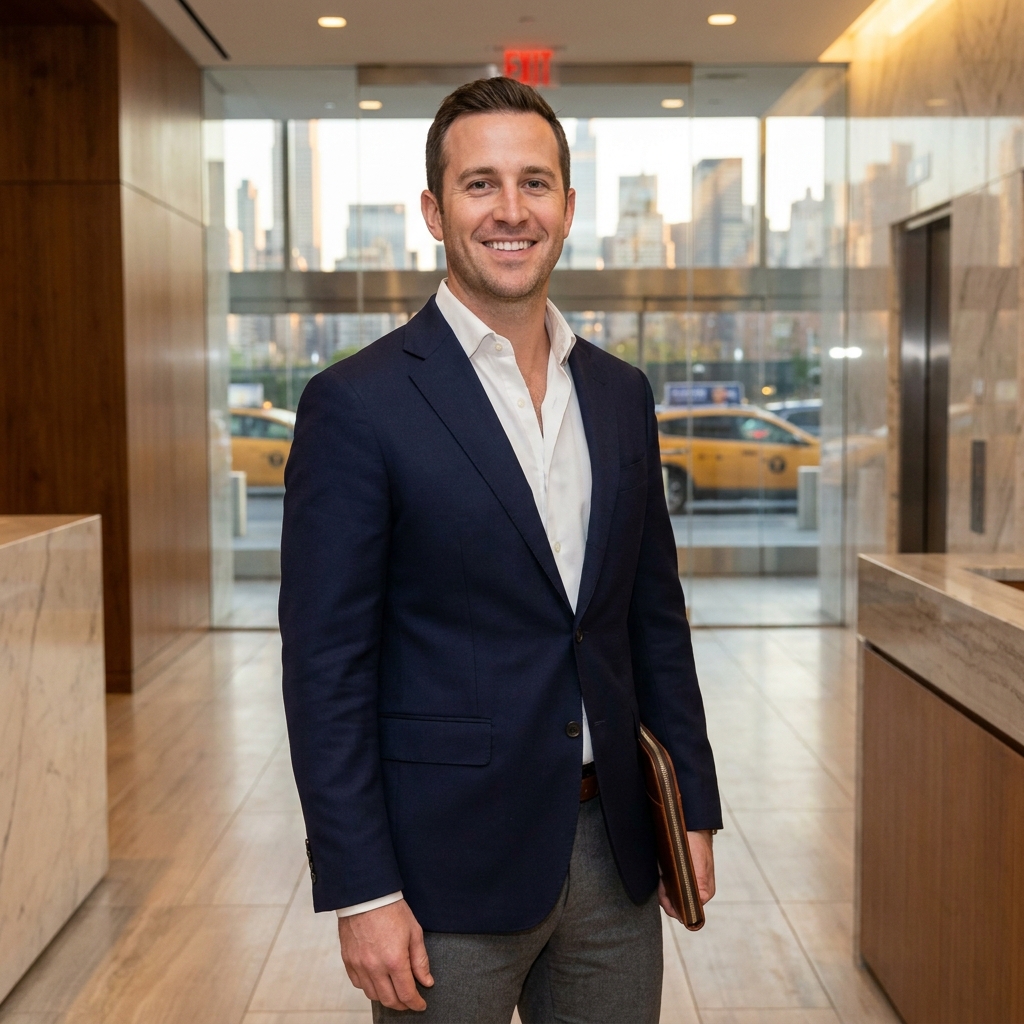
Hair Transplant New York City: Get Started in 5 Decisive Steps
Introduction: You’ve Made the Decision. Now Here’s How to Move.
The decision is already made. For most men who reach this point, the deliberation is behind them. What remains is execution: a clear, deliberate path from intent to a booked, well-prepared consultation. This guide exists for that moment.
Androgenetic alopecia affects roughly 50 million men in the United States, making it the most prevalent form of hair loss in the country, according to Dermatology Times. In a city of more than eight million people, the desire to act on it is both rational and increasingly common among men aged 25 to 54. The notable shift, per the ISHRS 2025 Practice Census, is that 95% of first-time surgical patients now initiate treatment between ages 20 and 35. Acting with intention at this stage is not premature. It is strategic.
This article is not a technique explainer or a comparison of methods. It is a sequential, five-step operational framework that takes a man from decision to a prepared, productive consultation. Throughout, it references Hair Doctor NYC (operating as Stoller Medical Group) on Madison Avenue in Midtown Manhattan, a credentialed, discreet practice that serves precisely this kind of patient.
The five steps ahead: confirm candidacy, vet the surgeon, choose and book a consultation format, prepare for that consultation, and prepare for surgery day. Each builds on the last.
Step 1: Confirm Your Candidacy Before You Book Anything
Not every stage of hair loss is immediately surgical. Understanding where one stands saves time and sets realistic expectations from the outset.
The conditions most commonly treated surgically in New York include androgenetic alopecia (male pattern baldness), receding hairlines, crown and vertex thinning, traction alopecia, and select cases of scarring alopecia. The consultation itself remains the definitive candidacy assessment, but a thoughtful self-evaluation beforehand allows a patient to arrive informed rather than uncertain.
Context helps here. First-time procedures required an average of 2,347 grafts, and most patients need between 2,000 and 4,000 grafts for meaningful restoration, per ISHRS data. This is not a barrier; it is simply the scale of what the procedure typically involves.
There is also a question worth asking honestly: what if the answer is “not yet”? Active or rapidly progressing hair loss, insufficient donor density, or age may point toward medications, PRP, or a re-evaluation timeline rather than immediate surgery. A qualified consultation clarifies this rather than pushing forward regardless.
Modern tools make pre-consultation self-assessment more precise than ever. AI-powered scalp analysis can now detect early-stage hair loss with over 90% accuracy from smartphone photos, giving candidates a more informed starting point. From there, Hair Doctor NYC’s team, which includes a specialist with 18 years dedicated exclusively to hair transplantation, is equipped to assess even complex or advanced cases with the depth they require.
Step 2: Vet Your Surgeon. This Is the Most Important Decision You’ll Make.
Surgeon vetting is not an afterthought. It is the single most consequential action in this entire process, and it must come before any commitment.
The data underscores why. The ISHRS 2025 Practice Census reports that 59% of member surgeons identified black-market hair transplant clinics operating in their cities, up from 51% in 2021. The downstream consequence is measurable: repair cases now represent between 6.9% and 10% of all procedures performed, a direct result of patients choosing unqualified providers. A poorly executed transplant is not merely a wasted investment; it is a problem that often requires corrective surgery.
The following checklist, drawn from guidance issued by the American Society of Plastic Surgeons and the ISHRS, is the foundation of responsible vetting.
What to Look for in a Qualified NYC Hair Transplant Surgeon
- Board certification. Look specifically for double board-certified facial plastic surgeons. Hair Doctor NYC’s team includes multiple physicians who hold this credential.
- Procedure volume. Ask how many hair transplant procedures the surgeon has personally performed. Dr. Roy B. Stoller, the practice’s lead physician, has completed over 6,000 successful procedures across more than 25 years in facial plastic surgery.
- Specialization depth. A surgeon whose career has been exclusively dedicated to hair transplantation, as is the case with Dr. Christopher Pawlinga’s 18-year focus, offers a different caliber of mastery than a generalist who performs the procedure occasionally.
- Professional membership. ISHRS or IAHRS membership serves as a baseline credentialing signal worth confirming.
- Who performs each step. In a physician-led practice, the surgeon is present and active throughout, not delegating critical steps to technicians.
- Before-and-after portfolios. Request cases similar to one’s own hair loss pattern and ethnicity.
One distinction the ISHRS flags explicitly deserves emphasis: a physician-led consultation versus a sales coordinator-led consultation. The first conversation should be with a credentialed medical professional, not a salesperson working from a commission structure. This is a safety signal, not a courtesy.
Hair Doctor NYC’s Madison Avenue team represents the physician-led standard: Dr. Stoller (globally recognized, with 25-plus years of experience), Dr. Louis Mariotti (double board-certified, focused on surgical detail and facial harmony), Dr. Pawlinga (18 years exclusively in hair restoration), and Michael Ferranti, P.A. (25-plus years in aesthetic dermatology, specializing in non-surgical options).
Questions to Ask During Your Surgeon Vetting Process
A qualified surgeon welcomes the following questions. An unqualified one deflects them.
- Are you board-certified, and in what specialty?
- How many hair transplant procedures have you personally performed?
- Who will be performing each step of my procedure on surgery day?
- Can I see before-and-after photos of patients with a hair loss pattern similar to mine?
- What technique do you recommend for my specific case, and why?
- What is your repair case rate, and how do you handle complications?
These questions are not adversarial. They are the mark of a patient who takes the decision as seriously as it deserves.
Step 3: Choose Between a Virtual or In-Person Consultation, and Book It
The format of the first consultation is a real decision, not a formality. According to the ISHRS 2025 Practice Census, 72% of prospective hair transplant patients now request an online consultation before committing to any provider. By 2026, an estimated 25% to 30% of all U.S. medical visits will be conducted via telemedicine. Virtual consultation is now standard clinical practice, not a compromise.
Each format serves a purpose. Understanding which fits a given situation determines how efficiently a patient moves forward.
Virtual Consultation: The Ideal First-Touch for Busy, Private Men
A virtual consultation is best suited for initial candidacy assessment, a technique overview, graft estimation, and establishing rapport with the medical team, all without leaving the office or home.
To prepare, a patient should gather high-resolution photos of the hairline, crown, and donor area from multiple angles, along with images from a time when hair was fuller and a list of current medications and supplements.
The discretion advantage is significant. For a high-net-worth professional, a virtual consultation allows complete privacy before committing to an in-person visit. Hair Doctor NYC accommodates both formats, and the virtual option functions as a genuine clinical entry point rather than a sales call. It is also valuable for out-of-state patients planning to travel to New York specifically for the procedure.
In-Person Consultation: The Definitive Clinical Assessment
The in-person consultation is where final candidacy is confirmed. It allows a hands-on scalp and donor density examination, densitometry measurements, and personalized surgical planning that no photograph can fully replicate.
A typical New York consultation lasts between 30 and 90 minutes and covers a medical history review, scalp examination, donor density assessment, graft count estimation, technique recommendation, and a personalized treatment plan. Hair Doctor NYC’s Madison Avenue clinic provides a state-of-the-art, discreet environment in which the physical setting reflects the premium standard of care delivered inside.
For many patients, the in-person visit is the natural second step after a virtual introduction. For those who prefer directness, it can be the first step. A practical note: arriving 15 minutes early allows time to complete medical history paperwork. The consultation is a collaborative conversation, not an interrogation.
Step 4: Prepare for Your Consultation Like a Professional
Preparation is a competitive advantage. Patients who arrive prepared extract more value from the consultation and make sharper decisions. This step closes a gap most clinics ignore: they provide a booking button but leave the patient underprepared for what follows.
What to Bring to Your Hair Transplant Consultation
- Photos from when hair was fuller, ideally from multiple angles and time periods, to help the surgeon understand progression and the natural hairline.
- A complete medication list, including blood thinners (aspirin, ibuprofen), supplements (vitamin E, fish oil), and any hair loss treatments (Minoxidil, finasteride).
- Family hair loss history: pattern, age of onset, and degree of loss in first-degree relatives.
- Records of prior treatments, including PRP, medications, or previous surgical procedures.
- Written questions, drawn from the vetting list in Step 2 plus any personal concerns.
Note that some New York clinics require pre-operative blood tests, including Hepatitis B/C, HIV, CBC, and a Chem Screen, before scheduling surgery. It is worth asking about this requirement during the consultation.
What Happens During the Consultation: A Step-by-Step Walkthrough
- Medical history review. The physician examines health background, medications, and the hair loss timeline.
- Scalp examination. A hands-on assessment of the loss pattern, scalp laxity, and overall scalp health.
- Donor density assessment. Evaluation of the donor area, typically the back and sides of the scalp, to determine graft availability.
- Graft count estimation. Based on the degree of loss and desired coverage, the surgeon estimates grafts required. Most first-time patients need 2,000 to 4,000.
- Technique recommendation. The surgeon recommends FUE, FUT, or a combination based on anatomy, loss pattern, and lifestyle. FUE suits those who prefer short hairstyles; FUT delivers maximum graft yield.
- Personalized treatment plan. A written plan outlining the approach, expected outcomes, and timeline.
- Q&A. The opportunity to ask every question on the list. A physician-led consultation welcomes this.
Step 5: Prepare for Surgery Day Before You Even Schedule It
Preparing for surgery before it is booked is the mark of a serious patient and a signal to the surgical team of genuine commitment. Pre-surgery preparation begins weeks before the procedure, not the night before.
The procedure itself lasts 4 to 8 hours depending on graft count, is performed under local anesthesia, and patients go home the same day. Planning the logistics in advance removes day-of stress entirely.
Pre-Surgery Preparation Checklist
- Stop blood thinners (aspirin, ibuprofen), vitamin E, and fish oil at least one to two weeks before surgery. Confirm the exact timeline with the surgeon.
- Stop Minoxidil seven days before surgery if currently in use.
- Avoid alcohol for at least three days prior.
- Quit smoking at least two weeks before. Nicotine impairs graft survival and healing.
- Schedule pre-operative blood tests well in advance if the clinic requires them, so results are available before the surgery date.
- Plan time off work. Most patients return to normal activity within days, but a few days of downtime is advisable. Discuss the specific timeline with the surgeon.
- Arrange recovery supplies in advance: saline spray, a neck pillow to protect grafts during sleep, and button-up shirts. Pullovers should be avoided, as they can disturb the recipient area.
- Arrange transportation. Driving after sedation is not permitted.
- On surgery day, wear a button-up or zip-up shirt, arrive with a clean scalp, and eat a light breakfast.
What to Expect After Surgery: A Realistic Timeline
Accurate expectations prevent post-procedure anxiety. A prepared patient is a confident one.
- Immediate post-op: mild swelling, redness, and scabbing in the recipient area are normal and resolve within 7 to 14 days.
- Shedding phase (weeks 2 to 8): transplanted hairs shed. This is expected and does not indicate failure. The follicle remains intact beneath the scalp.
- Visible regrowth: typically begins at 3 to 4 months.
- Full, mature results: develop over 9 to 12 months.
Hair Doctor NYC provides post-operative guidance and follow-up care. The relationship does not end on surgery day. The practice offers both FUE (no linear scarring, quick recovery, ideal for short hairstyles) and FUT (maximum graft yield, dense coverage). The right technique is determined collaboratively during the consultation, never imposed.
Why Madison Avenue Is the Right Address for This Decision
New York City ranks among the top cities globally for hair transplants, owing to its concentration of credentialed surgeons, access to advanced techniques, and the standard of care available at elite practices. The talent density alone makes it a premium destination.
Hair Doctor NYC’s team represents a rare combination of depth. Dr. Stoller brings more than 25 years of facial plastic surgery experience and over 6,000 procedures. Dr. Mariotti contributes precision in surgical detail and facial harmony. Dr. Pawlinga offers 18 years of exclusive dedication to hair transplantation. Michael Ferranti adds more than 25 years in aesthetic dermatology for non-surgical solutions. Few practices field this many credentialed specialists under one roof.
The Madison Avenue location reflects a commitment to a premium, discreet patient experience in a setting that matches the standard of care delivered inside.
On the matter of medical tourism, the calculation is straightforward. Choosing a globally recognized, locally accountable team in New York means continuity of care, accessible follow-up, and no logistical risk. For a procedure whose results unfold over 9 to 12 months, proximity and accountability are not luxuries; they are practical necessities.
Conclusion: Five Steps, One Decision
The framework is now complete: confirm candidacy, vet the surgeon, choose and book a consultation format, prepare for the consultation, and prepare for surgery day. Five steps, each deliberate.
The hardest part of this process was the decision already made. Everything from here is operational. With 95% of first-time surgical patients initiating treatment between ages 20 and 35, per the ISHRS, acting with intention at this stage is not premature. It is the strategic choice.
Hair Doctor NYC’s Madison Avenue team is built for exactly this patient: a man who values discretion, credentials, and results, and who deserves a partner that treats the decision with the seriousness it warrants. Visible regrowth begins at 3 to 4 months. Full results arrive at 9 to 12 months.
Book Your Consultation with Hair Doctor NYC
Hair Doctor NYC offers both consultation formats: virtual, for complete privacy and convenience, and in-person at the Madison Avenue clinic, for the full clinical assessment.
The first conversation is with a credentialed medical professional, not a sales coordinator. The consultation is a conversation, not a commitment. It is the opening step in a collaborative process designed entirely around individual goals.
What to do right now:
- Gather photos, including images from when hair was fuller.
- Write down current medications and supplements.
- Visit hairdoctornyc.com to book a consultation today.