

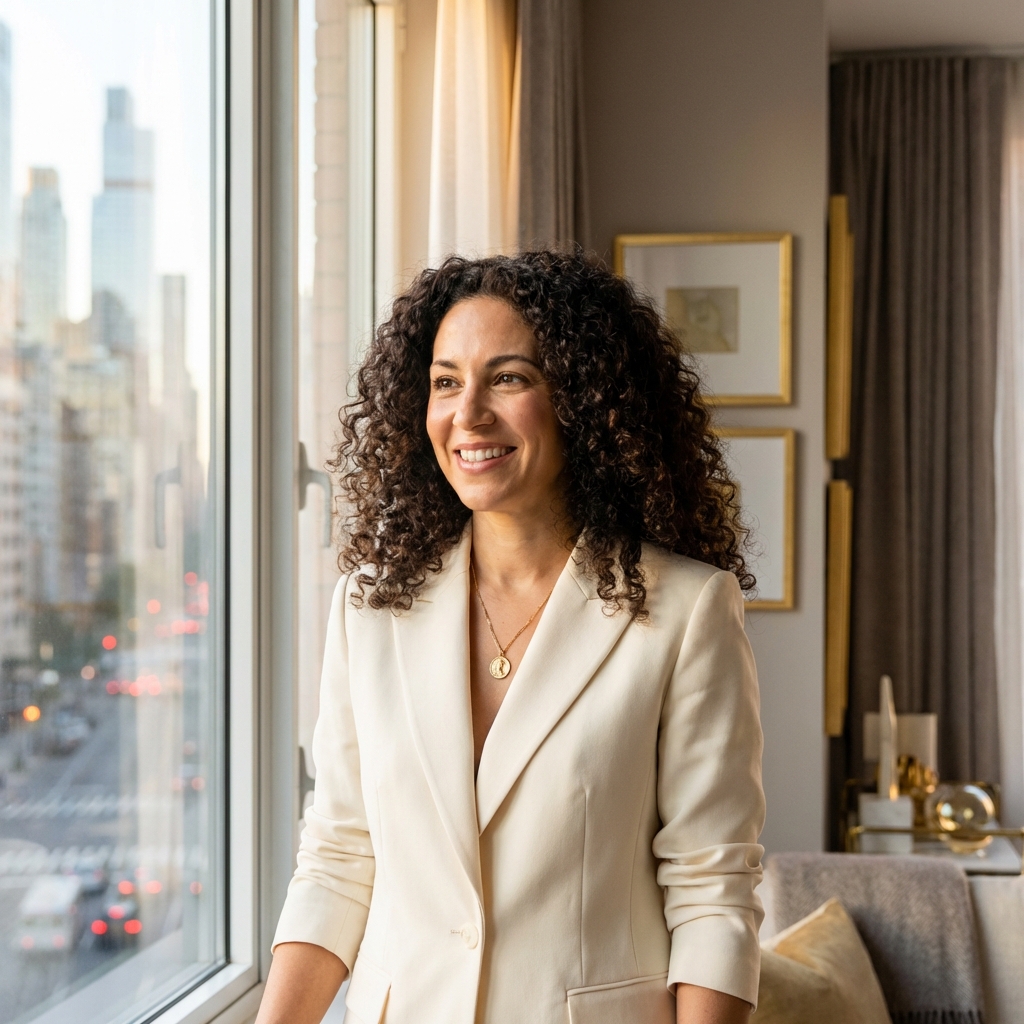
NYC Hair Restoration for Women: The Life-Stage Treatment Map
Up to 50% of women experience hair loss by age 50, yet only 12% pursue treatment—a gap driven by misdiagnosis, stigma, and a striking lack of female-specific clinical guidance. The cultural myth that hair loss is primarily a male concern has been definitively challenged: a 2025 Hers study of 7,100 respondents found that 23% of women report hair thinning compared to just 18% of men.
Female hair loss is not a single condition. It is a life-stage journey shaped by hormonal shifts, genetic predisposition, and—for women living and working in New York City—a uniquely demanding urban environment that compounds every biological trigger. Understanding this reality requires a framework that addresses the distinct phases of a woman’s hormonal life: postpartum, early-onset in the 20s and 30s, perimenopause, and postmenopause.
Hair Doctor NYC (Stoller Medical Group), located on Madison Avenue in Midtown Manhattan, has established itself as an authoritative resource for women navigating this journey. With over 25 years of specialized experience and a full spectrum of surgical and non-surgical solutions, the practice offers medically rigorous, life-stage-specific care for women seeking expert treatment.
Why Female Hair Loss Is Different—And Why It Demands a Different Approach
Female pattern hair loss (FPHL) presents fundamentally differently than male pattern baldness. Women typically experience diffuse thinning over the crown and vertex in what clinicians describe as a “Christmas Tree pattern,” with the frontal hairline largely preserved. This subtler presentation contributes to an average 2.5-year delay in diagnosis—a critical window during which treatment efficacy diminishes.
The treatment disparity is equally stark. Only topical minoxidil is FDA-approved specifically for women’s hair loss, compared to three approved medications for men. NIH funding for female hair loss research remains three times less than for male-focused studies, leaving women with fewer evidence-based options and less clinical attention.
Perhaps the most consequential clinical distinction is Diffuse Unpatterned Alopecia (DUPA). Over 50% of women have DUPA, where hair thins uniformly across the scalp—including the donor area at the back and sides. This makes traditional hair transplants unsuitable for the majority of female patients, as transplanted grafts would also thin over time. For these women, non-surgical pathways are not a fallback; they represent the primary and often superior treatment strategy. Learn more about hair transplant for diffuse thinning and why candidacy assessment is so critical.
The psychological burden compounds the clinical complexity. A 2025 systematic review in the British Journal of Dermatology found that 78% of women with hair loss reported feelings of shame, anxiety, or depression, and over 60% avoided social interactions due to embarrassment. Women with hair loss consistently report higher social anxiety, lower self-esteem, and less life satisfaction than their male counterparts with the same condition.
The NYC Factor: How Urban Living Amplifies Female Hair Loss
New York City presents a unique environment that compounds every hormonal and genetic hair loss trigger women already face. The city’s demanding professional culture creates chronic psychological stress, driving cortisol spikes that push hair follicles prematurely into the telogen (resting) phase.
Research published in Skin Appendage Disorders confirms that alopecia areata incidence is significantly higher in urban, industrialized areas compared to rural regions. The study demonstrated that particulate matter (PM2.5) exposure directly induces apoptosis in hair follicles. NYC’s air pollution—including heavy metals and polycyclic aromatic hydrocarbons—creates an ongoing assault on scalp health that many women never consider.
Additional urban stressors include:
- Hard water mineral buildup that damages the scalp barrier and weakens hair shafts
- Nutritional gaps from fast-paced NYC diets, particularly iron, ferritin, zinc, and biotin deficiencies that trigger telogen effluvium
- Inconsistent sleep patterns common among NYC professionals, disrupting the hormonal regulation that supports healthy hair growth cycles
These compounding factors make NYC women a particularly vulnerable demographic—and underscore why a Manhattan hair restoration clinic with deep familiarity with these environmental stressors is essential for accurate diagnosis and effective treatment.
The Life-Stage Treatment Map: Understanding Hormonal Phase
The life-stage framework serves as the organizing principle for understanding female hair loss. Hormonal context determines both the cause and the optimal treatment pathway. A one-size-fits-all approach fails women because the triggers, severity, diagnostic markers, and treatment responses differ significantly across life stages.
Stage 1: Postpartum Hair Loss (Ages 25–40)
During pregnancy, elevated estrogen prolongs the anagen (growth) phase, producing the fuller hair many women experience. After delivery, estrogen drops sharply, triggering a mass shift of follicles into telogen—resulting in significant shedding typically beginning two to four months postpartum.
This telogen effluvium is generally not permanent. However, for women with underlying FPHL or genetic predisposition, postpartum shedding can unmask or accelerate a chronic condition that requires ongoing management.
NYC-specific amplifiers at this stage include sleep deprivation from newborn care, nutritional depletion from pregnancy and breastfeeding, and the return to a high-stress professional environment. The diagnostic approach involves a comprehensive blood panel (ferritin, thyroid, CBC, vitamin D), trichoscopy to distinguish telogen effluvium from early FPHL, and careful timeline assessment.
Recommended treatment spectrum for postpartum patients:
- Nutritional repletion (iron, biotin, vitamin D)
- Topical minoxidil (with guidance on breastfeeding considerations)
- PRP/PRF therapy to accelerate follicle recovery
- Low-level laser therapy (LLLT)
- Scalp health optimization
Surgical options are rarely appropriate at this stage. The priority is stabilization and recovery, with reassessment at 12–18 months postpartum.
Stage 2: Early-Onset Hair Loss in the 20s and 30s
Primary drivers at this stage include androgenetic alopecia (FPHL) with genetic predisposition, polycystic ovary syndrome (PCOS) causing androgen excess, thyroid dysfunction, and traction alopecia from styling practices common in NYC’s diverse multicultural population.
Early-onset FPHL is frequently misdiagnosed as stress-related shedding, contributing to the 2.5-year average diagnosis delay. Early treatment produces the best long-term outcomes, making accurate diagnosis critical.
The multicultural dimension deserves specific attention. Traction alopecia from tight braids, weaves, and extensions is prevalent among Black women in NYC and requires specific clinical expertise and culturally competent care.
Recommended treatment spectrum:
- Topical minoxidil (FDA-approved)
- Spironolactone (oral anti-androgen for PCOS-related FPHL)
- PRP therapy showing 70–80% improvement rates
- LLLT and medical microneedling
- Emerging options including clascoterone (Breezula) with FDA submission expected in 2026
Women in their 20s and 30s with stable, patterned FPHL and adequate donor density may be candidates for FUE—but DUPA must be ruled out first. The unshaven FUE hair transplant technique available at Hair Doctor NYC addresses a critical consideration for women who cannot or prefer not to shave the donor area.
Stage 3: Perimenopause and the Transition Years (Ages 40–52)
Perimenopause initiates a hormonal cascade: fluctuating and declining estrogen and progesterone levels reduce their protective effect on hair follicles, while androgens become relatively dominant—accelerating FPHL in genetically susceptible women.
The clinical presentation often feels sudden but typically reflects years of subclinical progression. NYC-specific amplifiers at this life stage include peak career stress, sleep disruption from perimenopausal symptoms, and nutritional shifts.
Diagnostic complexity increases during perimenopause. Distinguishing FPHL from thyroid-related hair loss, iron deficiency anemia (common in perimenopausal women with heavy periods), and telogen effluvium triggered by hormonal fluctuation requires sophisticated clinical assessment.
Recommended treatment spectrum:
- Topical and oral minoxidil
- Spironolactone
- PRP/PRF therapy
- LLLT and exosome therapy
- Discussion of hormone therapy (HRT) in coordination with the patient’s gynecologist
Perimenopause represents a critical juncture for surgical candidacy assessment. DUPA evaluation is essential before any surgical recommendation. For appropriate candidates, FUE offers precision targeting of thinning crown and vertex areas.
Stage 4: Postmenopausal Hair Loss (Ages 52+)
After menopause, up to two-thirds of women experience thinning hair or significant hair loss—making this the highest-prevalence stage and a significantly underserved patient population. The sustained loss of estrogen’s follicle-protective effects, combined with the relative increase in androgen activity, results in progressive miniaturization of hair follicles.
Postmenopausal women often present with more advanced hair loss due to years of underdiagnosis and undertreatment. The diagnostic approach includes a full hormonal panel, thyroid function testing, ferritin levels, scalp biopsy when scarring alopecia is suspected, and trichoscopy to assess follicle miniaturization and donor area density.
Recommended treatment spectrum:
- Topical and oral minoxidil
- Spironolactone
- PRP/PRF therapy and LLLT
- Exosome therapy
- Scalp micropigmentation (SMP) for advanced thinning
- Medical microneedling
Scalp micropigmentation emerges as a particularly valuable option for postmenopausal women with diffuse thinning, creating the visual impression of density without surgery. At Hair Doctor NYC, this service is performed by Michael Ferranti, P.A., a licensed SMP specialist with 25+ years in aesthetic dermatology and plastic surgery.
Surgical vs. Non-Surgical Pathways: Determining Candidacy
The foundational reality bears repeating: over 50% of women are not surgical candidates due to DUPA. When the donor area is compromised, transplanted grafts would also thin over time, producing unsatisfactory long-term results.
Hair Doctor NYC’s DUPA assessment process evaluates donor area density, miniaturization patterns, and overall scalp health to determine candidacy with precision. For appropriate candidates, FUE is chosen by 68% of women undergoing transplant surgery, prized for minimal scarring, faster recovery, and precision—critical for women who wear updos or shorter styles.
For the majority of female patients, the non-surgical pathway offers highly effective primary treatment:
- PRP/PRF therapy with 70–80% improvement rates
- Low-level laser therapy (LLLT)
- Topical and oral minoxidil
- Spironolactone for androgen-related hair loss
- Exosome therapy for follicle regeneration
- Medical microneedling
- Scalp micropigmentation for visual density
Combination therapy protocols—layering multiple non-surgical modalities—produce synergistic results superior to any single treatment and represent a hallmark of sophisticated clinical practice.
Emerging Treatments Redefining Female Hair Restoration in 2026
The treatment landscape is evolving rapidly, making consultation with a current, specialized clinic essential.
Clascoterone (Breezula) 5% is a topical androgen receptor inhibitor with FDA submission expected in 2026. Healthline experts describe it as potentially “a useful topical option, particularly for women”—a significant advancement given the current single FDA-approved option.
JAK inhibitors (baricitinib, ritlecitinib) are now FDA-approved for severe alopecia areata, offering a new pharmacological pathway for women with autoimmune-driven hair loss. For a deeper look at how alopecia areata is treated, see our overview of hair transplant for alopecia areata.
Exosome therapy delivers growth factors directly to hair follicles, stimulating regeneration—particularly promising for postmenopausal and perimenopausal patients.
AI-powered scalp diagnostics represent the shift toward precision care. An AI model trained on 47,000 scalp images created personalized treatment plans resulting in a 32.4% decrease in hair shedding after 24 weeks.
The Hair Doctor NYC Approach: What to Expect
The diagnostic process at Hair Doctor NYC includes comprehensive blood work (ferritin, thyroid panel, hormonal profile, CBC), trichoscopy for scalp and follicle assessment, and thorough medical history review including hormonal life stage, styling practices, medications, and nutritional status.
Personalized treatment planning is led by Dr. Roy B. Stoller, a double board-certified facial plastic surgeon with 25+ years of experience and over 6,000 successful hair transplant procedures. The team includes Dr. Christopher Pawlinga, who has spent 18 years exclusively dedicated to hair transplantation, and Michael Ferranti, P.A., the practice’s SMP specialist with 25+ years in aesthetic dermatology and plastic surgery.
This multi-surgeon, multi-specialist team model distinguishes Hair Doctor NYC from single-practitioner clinics. Patients benefit from combined surgical and non-surgical expertise under one roof in a premium Madison Avenue setting designed for privacy and discretion.
Conclusion: Life Stage Is the Starting Point—Not a Limitation
Female hair loss is a life-stage condition shaped by hormonal biology, genetic predisposition, and—for NYC women—a uniquely demanding urban environment. Identifying which stage a woman is in represents the essential first step toward effective treatment.
The American Academy of Dermatology confirms that treatment works best when started at the first sign of hair loss. The 2.5-year average diagnosis delay means many women are losing valuable treatment time.
For women who are not surgical candidates—the majority—this reality opens the door to a sophisticated spectrum of non-surgical treatments that can produce meaningful, lasting results. Hair loss affects identity, confidence, and quality of life in ways that are profound and valid. Seeking expert care is an act of self-advocacy.
Schedule a Personalized Hair Restoration Consultation at Hair Doctor NYC
Women ready to take the first step are invited to schedule a comprehensive consultation at Hair Doctor NYC on Madison Avenue in Midtown Manhattan. The consultation includes a full diagnostic workup, life-stage assessment, DUPA evaluation, and personalized treatment planning with access to the full spectrum of surgical and non-surgical options.
With Dr. Roy B. Stoller’s 25+ years of experience and 6,000+ procedures, Dr. Pawlinga’s 18 years of exclusive hair transplant focus, and Michael Ferranti’s 25+ years in aesthetic dermatology and plastic surgery, Hair Doctor NYC offers the depth of expertise that women seeking specialized care deserve.
Contact Hair Doctor NYC today to schedule a consultation and receive a treatment plan designed for each patient’s life stage, hair loss pattern, and goals. Early consultation remains the single most impactful step a woman can take toward meaningful hair restoration.