

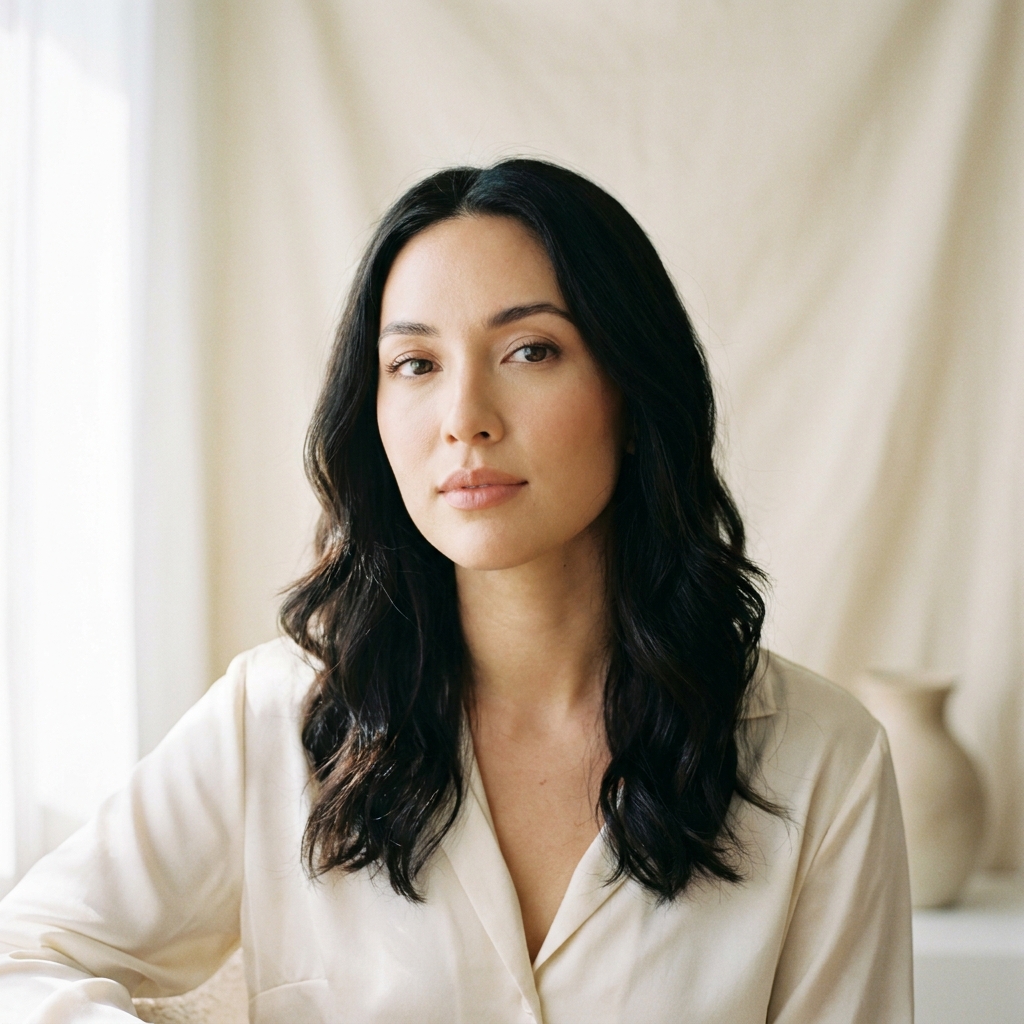
Scalp Micropigmentation for Women: The Female-Specific SMP Guide
Introduction: Female Hair Loss Deserves a Female-Centered Answer
More than 30 million American women experience androgenetic alopecia alone, according to the American Academy of Dermatology. Yet the overwhelming majority of scalp micropigmentation (SMP) content is written for men, filled with images of shaved heads, receding hairlines, and stubble effects. Women researching a solution for themselves are left to mentally translate a narrative that simply does not describe their experience.
The emotional weight of that experience is well documented. A 2025 systematic review published in the British Journal of Dermatology found that 85% of women with hair loss reported negatively affected self-esteem, and more than 60% avoided social interactions out of embarrassment. Hair loss is not a superficial inconvenience for women; it reaches directly into identity, confidence, and daily life.
This guide corrects the imbalance. It is a fully woman-centered examination of scalp micropigmentation, addressing female hair loss patterns, female SMP technique, and female-specific candidacy on their own anatomical and psychological terms. The core distinction that runs throughout is this: female SMP is not about reconstructing a hairline. It is about creating a density illusion through existing hair, a fundamentally different clinical and artistic discipline.
Hair Doctor NYC approaches female hair loss with exactly this clinical specificity, supported by a licensed SMP specialist with more than 25 years in aesthetic dermatology and a team of board-certified surgeons on Madison Avenue in Midtown Manhattan.
Why Female Hair Loss Is Not Male Hair Loss: The Anatomy of the Difference
Female pattern hair loss (FPHL) presents very differently from male pattern baldness. It manifests as diffuse thinning across the crown and a widening of the part line, not a receding hairline and not complete baldness. As Harvard Health explains, androgenetic alopecia in women begins with gradual thinning at the part line and radiates outward from the top of the head. A woman’s hairline rarely recedes, and women rarely become completely bald.
That single anatomical fact renders the male SMP framework largely irrelevant. There is no shaved head to mimic and no hairline to reconstruct.
The condition is also common. DermNet NZ reports that roughly 40% of women show signs of hair loss by age 50, and fewer than 45% reach age 80 with a full head of hair. Clinicians grade FPHL using the Ludwig Scale, which measures diffuse crown thinning across three grades, in contrast to the Norwood Scale used for men.
Nor is this only an older woman’s concern. Research in the Journal of Cosmetic Dermatology (2025) documented a mean onset of androgenetic alopecia in women as early as 29.46 years. Because women retain their hairlines and existing hair, SMP for women must be performed through and beneath that hair, a technical environment that demands significantly more precision than male SMP.
The Full Spectrum of Female Hair Loss: Who SMP Can Help
Female hair loss has many causes, and SMP is relevant to more of them than most women realize. The following overview allows a woman to identify her own situation and understand where SMP fits.
Female Pattern Hair Loss (Androgenetic Alopecia)
The most common cause, FPHL affects up to 50% of women by age 70. It is characterized by diffuse thinning at the crown and a widening part line, which are the primary visual targets for female SMP. By reducing the visible scalp-to-hair contrast that makes thinning apparent, SMP restores the appearance of density without surgery.
Traction Alopecia
Chronic tension from tight hairstyles such as braids, ponytails, and weaves causes traction alopecia, which disproportionately affects women of color. It typically presents along the hairline and temples, creating bare patches adjacent to longer hair. SMP is highly effective for edge restoration and hairline softening in these cases. A September 2025 feature in Ebony Magazine highlighted how SMP artists in New York are transforming hair loss solutions for women of color with hyperrealistic artistry, validating this as a growing and underserved segment.
Postpartum Hair Loss (Telogen Effluvium)
Falling estrogen levels after childbirth trigger telogen effluvium. The American Academy of Dermatology notes that many new mothers experience noticeable shedding within months of delivery. The condition is usually temporary, with most women seeing fullness return by their child’s first birthday. Timing is therefore a critical candidacy point: women in active postpartum shedding should wait for stabilization before proceeding. For those whose hair does not fully recover, or who experience recurrent episodes, SMP offers a non-invasive density solution.
Alopecia Areata
This autoimmune condition causes patchy hair loss that can appear anywhere on the scalp. The Cleveland Clinic explicitly lists alopecia areata among the conditions for which SMP can create the appearance of thicker hair. SMP is most effective for stable patches, and candidacy assessment must account for the condition’s unpredictable, potentially progressive nature.
Scarring Alopecias: Traction Alopecia and Frontal Fibrosing Alopecia (FFA)
A 2026 study in the Journal of Cutaneous and Aesthetic Surgery confirmed that SMP significantly improved patient satisfaction and visual scalp appearance in scarring alopecia. Notably, conditions like traction alopecia and FFA responded better than dense fibrotic conditions. Medically supervised assessment is essential to determine whether the scalp tissue can accept pigment effectively.
Menopausal and Hormonal Thinning
A major and growing demographic almost entirely absent from most SMP content, women experiencing perimenopause and menopause face declining estrogen and progesterone that accelerate hair miniaturization, often producing diffuse thinning similar to FPHL. SMP offers a non-hormonal, non-pharmaceutical complement to other treatments. Modern 2026 pigment technology now offers improved color matching for greying and mixed-color hair, a capability directly relevant to this group. Women navigating this stage of life can learn more about hair restoration for women after menopause and how SMP fits within a broader treatment plan.
Chemotherapy-Induced Alopecia
The Cleveland Clinic recognizes chemotherapy-related hair loss as a primary SMP use case. For women whose hair regrows incompletely after treatment, SMP can restore the appearance of density and reduce the visible scalp contrast that marks the experience. Timing and scalp health assessment following chemotherapy are critical considerations for candidacy.
The Density Illusion: How Female SMP Actually Works
The core visual mechanism of female SMP is reducing the contrast between a pale or visible scalp and darker hair strands, not drawing a new hairline.
The human eye perceives thinning primarily as a contrast problem. When scalp skin shows through hair, the brain registers reduced density. SMP neutralizes this contrast by depositing pigment that visually fills in the scalp between existing strands. The approach is strategic and zone-by-zone: the part line, crown, and temples are typically the highest-priority zones for women with FPHL, each requiring a tailored pigment density and placement strategy.
This differs completely from male SMP, which creates the illusion of a shaved head with a defined hairline on a largely bare scalp. Female SMP is performed in a three-dimensional environment of existing longer hair, requiring pigment to be placed between and beneath living follicles without disturbing them.
Importantly, SMP does not damage existing hair follicles and does not cause additional hair loss, a critical reassurance for women protective of their remaining hair. SMP is most effective when approximately 104.6 hairs per square centimeter remain; completely bald patches adjacent to long hair present a greater technical challenge that requires careful clinical assessment.
The Technical Precision Threshold: Why Female SMP Demands a Higher Skill Level
Female SMP is not a simpler version of male SMP. It is technically more demanding, and the consequences of poor execution are more visible in women because the work must remain undetectable beneath longer hair.
Three technical challenges are unique to female SMP:
- Navigating existing follicles without damaging them.
- Matching pigment to hair color across a potentially mixed or greying palette.
- Calibrating dot size and depth so pigment does not migrate or appear as a flat, tattoo-like stain.
The stakes are documented. A 2025 study by Park et al. in the International Journal of Dermatology examined 120 patients seeking SMP revision for unsatisfactory outcomes. Of these, 76 were women, and 89.2% of all prior recipients had been treated at non-medical cosmetic facilities or beauty salons. This is a patient safety issue, not merely an aesthetic one.
Pigment science matters here. Clinically tested 2026 pigments offer improved color matching across all skin tones and complexions, including greying or mixed-color hair, a capability that separates medical-grade SMP from cosmetic-facility work. Medically supervised SMP, performed by a licensed specialist with a background in aesthetic dermatology, is the standard of care that protects women from the documented revision risk.
Clinical Evidence: What the Research Says About SMP Outcomes for Women
A 2025 study by Liu et al. in the Journal of Cosmetic Dermatology validated a standardized three-session SMP protocol that achieved Visual Density Scores of 8.7/10 immediately post-treatment and 7.7/10 at six-month follow-up, with 85.7% of androgenetic alopecia patients reporting “very satisfied” outcomes.
The 2026 Journal of Cutaneous and Aesthetic Surgery study confirmed significant improvements in patient satisfaction and visual scalp appearance in scarring alopecia, validating SMP for traction alopecia and FFA.
The International Society of Hair Restoration Surgery (ISHRS) describes SMP as “an indispensable part of the comprehensive hair surgeon’s practice,” lending the procedure significant medical legitimacy. The ISHRS 2025 Practice Census documented a 16.5% rise in female hair restoration patients between 2021 and 2024, reflecting surging demand. The 2025 British Journal of Dermatology review found that cosmetic solutions including SMP enhanced confidence and social reintegration for 72% of participants.
The Psychological Reality of Female Hair Loss and Why It Matters for Treatment
Hair loss for women is not a cosmetic inconvenience. It is a psychologically significant experience tied to identity, femininity, and social functioning.
The 2025 British Journal of Dermatology systematic review found that 85% of women with hair loss experienced negatively affected self-esteem, 78% reported shame, anxiety, or depression, and over 60% avoided social interactions. AJMC reported in January 2026 that younger patients and women report greater psychological distress than men. As research in PMC notes, societal norms position hair as central to a woman’s sexuality and gender identity, so any hair loss generates feelings of diminished attractiveness that providers must acknowledge rather than minimize.
Even clinically inconspicuous hair loss correlates with reduced quality of life, and women often rate their loss as more severe than dermatologists do. The 72% confidence and social reintegration improvement documented in the 2025 review is not a secondary benefit; it is a primary clinical outcome. Hair Doctor NYC’s patient-centered approach treats the whole person, not just the scalp.
Candidacy: Is SMP Right for You?
The following self-assessment guide addresses candidacy criteria that are rarely explained for women specifically.
Ideal Candidates for Female SMP
- Women with diffuse thinning (FPHL, Ludwig Scale Grade I–III) who retain existing hair and want to reduce visible scalp contrast.
- Women with stable, non-progressive hair loss, where stabilization ensures predictable, lasting results.
- Women with traction alopecia seeking edge restoration or hairline softening.
- Women with alopecia areata patches stable for a defined period.
- Women post-chemotherapy whose hair has regrown incompletely.
- Women experiencing menopausal thinning who want a non-pharmaceutical complement.
- Women retaining roughly 104.6 hairs per square centimeter in treatment zones for optimal density illusion results.
Important Candidacy Considerations
- Active postpartum telogen effluvium: Women should wait for stabilization, typically by the child’s first birthday, since the condition is usually temporary.
- Progressive conditions: Actively advancing FPHL or scarring alopecias should ideally be stabilized medically before SMP to avoid the treatment appearing to fall behind ongoing loss.
- Scalp health: Conditions affecting skin integrity in the treatment zone require clinical evaluation.
- Realistic expectations: SMP creates a density illusion. It does not regrow hair or stop progression.
- Combination compatibility: SMP is safe to combine with minoxidil, spironolactone, PRP, and low-level laser therapy.
Addressing Common Misconceptions Women Have About SMP
“I’ll have to shave my head.” False. Female SMP is performed through existing longer hair. No shaving is required.
“It will look like a tattoo.” Medical-grade SMP uses specialized pigments, needle gauges, and depth calibration distinct from decorative tattooing. Performed by a qualified specialist, the result is a natural-looking density enhancement, not a flat ink stain.
“It only works for dark hair.” False. 2026 pigment technology offers color matching across all hair tones, including blonde, grey, and mixed-color hair.
“It will damage my remaining hair.” False. SMP does not damage existing follicles and does not cause additional loss.
“SMP is only for men or completely bald people.” Female SMP for density enhancement is a distinct and growing clinical application, validated by peer-reviewed research and endorsed by the ISHRS.
“Any cosmetic studio can do this.” The 2025 Park et al. study found that 89.2% of unsatisfactory outcomes occurred at non-medical cosmetic facilities, with women disproportionately affected. Medical supervision matters.
What to Expect: The Female SMP Treatment Process
The Consultation
A thorough consultation includes scalp assessment, hair loss pattern mapping using the Ludwig Scale, candidacy evaluation, and a discussion of aesthetic goals. At Hair Doctor NYC, the SMP specialist Michael Ferranti, P.A., brings more than 25 years of experience in aesthetic dermatology and plastic surgery, providing clinical depth that goes beyond cosmetic assessment. The consultation establishes realistic expectations, identifies primary treatment zones (part line, crown, and temples), and determines the appropriate pigment palette for the patient’s hair color and skin tone.
The Treatment Sessions
Female SMP typically requires two to three sessions spaced several weeks apart, allowing the scalp to heal and pigment to settle between appointments. Each session lasts approximately one to four hours depending on the treatment area. Sessions are progressive: the first establishes the foundational pigment layer, while subsequent sessions refine density, adjust tone, and address areas needing additional coverage. Most clients return to normal daily activities within a day of each session.
Aftercare and Healing
The scalp requires gentle care in the days following each session, with patients avoiding excessive moisture, sun exposure, and abrasive products. Some initial redness or sensitivity is normal and resolves quickly. Pigment appears slightly darker immediately post-treatment and softens to the intended tone as healing progresses, a transition patients should anticipate.
Results Longevity and Maintenance
Female SMP results typically last four to six years before a touch-up is recommended. Longevity is influenced by skin type, sun exposure, and pigment quality. The medical-grade pigments used at Hair Doctor NYC are formulated for durability and natural fading. Touch-ups are straightforward and can be adjusted to accommodate changes in hair color, including greying, or shifts in the hair loss pattern over time.
SMP in the Context of a Comprehensive Female Hair Restoration Plan
SMP is best understood not as a standalone fix but as one component of a comprehensive, personalized strategy. It is safe to combine with FDA-approved topical treatments (minoxidil), hormonal therapies (spironolactone for androgenetic alopecia), PRP injections, and low-level laser therapy, each targeting hair loss through different mechanisms.
For women who are also candidates for surgical restoration (FUE or FUT), SMP can complement transplant results by enhancing density where grafts alone cannot achieve full coverage. Hair Doctor NYC’s comprehensive model, offering FUE, FUT, and SMP under one roof with a team that includes double board-certified facial plastic surgeons and a dedicated SMP specialist, means women receive an integrated treatment assessment rather than a single-modality recommendation. The right combination depends entirely on the individual’s hair loss pattern, medical history, and aesthetic goals, reinforcing the value of a personalized consultation.
Why Medical Supervision Is Non-Negotiable for Female SMP
The safety argument is grounded in clinical evidence. The 2025 Park et al. study found that 76 of 120 patients seeking SMP revision were women, and 89.2% of all prior recipients had been treated at non-medical cosmetic facilities.
Medically supervised SMP is distinguished by clinical assessment of the underlying hair loss condition, proper candidacy screening, medical-grade pigments and equipment, sterile technique, and the ability to identify and manage complications. At Hair Doctor NYC, the SMP specialist operates within a medical environment that includes board-certified surgeons, providing clinical oversight no standalone cosmetic studio can replicate.
This is not a criticism of the broader industry but an informed patient’s guide to protecting an investment and a scalp. The consequences of poor SMP, including pigment migration, unnatural color, and visible patchiness, are far more difficult to correct than to prevent. The ISHRS’s formal endorsement of SMP as part of the comprehensive hair surgeon’s practice confirms that medical legitimacy is the standard, not the exception.
Conclusion: Female Hair Loss Has a Female-Centered Solution
Female SMP is a distinct clinical discipline defined by the density illusion, performed through existing hair, validated by peer-reviewed outcomes data, and designed for the anatomical and psychological realities of female hair loss.
The emotional stakes are real. The 2025 British Journal of Dermatology research confirms that hair loss profoundly affects women’s self-esteem, social participation, and quality of life, and that cosmetic solutions including SMP meaningfully restore confidence for 72% of participants. The women who can benefit span a wide range: from those with FPHL in their late twenties to menopausal women experiencing hormonal thinning, from women of color managing traction alopecia to women rebuilding after chemotherapy.
The documented, disproportionate impact of poor SMP outcomes on women makes the choice of a medically supervised, qualified provider not a luxury but a clinical necessity. Hair Doctor NYC treats female hair loss on its own terms, with a licensed SMP specialist, a team of board-certified surgeons, and a patient-centered philosophy, offering women a resource the broader SMP industry has largely failed to provide.
Take the First Step Toward Visible Confidence
Women ready to explore scalp micropigmentation are invited to schedule a personalized consultation at Hair Doctor NYC in Midtown Manhattan. The consultation offers a thorough assessment with a specialist who understands female hair loss patterns, candidacy criteria, and the artistic precision required for undetectable, natural-looking results.
Taking the first step can feel significant, and the team at Hair Doctor NYC approaches every consultation with the discretion, expertise, and individualized attention female patients deserve. To begin, contact Hair Doctor NYC or visit hairdoctornyc.com to schedule a consultation.
Backed by a Madison Avenue location, more than 25 years of aesthetic dermatology expertise, over 6,000 successful procedures, and multiple board-certified surgeons, Hair Doctor NYC delivers the clinical depth that a decision this personal warrants.