

Scalp Micropigmentation for Receding Hairline: The Millimeter Standard
Introduction: Why a Receding Hairline Is a Proportion Problem, Not a Coverage Problem
Many men assume that scalp micropigmentation (SMP) for a receding hairline simply means “tattooing in hair” where hair used to be. That framing misses the point. A hairline is not just a patch of scalp to fill. It is a facial boundary, and its position, shape, and softness govern how the entire face reads: the apparent length of the forehead, the balance of the brow, and the perceived age of the person.
The central argument of this article is straightforward. A receding hairline demands more millimeter-level precision than full baldness does. When hair is still partially present, there is no room to blend away, hide, or later correct an error. Every pigment deposit is judged directly against living hair.
For that reason, this article sets aside generic style labels such as “hard,” “natural,” or “round” and looks instead at measurable facial anatomy: the rule of thirds, bitemporal recession patterns, and feathering density. It also addresses a regulatory reality most prospective patients never hear about: SMP has no federal licensing requirement in the United States. Against that backdrop, the clinical credentials of a provider such as Michael Ferranti, P.A., with more than 25 years in aesthetic dermatology and plastic surgery, become directly relevant to the outcome.
The stakes are not merely cosmetic. A 2025 systematic review in the British Journal of Dermatology, covering 26 studies and 1,450 participants, found that self-esteem was negatively affected in 85% of women with hair loss, and that cosmetic solutions including scalp micropigmentation enhanced confidence and social reintegration. The same review found 78% reported shame, anxiety, or depression tied to hair loss. Men confronting a retreating hairline carry a comparable psychological weight, which is exactly why the decision deserves rigor.
Why Receding Hairlines Are the Hardest Case in Scalp Micropigmentation
Hairline-only SMP for recession and full-scalp SMP are related but distinct disciplines. Full-scalp work replaces the visual impression of hair across the entire head. Recession work must integrate with native hair that is still growing, still varying in density, and still subject to change.
The risk is asymmetric. With full-scalp SMP, there is no “real” hairline nearby to contradict the pigment. With recession, every dot sits beside genuine follicles, and any mismatch in tone, spacing, or depth becomes immediately apparent.
There is also a long-term dynamic to consider. Full-scalp SMP commits a client to a shaved or near-shaved look indefinitely, because tattooed stubble does not grow while native hair loss continues underneath, eventually opening visible gaps between pigment and reality. Recession cases face a version of the same problem at a much finer scale: the practitioner must design for a boundary that is still moving.
Recession SMP, then, is not a simplified version of full-scalp work. It is a precision discipline practiced at the intersection of pigment artistry and medical judgment.
The Anatomy of Recession: Understanding What’s Actually Happening to the Hairline
Androgenetic alopecia follows a defined pattern. It begins with bitemporal recession at the frontal hairline and eventually progresses to diffuse thinning at the vertex, until the two areas enlarge and merge into a single bald region.
This is a common experience, not an exceptional one:
- By age 50, half of men are at Norwood stage 3 or higher.
- By age 70, 80% are at Norwood stage 4 or higher.
- A cross-sectional study in the Journal of Investigative Dermatology found that roughly 16% of men aged 18 to 29 already showed some degree of male pattern baldness, rising to about 53% in the 40 to 49 group.
The bitemporal pattern deserves special attention. Because the corners (the temporal points) typically recede before the center, the hairline rarely retreats evenly. One side may lead the other, and the midline may hold its position for years. This creates an asymmetric, moving target that no generic hairline template can address. A design that ignores the patient’s specific recession pattern will look correct on day one and wrong within a few years.
The Rule of Thirds: Why Hairline Placement Is a Measurement, Not a Guess
Facial proportion offers an objective starting point. Under the rule of thirds, the face divides roughly into three equal vertical segments: hairline to brow, brow to the base of the nose, and nose to chin. A hairline placed too low compresses the upper third, and the face reads as unnatural; correct placement keeps the forehead at roughly one third of total face length.
That principle is a framework, not a formula. It must be adapted to each patient:
- Brow position shifts where the upper third actually begins.
- Native hair density patterns determine where a believable margin can sit.
- Age matters, because a mature hairline sits higher and softer than an adolescent one, and a hairline that ignores age looks conspicuously artificial.
One of the most common SMP mistakes is creating hairlines that are too sharp and too low, which can look especially unnatural on lighter skin tones. The impulse to “give back” as much forehead as possible usually produces the least convincing result.
Proportion assessment requires the same anatomical eye used in facial plastic surgery consultations. A cosmetic tattoo template selected from a style menu cannot account for brow height, temporal recession, or facial length.
Feathering Density: The Millimeter-Level Technique That Separates Real From Fake
A natural SMP hairline is never drawn as a hard edge. The outermost points are feathered with lighter, irregular placements that deepen further back, and that gradient is what makes the result read as real stubble rather than a tattoo.
The key to convincing results is not coverage alone. It is how the hairline is designed, approached as a bespoke element tailored to facial structure, age, and personal preference.
Feathering is mathematically harder on a receding hairline than on a shaved head. On a fully shaved scalp, the practitioner controls the entire density gradient. On a receding hairline, the pigment density must taper to match native hair that is already diminishing and uneven at the margin. The pigment must meet the real hair at the right density, then dissipate convincingly in front of it.
In practice, the “millimeter standard” means deliberate variance at the level of each deposit:
- Spacing variance, so dots never form a visible grid or line.
- Saturation variance, with lighter pigment at the leading edge and fuller tone behind it.
- Pattern irregularity, mirroring the natural randomness of follicular units.
This dot-by-dot calibration is the technical core that separates a trained clinician from a volume-focused studio.
The Four Root Causes of SMP Regret, and Why Recession Cases Amplify Each One
Nearly every case of SMP regret traces back to four root causes. A receding hairline raises the stakes on each:
- An undertrained practitioner. An untrained eye may manage a uniform shaved scalp, but it cannot reliably judge a moving, asymmetric boundary.
- A hairline placed too low or designed too aggressively. A low, dense hairline clashes visibly with the thinning hair behind it, creating an obvious “painted on” contrast.
- Pigment deposited at the wrong depth. Depth errors are far more visible against sparse native hair, where the eye has a real follicle for comparison.
- Misaligned client expectations. Expectations drift fastest when a client pictures his hairline from ten years ago rather than his current anatomy and likely future recession.
Each of these is preventable, and three of the four depend directly on who performs the work. That is why provider qualification matters disproportionately for recession cases.
The Regulatory Vacuum: Why Almost Anyone Can Legally Perform SMP
There is no federal licensing body in the United States governing who may perform SMP. In most states, the legal minimum is a bloodborne pathogen certification. That certification addresses infection control. It does not address technique, scalp anatomy, or aesthetic judgment.
New York is a clear example. An individual may obtain a tattoo license without a cosmetology license, and that tattoo license alone permits performing SMP, with no medical training legally required.
Market growth compounds the problem. The global SMP services market is valued at USD 3.10 billion in 2026 and is projected to reach USD 4.91 billion by 2033, a 6.8% compound annual growth rate. Growth at that pace attracts new, often unvetted, providers faster than regulation can respond.
The implication for the patient is direct: the title “scalp micropigmentation specialist” carries no guaranteed meaning. Credentials must be verified personally.
Why the Scalp Itself Is a Uniquely High-Stakes Canvas
The scalp is not ordinary skin. The International Society of Hair Restoration Surgery (ISHRS) warns that the scalp’s high concentration of oil glands makes deep pigment placement dangerous. It further states that when the underlying condition causing hair loss is medical, SMP should be treated as a medical procedure, with corresponding screening, training, and clinical oversight.
Several risk factors converge here:
- Vascularity and proximity to the brain. The scalp’s rich blood supply and anatomical location make contamination events more clinically serious than on body skin.
- Depth-related color shift. When conventional tattoo ink and needles are used on the scalp, pigment is often placed deeper than optimal. It spreads, and the color can shift from black or brown to an unnatural blue or orange.
- Documented ink contamination. The FDA has issued safety alerts about contaminated tattoo inks, including a May 2025 alert on Sacred Tattoo Ink products contaminated with pathogenic microorganisms such as Pseudomonas aeruginosa. The agency notes that inks injected into the dermal layer can introduce pathogens that cause permanent scarring or hospitalization.
The frontal hairline is the least forgiving location for any of these failures. It sits in thin, highly visible skin at the center of the face, so any depth or contamination error is immediately apparent and difficult to conceal.
The Clinical Evidence: What Happens When SMP Is Performed Outside Medical Settings
Peer-reviewed data now supports what correction specialists have observed for years. A retrospective study of 120 patients (Park et al., International Journal of Dermatology, 2025) found that improperly performed SMP, including procedures done at beauty salons or tattoo facilities, caused severe mental stress and feelings of inferiority. Most striking, 89.2% of patients requiring corrective SMP had originally been treated in non-medical settings.
A separate 2025 study in the Annals of Dermatology administered a structured questionnaire to 131 adult dermatology outpatients with hair loss at Incheon St. Mary’s Hospital. It found that 90.8% had heard of SMP, while also raising regulatory concerns about SMP performed in non-medical settings. Awareness, in other words, is high; understanding of who should perform the procedure is not.
This is clinical data, not marketing. And it points to a single conclusion: the overwhelming majority of correction cases trace back to one preventable choice made before the first session.
The Clinical Safeguard: What Medical-Grade SMP Looks Like at Hair Doctor NYC
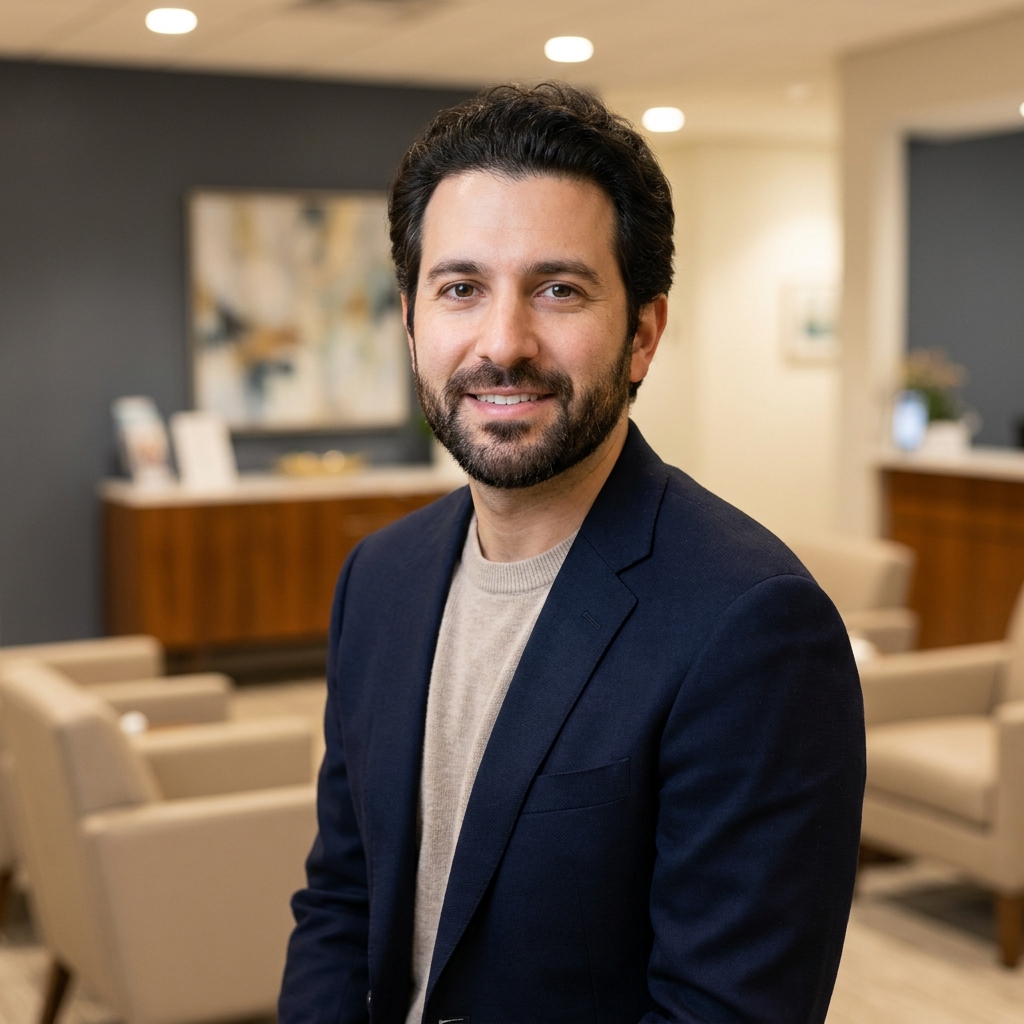
At Hair Doctor NYC, SMP is performed by Michael Ferranti, P.A., a licensed SMP specialist with more than 25 years of experience in aesthetic dermatology and plastic surgery. His background is the direct counterpoint to the “undertrained practitioner” risk outlined above.
Physician assistant licensure carries practical weight. It reflects formal medical education, scope-of-practice accountability, and clinical oversight, none of which a standalone tattoo license requires or verifies. That training informs patient screening, skin assessment, and the judgment needed to work safely on scalp tissue.
The broader team matters as well. Hair Doctor NYC (operating as Stoller Medical Group) includes double board-certified facial plastic surgeons, among them Dr. Roy B. Stoller, who has performed more than 6,000 hair transplant procedures, and Dr. Louis Mariotti, whose focus on surgical detail and facial harmony shapes the practice’s proportion-based philosophy. Even for a non-surgical procedure, that facial-aesthetics perspective informs where and how a hairline should sit.
For recession cases specifically, this clinical foundation means assessment comes first: mapping the bitemporal pattern, evaluating native hair density at the margin, and confirming rule-of-thirds proportion before a single pigment dot is placed. The setting reflects the same standard. The practice’s Madison Avenue clinic in Midtown Manhattan operates as a medical facility, not a studio.
What the Precision Hairline Process Actually Involves
A full SMP treatment typically takes three to four sessions of about two hours each. That cadence is deliberate. It allows for iterative calibration rather than a single-visit tattoo.
Consultation. The process begins with facial proportion assessment and mapping of bitemporal recession. The hairline position is set with anticipated future recession in mind, not only current anatomy, so the design continues to look appropriate as the native hair changes.
Structure. Early sessions establish the framework: the hairline’s position, shape, and foundational density.
Refinement. Later sessions build density where it is needed and soften the margin, refining the feathered transition until the pigment and native hair read as one continuous hairline.
Long-term expectations. SMP is durable but not static. Pigments can fade and shift tone over three to six years, with sun exposure accelerating fading, so periodic touch-up sessions are part of responsible planning. Patients are better served by honest expectations than by promises of permanence.
How to Vet Any SMP Provider: A Credential Checklist for the Discerning Patient
Whether or not a patient ultimately chooses Hair Doctor NYC, the following questions provide a practical due diligence framework:
- Medical license or tattoo license? Confirm whether the practitioner holds a medical license (PA, RN, or MD-supervised practice) or a tattoo license alone.
- Proportion training. Ask whether the provider has formal training in facial proportion assessment, not only pigment application technique.
- Relevant portfolio. Request before-and-after examples of receding-hairline cases specifically. Full-scalp shaved results do not demonstrate the same skill set.
- Depth protocol and equipment. Ask what pigment depth protocol and equipment are used, and how the provider prevents the blue or orange color shift associated with excessive depth.
- Pigment sourcing and safety. Ask what pigments are used and how sterility and infection control are managed.
- Future-proofing. Ask how the design accounts for continued recession over the coming years.
A qualified provider will welcome these questions. Hesitation or vague answers are informative in their own right.
Conclusion: Precision Is the Standard, Not the Upgrade
A receding hairline is anatomically and aesthetically more demanding than full-scalp SMP, because the margin for error is smallest exactly where hair is still present. Success depends on measurable standards: the rule of thirds for placement, a clear understanding of bitemporal recession patterns, and feathering density calibrated to the native hair at the margin. These are not subjective style choices.
The regulatory reality remains unchanged. With no federal licensing framework, the burden of verification falls on the patient, unless that patient chooses a medically credentialed provider from the outset.
Michael Ferranti’s aesthetic dermatology background and PA licensure, supported by Hair Doctor NYC’s team of double board-certified facial plastic surgeons, address all four root causes of SMP regret: training, placement, depth, and expectations. In this context, precision is not a premium add-on. It is the baseline.
Schedule a Precision Hairline Consultation
Men with early-to-moderate recession are invited to schedule a consultation at Hair Doctor NYC’s Madison Avenue location in Midtown Manhattan for a facial-proportion-based hairline assessment.
The consultation itself demonstrates the clinical, measurement-driven approach described throughout this article. It offers a concrete way to evaluate the practice, its reasoning, and its standards before any commitment is made.
For patients who expect precision over guesswork, Hair Doctor NYC offers a medically licensed SMP specialist with more than 25 years of aesthetic dermatology experience, working within a team of double board-certified facial plastic surgeons. Excellence meets elegance, one millimeter at a time.