

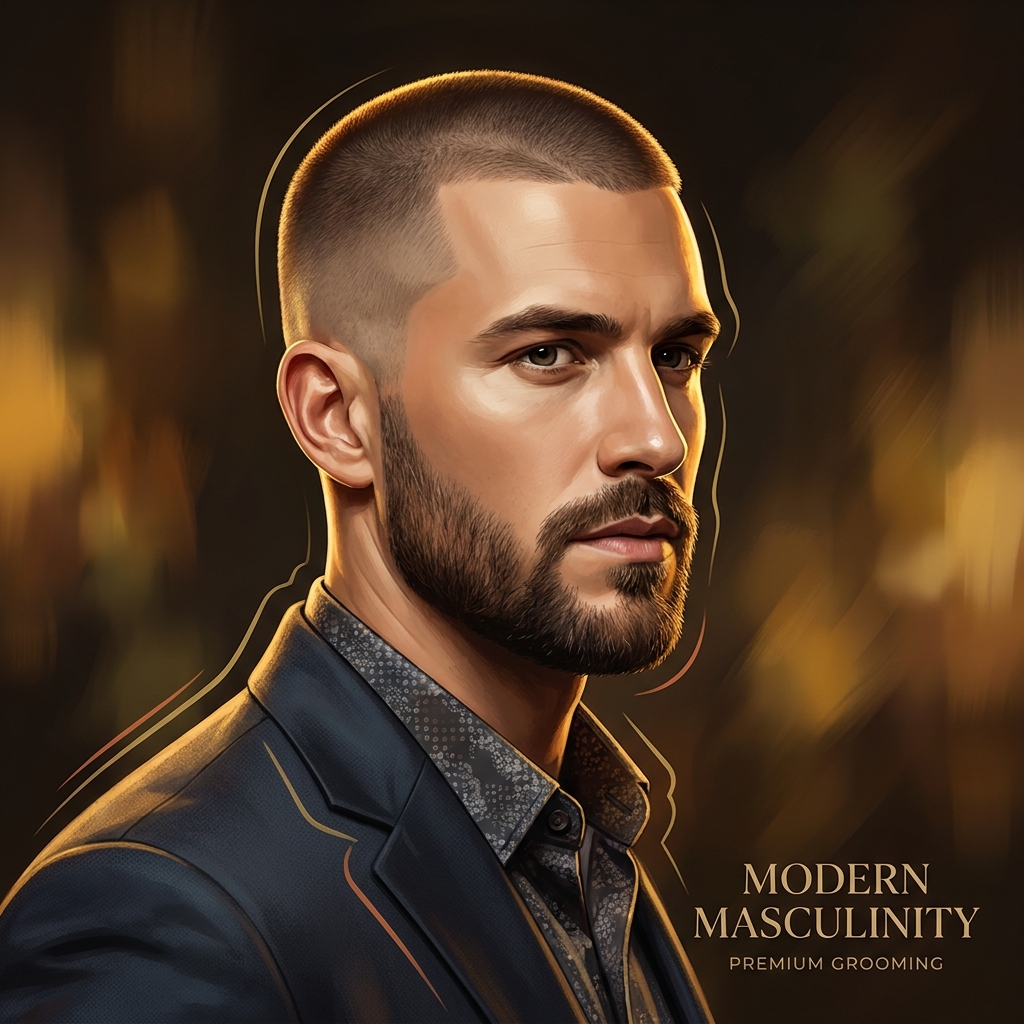
FUE Hair Transplant for Short Hairstyles: The Clipper Guard Reality Test
Introduction: The Question Every Short-Haired Man Asks Before Surgery
Every consultation begins with the same question: “Can I keep my buzz cut, fade, or crew cut after a hair transplant?” For men who have built their personal style around short, modern haircuts, this is not a minor concern. It is the deciding factor.
The stakes are significant. Approximately 66% of men experience noticeable hair loss by age 35, yet the most popular men’s hairstyles in 2026 remain short, clean cuts that would immediately expose a poorly chosen surgical scar. A Grade 1 buzz cut or a sharp skin fade leaves nowhere to hide.
This article delivers the Clipper Guard Reality Test: a concrete, guard-by-guard analysis of what FUE scarring actually looks like at each hair length. The framework covers three essential pillars: the science of FUE dot scars versus FUT linear scars, a grade-by-grade visibility breakdown, and a week-by-week athletic recovery timeline designed for active men.
The analysis draws on clinical data from the ISHRS 2025 Practice Census, peer-reviewed research from the NIH, and the expertise of Hair Doctor NYC, where a team of double board-certified surgeons has completed over 6,000 successful procedures at their Madison Avenue clinic.
Why Short-Haired Men Face a Different Decision Than Everyone Else
Hair transplant scar visibility is entirely hairstyle-dependent. A scar that remains invisible under four inches of hair can be fully exposed at a Grade 1 buzz cut. This reality fundamentally changes the surgical decision for men who prefer short styles.
The ISHRS 2025 Practice Census found that 95% of first-time hair restoration surgery patients in 2024 were between ages 20 and 35. This demographic overwhelmingly prefers short, modern hairstyles and demonstrates the highest sensitivity to visible scarring.
Two surgical techniques dominate the field, each with a distinct scar profile. FUT (Follicular Unit Transplantation) leaves a single linear scar running across the back of the head. Under ideal conditions, this scar measures 1 to 2 mm wide; however, it can widen to 10 mm or more depending on healing factors. FUE (Follicular Unit Extraction) leaves scattered dot scars measuring 0.7 to 1.0 mm each.
The critical distinction becomes clear at specific hair lengths. FUT’s linear scar becomes visible at approximately 10 mm of hair length, roughly Grade 3 to 4. This makes FUT incompatible with buzz cuts, skin fades, and most modern short styles.
For men targeting Grade 0 to 1.5 clipper cuts, FUE is the only clinically viable surgical option. The NIH/StatPearls 2025 edition specifically recommends FUE as the preferred method for younger patients and those seeking shorter hairstyles.
Market data validates this preference. FUE now accounts for 85.4% of all male hair restoration surgical procedures according to the ISHRS, and Mordor Intelligence reports that FUE captured 58.62% of global hair transplant market revenue in 2025.
The Science of FUE Dot Scars: Why the Human Eye Cannot Find Them
FUE’s extraction mechanism creates a fundamentally different scar pattern than FUT. A circular punch tool measuring 0.7 to 1.2 mm in diameter removes individual follicular units one at a time, leaving micro-wounds that heal into tiny, round scars.
FUT operates differently. The strip method removes a continuous band of scalp tissue, leaving a single linear scar that the human eye is neurologically primed to detect.
The Neuroscience of Pattern Detection: Linear vs. Dot
The human visual system evolved to detect edges, lines, and continuous patterns. This survival mechanism makes a linear FUT scar immediately conspicuous to observers.
FUE dot scars exploit a blind spot in human pattern recognition. Scattered, random, circular micro-scars do not form a recognizable pattern, making them neurologically harder to detect even when technically present.
The ISHRS patient education materials confirm this advantage: “FUE scars are much less visible with very short haircuts than one continuous linear scar expected from strip hair transplant surgery.”
Clinical literature reinforces this perspective: when a patient’s primary goal is to wear hair very short, FUE is the ideal technique precisely because of this scar-pattern advantage.
FUE’s advantage is not merely physical (smaller scars) but perceptual. The randomness of dot scars makes them effectively invisible in social settings. Understanding the different FUE extraction tool types helps explain why punch diameter and technique precision directly influence the final scar size and distribution.
The Clipper Guard Reality Test: Grade-by-Grade Visibility Breakdown
The Clipper Guard Reality Test provides a framework that maps FUE scar visibility to specific clipper guard numbers. Each guard number represents approximately 3 mm of hair length: Grade 1 equals 3 mm, Grade 2 equals 6 mm, Grade 3 equals 9 mm, and Grade 4 equals 12 mm. Grade 0 represents a skin shave.
Grade 0: The Skin Shave (Razor or Foil Shaver)
A completely shaved head with no hair coverage presents the most demanding test for any transplant scar.
FUE outcome: Tiny circular scars (0.7 to 1.0 mm) are present but blend with natural skin texture variation. Most observers cannot distinguish them from normal skin pores or follicular openings.
FUT outcome: The linear scar is fully exposed and clearly visible as a continuous line across the occipital scalp.
Verdict: FUE is the only viable surgical option for men who shave their heads completely. Some men combine FUE with Scalp Micropigmentation (SMP) at Grade 0 to further blend dot scars into a uniform stubble appearance, an option available at Hair Doctor NYC.
Grade 1: The Tight Buzz Cut (3 mm)
The classic military buzz cut and tight skin fade base remains one of the most popular men’s cuts in 2026.
FUE outcome: At 3 mm, the surrounding hair provides minimal coverage, but the random distribution of dot scars means they remain effectively undetectable in normal lighting and at social distances.
FUT outcome: A linear scar of even 2 to 3 mm width is clearly visible at this length, particularly in bright or overhead lighting.
Verdict: FUE passes the Grade 1 reality test comfortably. FUT fails for most patients.
Grade 1.5: The Skin Fade Transition Zone (4 to 5 mm)
The fade transition zone used in high-skin fades and taper fades exposes the donor area most during the gradient.
FUE outcome: Dot scars remain invisible. The slight increase in hair length at this grade actually helps scatter light around the micro-scars, further reducing visibility.
FUT outcome: A linear scar remains visible through the fade gradient, especially problematic because barbers work closely with clippers in this zone.
Verdict: FUE is the clear choice for men who regularly get skin fades.
Grade 2: The Standard Buzz Cut (6 mm)
The all-over Grade 2 buzz cut offers a clean, low-maintenance style popular with athletic and professional men.
FUE outcome: Dot scars are completely undetectable at this length under virtually all lighting conditions and viewing distances.
FUT outcome: A narrow linear scar (1 to 2 mm, ideal healing) may be borderline visible. A wider scar (3 mm or more) remains visible.
Verdict: FUE passes with confidence. FUT is marginal for ideal cases and problematic for average or wider scars.
Grade 3 and Above: Crew Cuts, Undercuts, and Longer Styles (9 mm+)
Crew cuts, textured crops, undercuts, and any style where the back and sides are kept at 9 mm or longer fall into this category.
FUE outcome: Dot scars are completely invisible at Grade 3 and above.
FUT outcome: A linear scar may be adequately concealed at Grade 3 or higher for patients with ideal, narrow scar healing.
Verdict: Both FUE and FUT can work at Grade 3 or higher, but FUE remains the preferred choice for men who want maximum styling flexibility and the option to go shorter in the future.
The Clipper Guard Reality Test: Summary Scorecard
| Grade | FUE Result | FUT Result |
|---|---|---|
| Grade 0 | Pass | Fail |
| Grade 1 | Pass | Fail |
| Grade 1.5 | Pass | Fail |
| Grade 2 | Pass | Marginal |
| Grade 3+ | Pass | Conditional Pass |
FUE is the only technique that passes the Clipper Guard Reality Test at every grade level.
No-Shave FUE: Keeping Style Intact During Recovery
No-Shave FUE (U-FUE) represents a growing 2025 to 2026 trend that allows the procedure to be performed without shaving the entire donor area. Follicles are extracted individually from between existing hairs, leaving the surrounding hair long enough to conceal extraction sites immediately post-procedure.
The ideal candidate is the professional or executive who cannot afford the social or professional visibility of a post-surgery buzz cut reveal. A peer-reviewed PMC/NCBI study confirms nonshaven FUE as a validated technique for patients who wish to avoid shaving the donor area while still avoiding a linear donor scar.
The trade-off is worth noting: U-FUE is technically more demanding, may slightly limit the number of grafts harvested per session, and requires a highly skilled surgical team. This premium option aligns with Hair Doctor NYC’s “Excellence Meets Elegance” ethos, and men in demanding careers may find it particularly relevant when exploring hair transplant options for executive professionals.
FUE for Repairing Previous FUT Scars: A Second Chance at Short Styles
Men who previously underwent FUT surgery and now want to wear their hair shorter face a significant challenge: the visible linear scar.
FUE scar repair offers a solution. Individual follicular units are transplanted directly into the linear scar tissue, breaking up the continuous line and camouflaging it with natural hair growth. Clinical data shows graft survival in scar tissue averages 66 to 81%, making this a viable procedure that requires experienced surgical judgment.
The FUE dot scars from the repair procedure itself remain discreet, so the patient does not trade one visible scar for another. This service is available at Hair Doctor NYC, where the team’s experience with over 6,000 procedures includes complex revision and scalp scar correction cases.
The Active Man’s FUE Recovery Timeline: Week by Week
High-achieving men who maintain active lifestyles need clarity on exactly when they can return to each activity. FUE recovery offers a significant advantage over FUT: no stitches or sutures means no 10 to 14 day suture removal period and no risk of tension-related scar widening.
Days 1 to 3: Immediate Post-Procedure Protocol
Patients can expect mild swelling, redness, and sensitivity in both donor and recipient areas. Rest is recommended; light walking is acceptable and encouraged for circulation. Most men can return to desk-based work within 2 to 3 days.
Days 4 to 9: Early Healing and the Shedding Phase Begins
Transplanted hairs begin to shed in the first 2 to 4 weeks. This is normal and does not indicate graft failure. Light walking should continue, but any activity causing significant sweating should be avoided. The weight room remains off-limits.
Days 10 to 21: Light Exercise Resumes
Light exercise, including brisk walking, light cycling, yoga, and stretching, is typically cleared at days 10 to 14. Heavy weightlifting, HIIT, and CrossFit should still be avoided. The donor area is increasingly discreet, and most men can wear their hair at Grade 2 to 3 without visible evidence of the procedure.
Weeks 3 to 4: Moderate Training Returns
Moderate workouts, including weightlifting at moderate intensity, cycling, and swimming (with surgeon approval), are typically cleared. Most active men are back to their full workout routine within 3 to 4 weeks post-FUE transplant.
Weeks 5 to 6 and Beyond: Full Activity and Contact Sports
Contact sports, martial arts, rugby, and basketball are typically cleared at the 6-week mark. By week 6, the donor area is fully healed, and men can return to their regular barbershop routine, including fades and buzz cuts, with confidence. For a complete picture of what to expect from the first days through full hair growth, the FUE hair transplant healing timeline provides a detailed month-by-month breakdown.
Why the Body and Beard Donor Option Matters for Active Men
FUE offers a capability unique to its technique: follicles can be harvested from the beard, chest, or other body areas and transplanted to the scalp. This expands the total available graft pool for men with limited scalp donor supply.
Body and beard hair has different characteristics than scalp hair and is best used strategically (for density in crown areas, for example) rather than as a primary source. This advanced capability is available at Hair Doctor NYC, where the surgical team’s depth of experience enables complex multi-source donor planning.
Choosing the Right FUE Surgeon for Short Hairstyles: What to Look For
FUE outcomes for short-haired men are highly surgeon-dependent. The precision of extraction, the randomness of dot scar placement, and the density of graft harvesting all affect how the donor area looks at Grade 0 to 2.
Specialization depth: Surgeons who have dedicated their careers exclusively to hair restoration bring a level of focused expertise that generalists cannot match. The advantage of choosing a facial plastic surgeon for FUE is particularly relevant for short-haired men, where aesthetic judgment about donor area density and scar distribution is critical.
Procedure volume: Over 6,000 successful procedures (as with the Hair Doctor NYC team) provides the pattern recognition and technical refinement that directly improves FUE dot scar consistency.
Artistic judgment: FUE for short hairstyles requires aesthetic judgment about donor area density, scar distribution, and hairline design. These qualities distinguish a double board-certified facial plastic surgeon from a technician.
Technology and tools: Advanced robotic FUE systems can harvest 500 to 700 grafts per hour with 44-micron precision.
Comprehensive options: The best clinics offer FUE, SMP, and No-Shave FUE under one roof, enabling a personalized plan that may combine techniques for optimal results.
Prospective patients should request before-and-after photos of patients with short hairstyles specifically, not just patients with longer hair where donor area visibility is less relevant.
The Cultural Shift: Why More Men Are Openly Choosing FUE
The ISHRS found that 44% of 2024 hair transplant patients planned to openly tell others they had the procedure. This represents a significant cultural shift from the secrecy that historically surrounded hair restoration.
FUE’s natural, undetectable results are a primary driver of this openness. When results look genuinely natural at a Grade 1 buzz cut, there is no visible evidence to conceal.
The global hair transplant market was valued at approximately $6.98 to $10.74 billion in 2026, with FUE projected to reach approximately 60% market share by 2035. Choosing FUE at a premium clinic is increasingly viewed not as a secret to conceal but as a quality investment to be proud of.
Conclusion: The Clipper Guard Test Has a Clear Winner
The Clipper Guard Reality Test delivers a definitive answer: FUE passes at every grade level from Grade 0 (skin shave) through Grade 4 and beyond. FUT fails at Grade 0 to 1.5 and is marginal at Grade 2.
For men who wear short hairstyles, FUE is not optional. It is the cost of a result that actually works with their chosen style. The NIH/StatPearls, the ISHRS, and global market data all point to the same conclusion: FUE is the preferred, dominant, and fastest-growing hair restoration technique for men, particularly younger men with short-style preferences.
The decision is not just about today’s haircut. It is about preserving the freedom to wear any style, at any length, for the rest of one’s life. FUE is the only surgical technique that delivers that freedom.
Ready to Pass the Clipper Guard Reality Test? Schedule a Consultation at Hair Doctor NYC
Men considering FUE for short hairstyles are invited to schedule a personalized consultation at Hair Doctor NYC’s state-of-the-art clinic on Madison Avenue in Midtown Manhattan.
Every consultation involves a customized assessment of hair loss pattern, donor supply, target hairstyle, and lifestyle. Consultations are conducted by a team that includes double board-certified facial plastic surgeons and a specialist with 18 years of exclusive hair transplant experience.
The team has extensive experience planning FUE procedures for men who wear buzz cuts, fades, and crew cuts. They will evaluate exactly which clipper grades each patient can target post-procedure.
Most patients return to normal life within days, making the decision to consult a low-disruption, high-return investment in long-term confidence.
“Excellence Meets Elegance” is not merely a tagline at Hair Doctor NYC. It is the standard: surgical precision and aesthetic artistry combine to deliver results that hold up at every clipper guard, in every light, and in every room.