

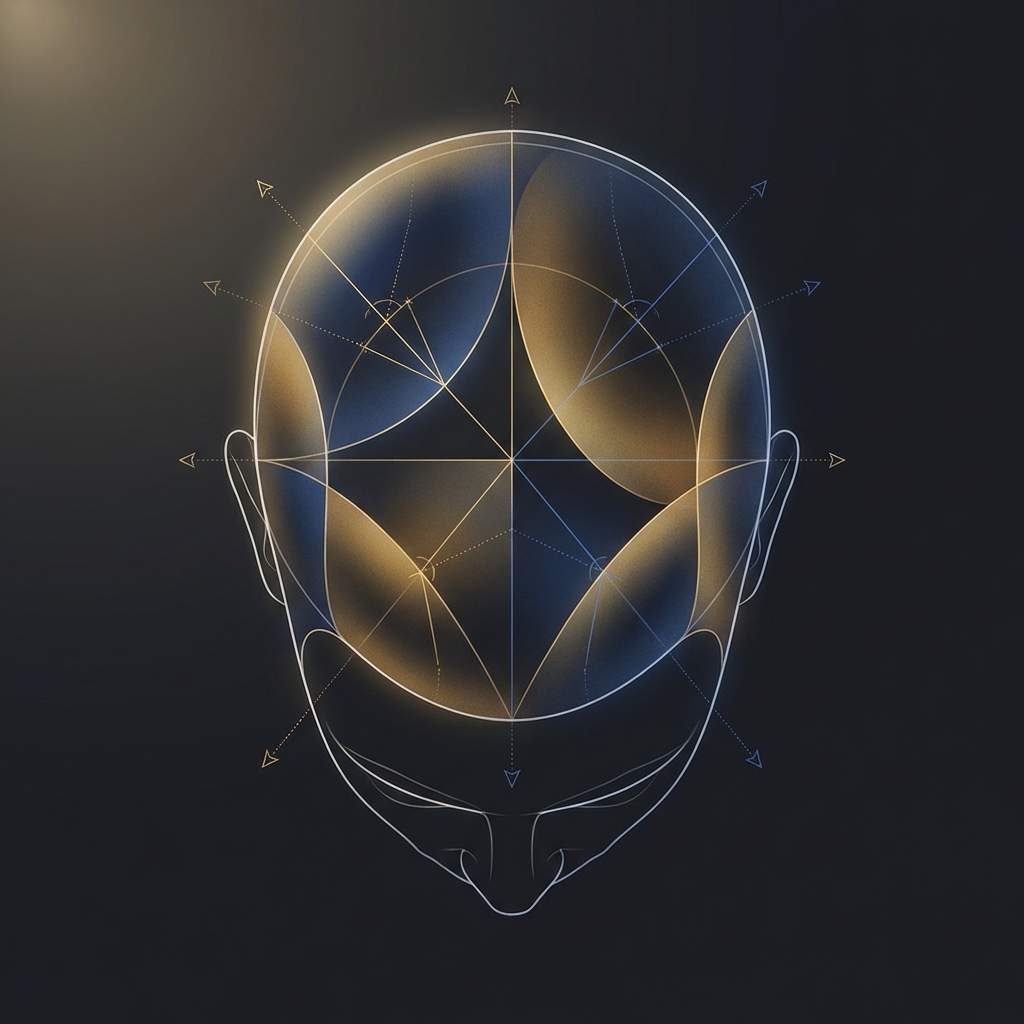
Hair Transplant Follicle Implantation Technique: The Zone-by-Zone Angle and Blade Sizing Blueprint
Introduction: Why Follicle Implantation Is an Engineering Problem, Not a Single Step
Many patients approach hair transplantation with a fundamental misconception: that follicle implantation is a uniform, straightforward step applied consistently across the entire scalp. This understanding dramatically underestimates the surgical precision required to achieve natural-looking results. In reality, implantation represents a zone-specific surgical engineering challenge where angle tolerances as narrow as 5°, blade geometry, and incision orientation collectively determine whether results appear natural or artificial.
The core thesis of this technical blueprint is straightforward yet profound: natural hair does not grow uniformly. It exits the scalp at different angles depending on anatomical location, follows distinct directional patterns, and varies in density across zones. Replicating this complexity requires a surgeon to master zone-by-zone angulation, understand the snug-fit principle, navigate the coronal versus sagittal orientation debate, select appropriate blade sizing, and execute precise placement techniques.
Hair Doctor NYC exemplifies the clinical expertise required to execute this level of surgical precision. With a multi-surgeon team of double board-certified facial plastic surgeons, over 6,000 successful procedures, and more than 25 years of experience in facial plastic surgery, the practice operates at the intersection of surgical excellence and artistic precision. This article explores the biomechanical logic surgeons apply at every zone of the scalp—moving far beyond surface-level comparisons to reveal the engineering principles that separate exceptional results from mediocre ones.
Recipient Site Creation: The Most Critical Phase of Any Hair Transplant
Recipient site creation is widely considered the single most consequential phase of the entire hair transplant procedure. This phase pre-determines the angle, direction, depth, and density for every graft placed. Once incisions are made, the surgical outcome is largely locked in—errors at this stage cannot be corrected during the placement phase.
A surgeon controls four critical variables during recipient site creation:
- Angle of incision – determining how the hair will emerge from the scalp
- Direction and orientation – controlling the directional flow of hair growth
- Depth – affecting both graft stability and vascular preservation
- Site width (blade sizing) – ensuring proper fit between the graft and its new home
In 2026, virtually all modern hair transplants are built on the FUE (Follicular Unit Extraction) principle. Clinics differentiate themselves, however, through implantation tools, technique refinements, and supplemental technologies such as AI planning, PRP, and exosome treatments. According to ISHRS practice guidelines, surgeons must use 4.5× magnification loupes, create limited-depth recipient sites, and match variable-width sites to graft dimensions for optimal outcomes.
The Zone-by-Zone Angle Blueprint: Why One Angle Cannot Fit All
Natural hair does not grow at a uniform angle across the scalp—it varies significantly by anatomical zone. Transplanted grafts must replicate this variation precisely. Research demonstrates that deviations of even 5° can produce an artificial appearance or compromise graft survival.
Temporal Hairline Zone: 5–10° — The Most Demanding Angle in Hair Restoration
The temporal hairline represents the flattest, most technically demanding zone in any hair transplant procedure. Hairs in this region exit at just 5–10°, lying almost flush against the skin surface. Even a slight upward deviation creates an unnatural “spike” effect visible at close range.
Achieving this near-horizontal angle presents significant blade control challenges. The surgeon must maintain precise depth while working at an extreme oblique angle, requiring specialized technique and extensive experience. Single-hair follicular units must populate this zone exclusively to maintain the soft, wispy appearance characteristic of a natural temporal hairline.
Frontotemporal Angle Zone: 10–15° — The Transition Corner
The frontotemporal angle—commonly known as the “widow’s peak” corner region—requires incisions at 10–15°, serving as a bridge between the temporal and frontal zones. This area presents directional complexity: not only must the angle be precise, but incision direction must curve to follow the natural sweep of hair growth around the hairline corner.
The “micro-irregularity” concept becomes essential here. Intentional, controlled asymmetry in this zone replicates the natural randomness of a biological hairline and prevents an obviously transplanted appearance. Surgeons at Hair Doctor NYC apply artistic precision—rooted in their facial plastic surgery training—to design this zone according to each patient’s individual facial anatomy.
Frontal Hairline Zone: 15–20° — Where Artistry Meets Biomechanics
Frontal hairline hairs exit at 15–20°, slightly steeper than temporal hairs but still requiring a strongly forward-projecting angle. The density transition principle governs this zone: single-hair grafts at the leading edge, followed by 2-hair grafts, then 3-hair grafts placed successively behind—creating a soft, gradual density gradient that mimics nature.
Incorrect angulation in this zone produces the classic “doll hair” or “pluggy” appearance that patients fear. Placing grafts at 30° instead of 15° creates an immediately recognizable artificial pattern. Additionally, incisions must respect the subdermal vascular plexus—shallow enough to avoid vascular injury while deep enough to anchor grafts securely.
Mid-Scalp Zone: 30–45° — Higher Angles for Coverage and Density
Mid-scalp hairs exit at 30–45°, the steepest angles on the scalp, reflecting the more upright growth pattern in this region. This zone tolerates—and requires—higher angles because the goal shifts from creating a soft hairline illusion to achieving coverage density and volume.
Dense hair transplant results in this zone present unique challenges. Higher graft density risks poor perfusion and “popping” (graft ejection), requiring surgeons to balance density goals with vascular preservation. Two-hair and 3–4 hair grafts dominate this zone, and blade sizing must scale accordingly.
Blade Sizing and the Snug-Fit Principle: Matching Every Graft to Its Site
The snug-fit principle is fundamental to successful implantation: the recipient site must be sized to create a tight fit around the graft. Sites that are too loose cause pitting and poor healing; sites that are too tight crush the follicular bulb and compromise survival.
The clinical sizing framework follows specific parameters:
- 1-hair grafts: 0.6–0.9mm blades
- 2-hair grafts: 0.9–1.1mm blades
- 3–4 hair grafts: 1.1–1.3mm blades
Expert surgeons may use up to six different blade sizes in a single surgery because graft dimensions vary even within the same patient’s donor area. Size mismatch carries significant consequences: oversized sites lead to a cobblestone or pitted appearance and poor oxygenation; undersized sites cause mechanical trauma to the follicular bulb and reduced graft survival.
Snug fit connects directly to incision depth. Going too deep injures the subdermal vascular plexus and compromises blood supply; going too shallow creates surface irregularities. ISHRS standards require that sites be of correct depth to assure blood supply, correctly angled for natural growth, and correctly sized—all three variables must be optimized simultaneously.
Incision Orientation: The Coronal vs. Sagittal Debate
Two primary incision orientations exist in hair transplantation: sagittal slits (parallel to hair growth direction) and lateral/coronal slits (perpendicular to hair growth direction). This debate represents a significant clinical discussion in peer-reviewed literature yet remains almost entirely absent from patient-facing content.
Research demonstrates that coronal slits produce less vascular damage than sagittal slits with the same blade size and offer more precise angle and direction control. The biomechanical explanation is straightforward: coronal slits run parallel to the subdermal vascular plexus rather than across it, reducing the probability of severing blood vessels that supply transplanted grafts.
Practical trade-offs exist between the two approaches. Sagittal slits may be easier to create in certain scalp topographies, while coronal slits require more surgical skill but deliver superior vascular preservation. The lateral slit technique represents a well-established clinical approach using custom-cut blades (0.6–1.2mm) matched to graft dimensions, specifically designed to replicate natural follicular orientation.
Blade Technology: Steel, Sapphire, and the Science of Micro-Channel Creation
Traditional Steel Blades: The Clinical Standard
Steel blades remain the global standard and are highly effective in skilled hands. Blade material represents one variable among many in determining outcomes. Research shows that semiconical blades reduce dermal and vascular plexus damage compared to rectangular blades.
Blade sharpness degrades with use, and experienced surgeons monitor and replace blades throughout procedures to maintain consistent incision quality.
Sapphire Blades: Precision, Healing, and the Evidence Base
Sapphire FUE uses V-shaped synthetic sapphire crystal blades, enabling narrower, more controlled micro-channels due to the material’s hardness and edge consistency. A 2021 study found that the 30°-sapphire blade caused the least tissue injury of all blade types tested, with patients healing up to 25% faster than with steel blades.
The trigonometric principle applies: tissue injury decreases as insertion angle decreases, making the combination of sapphire blades and low-angle incisions particularly advantageous in temporal zones.
The emerging SDHI (Sapphire Direct Hair Implantation) technique integrates sapphire blade precision with Choi implanter pen placement, reporting a 95.1% graft retention rate at 6 months in internal follow-up studies. Long-term comparative data between sapphire FUE and standard FUE continues to evolve—the clinical advantage is real, but the magnitude of benefit depends heavily on surgeon skill. For a broader perspective on evaluating new technologies in this field, see our analysis of keeping it real: tempering the new technology in hair restoration.
Implantation Methods: Forceps, Implanters, and the DHI Distinction
The ISHRS recognizes two main implantation methods: forceps (graft inserted into a pre-made incision) and implanters (sharp or dull). A critical distinction that most content misrepresents: DHI (Direct Hair Implantation) is a placement technique, not a separate harvesting procedure. Grafts are still extracted via FUE; the difference lies in how they are placed.
Forceps Placement and the Stick-and-Place Method
Standard forceps placement involves inserting grafts into pre-made incisions using fine forceps, requiring a coordinated two-phase workflow. The “stick and place” method—simultaneous incision creation and graft insertion using forceps—reduces the time grafts spend outside the body.
The atraumatic handling principle remains paramount: pressure must never be applied to the follicular bulb during placement. Grafts should only be grasped at the dermal cap or fat tissue. ISHRS technical assessments acknowledge that outcomes are primarily determined by surgeon mastery and atraumatic handling, not tool choice alone.
The Choi Implanter Pen: Mechanics, Angles, and DHI Workflow
The Choi Implanter Pen was developed at Kyungpook National University in South Korea in 1992 and remains the primary tool for DHI. Its hollow needle (0.5–1.5mm diameter) with a plunger mechanism simultaneously creates the incision and implants the graft at a 40–45° angle, eliminating the need for pre-made channels.
By minimizing ischemic time, DHI achieves graft survival rates of 92–98%+, reducing mechanical trauma to the follicular bulb. The loading-placing workflow rhythm (2-1-1 or 3-1-1) maintains continuous implantation cadence while technicians load grafts into pens.
One limitation exists: the 40–45° default angle is well-suited for mid-scalp zones but requires modified technique for the extreme low angles required in temporal zones.
Robotic Precision: The ARTAS iXi System and AI-Guided Implantation
The ARTAS iXi represents the current state-of-the-art robotic system for hair transplantation. Its technical specifications include a 44-micron resolution multi-camera stereoscopic vision system analyzing follicular units 60 times per second, with a seven-axis robot arm.
The AI-guided recipient site creation capability allows the system to create recipient sites while simultaneously implanting harvested grafts, with programmable punch depth (3.5–7mm) and angle (35–60°). For a deeper look at how robotic technology is applied in practice, our overview of robotic hair transplants and the ARTAS robotic system provides additional context. Robotic assistance enhances consistency and reduces fatigue-related variability in site creation, but the surgical plan—zone-by-zone angle decisions, hairline design, density mapping—remains the surgeon’s domain.
Special Considerations: Adapting Technique for Different Patient Populations
Afro-Textured Hair: Curved Follicles and Modified Angulation
Afro-textured hair presents unique anatomical challenges: naturally curved (C-shaped) follicles follow a curved path beneath the scalp surface, making standard straight-punch extraction high-risk for transection. Technical adaptations include specialized punches (e.g., UPunch Curl), modified extraction angles, and adjusted implantation technique to accommodate the follicular curve.
Recipient site creation must account for the natural curl pattern—implanting a curved follicle at an angle designed for straight hair produces an unnatural growth direction.
Beard, Eyebrow, and Facial Hair Transplants: Zone Logic Beyond the Scalp
Facial hair zones have their own angle and direction requirements distinct from scalp zones. Beard hairs exit at angles and directions that vary across the jawline, chin, and mustache area. Eyebrow restoration requires single-hair grafts placed at extremely acute angles—nearly parallel to the skin—with precise directional control to avoid an unnatural, bushy appearance.
Hair Doctor NYC’s facial hair restoration background provides a distinct advantage in facial hair restoration, where understanding facial harmony and proportion is as important as technical implantation skill.
What Separates a Natural Result from an Artificial One: The Surgeon’s Role
Surgical mastery—not tool choice alone—determines outcomes. The micro-irregularity concept illustrates this principle: the best results incorporate intentional, controlled asymmetry that replicates the natural randomness of biological hair growth. This requires artistic judgment, not just technical execution.
The density transition principle summarizes the approach: single-hair grafts at the leading edge, graduating to 2-hair and 3–4 hair grafts behind, creating a gradient the eye reads as natural. The combination of facial plastic surgery training and dedicated hair restoration specialization produces superior outcomes because understanding facial anatomy, proportions, and aesthetics informs every zone-specific decision.
Dr. Christopher Pawlinga of Hair Doctor NYC exemplifies this depth of specialization, having spent 18 years exclusively dedicated to hair transplantation.
Conclusion: The Blueprint Behind Every Natural-Looking Result
Follicle implantation is not a single step but a zone-specific engineering discipline where angle tolerances, blade geometry, incision orientation, and graft-to-site fit collectively determine whether results look natural or artificial. The zone-by-zone angle framework—5–10° temporal to 30–45° mid-scalp—combined with the snug-fit principle, coronal versus sagittal orientation decisions, and blade sizing matched to graft type forms the technical foundation of exceptional hair restoration.
The best outcomes emerge from the intersection of surgical precision, anatomical knowledge, artistic judgment, and atraumatic graft handling. Hair Doctor NYC executes this blueprint at the highest clinical level: a multi-surgeon team of double board-certified facial plastic surgeons with decades of specialized experience, performing this work in a state-of-the-art Madison Avenue facility.
As techniques such as SDHI and AI-guided robotic implantation continue to evolve, the foundational principles of zone-specific angulation and biomechanical precision remain the non-negotiable core of exceptional hair restoration.
Ready to Experience Surgical Precision at Its Highest Level?
Patients who now understand the technical depth behind hair transplant implantation are invited to take the next step: schedule a consultation with the Hair Doctor NYC team. Every patient’s scalp anatomy, hair characteristics, and aesthetic goals require an individualized zone-by-zone plan—this is where the blueprint becomes specific to each person.
The team’s credentials speak to their expertise: double board-certified surgeons, 6,000+ successful procedures, 25+ years of experience in facial plastic surgery, and a dedicated specialist with 18 years exclusively in hair transplantation. The premium, discreet experience available at the Madison Avenue clinic is designed for discerning patients who demand the highest standard of care.
Visit hairdoctornyc.com to schedule a consultation and begin the journey toward natural, lasting hair restoration.