

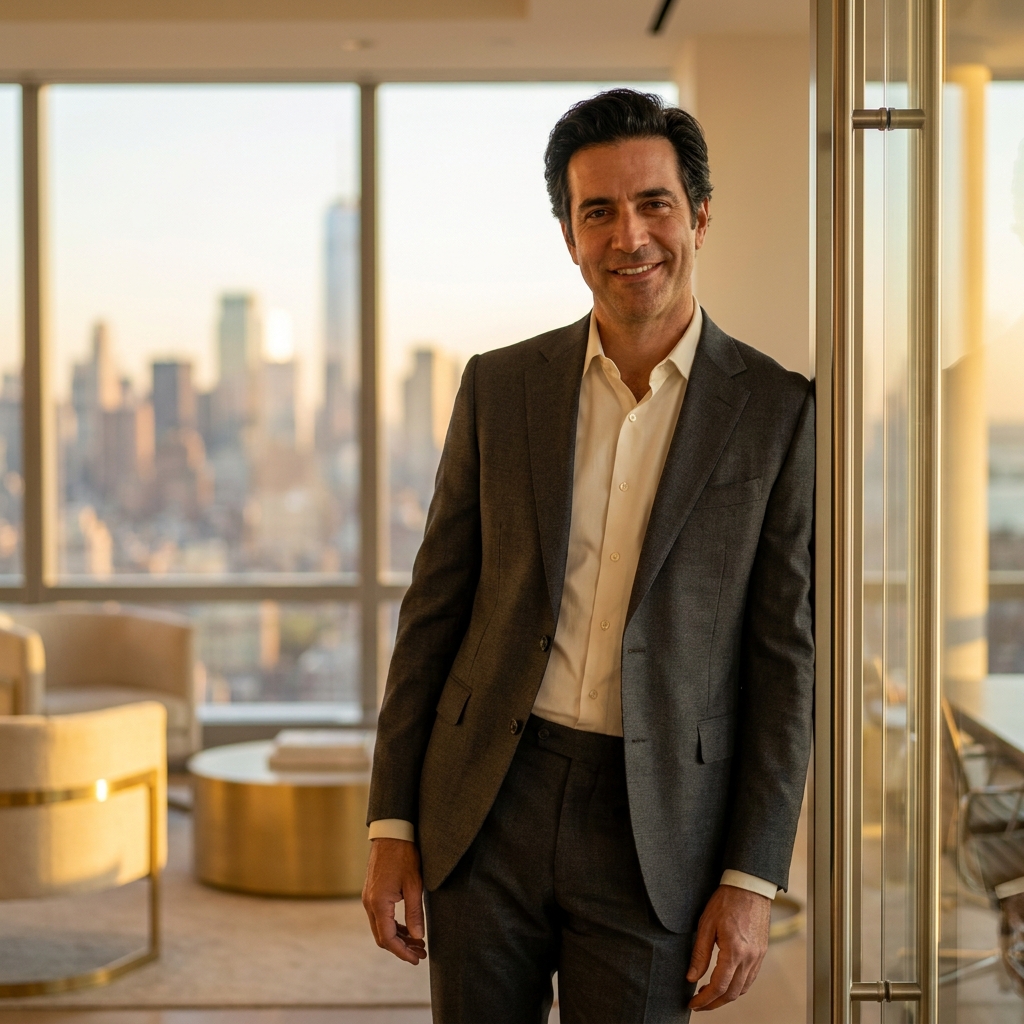
Hair Transplant for Men New York City Best Options: The 2026 Surgeon-Vetting and Procedure Selection Guide
Introduction: The Decision You’re About to Make Is Permanent, So Treat It That Way
Two-thirds of men over age 35 experience some form of hair loss, and by age 50, roughly 85% will face significant thinning. This is not a niche cosmetic worry. It is a medically validated quality-of-life issue that affects how a man sees himself and how the world responds to him. A 2025 Frontiers in Psychiatry analysis and multiple peer-reviewed studies confirm that androgenetic alopecia is significantly associated with anxiety, depression, and reduced wellbeing.
This guide is not a clinic directory or a glossary of procedures. It is a decision-intelligence framework for the man who is ready to act and wants to validate his choice with the same rigor he applies to any serious professional or financial commitment.
New York City is a paradox. It offers some of the finest surgical talent on the planet, yet it is also a market where premium positioning, medical tourism temptation, and underqualified providers all compete for the same patient. By the end of this guide, the reader will understand how his Norwood stage maps to realistic outcomes, what world-class surgeon credentials actually look like, and why the medical tourism calculation is riskier than it first appears.
This is a permanent decision. It deserves to be treated as one.
Why Hair Loss Hits Differently Than Other Medical Concerns
Male androgenetic alopecia (MAA) is the most common cause of hair loss in men, and according to the NIH’s Endotext reference, its morbidity is predominantly psychological. Premature onset causes the greatest emotional distress.
A 2024 mixed-methods study of 177 men found depleted confidence and lower-than-norm wellbeing, with participants describing hair as an important component of masculinity and body appreciation. This is not vanity. It is identity. For a deeper look at the emotional dimension, why hair loss feels so personal is a subject worth understanding before entering any clinical conversation.
There is an upside worth noting. A Johns Hopkins study found that men who underwent hair transplants were rated as appearing an average of 3.6 years younger, more attractive, more successful, and more approachable. These are outcomes that matter in boardrooms and in personal life alike.
The demographic reality has also shifted. Per the ISHRS 2025 Practice Census, 95% of first-time hair restoration surgery patients in 2024 were between ages 20 and 35. Early intervention is now the norm, not the exception. Acting thoughtfully and early, with the right surgeon, produces superior long-term outcomes compared to waiting until loss is advanced.
Before evaluating any surgeon or procedure, a man must first understand where he sits on the clinical spectrum.
Your Norwood Stage Is Your Starting Point: A Clinically Honest Self-Assessment
The Hamilton-Norwood scale is the standard classification system used by NYC surgeons to assess candidacy, plan graft counts, and design hairlines. Understanding one’s Norwood stage is the single most valuable pre-consultation step a patient can take, because it sets realistic expectations before a surgeon ever weighs in.
Norwood Stages I to III: Early Loss, Maximum Flexibility
Stages I and II involve minimal recession, and these men are typically not surgical candidates yet. Non-surgical options such as finasteride, minoxidil, and PRP are often the appropriate first intervention.
Stage III is the first stage where surgical intervention becomes commonly appropriate. Hairline recession is visible and emotionally impactful. The typical graft range is 800 to 1,500 grafts, and FUE is almost universally preferred due to minimal scarring and faster recovery.
The critical surgeon consideration at this stage is conservative hairline design that accounts for future progression. A surgeon who places grafts too aggressively at Stage III can compromise the donor area for future sessions. Notably, the ISHRS reports the average first-time procedure required 2,347 grafts in 2024, up from 2,176 in 2021, suggesting patients are presenting with slightly more advanced loss.
Norwood Stages IV to V: The Most Common Surgical Presentation
Stages IV and V represent the most frequently treated range in NYC practices. Significant crown and mid-scalp involvement requires strategic planning, with typical graft counts of 2,000 to 3,500. Both FUE and FUT are viable depending on donor density and recovery preferences. Men presenting with Norwood 4 pattern hair loss will find detailed clinical context on what that stage specifically demands from a surgical plan.
FUT becomes more relevant when maximum graft yield is required, because its lower per-graft disruption to the donor area can preserve more follicular units for future sessions. This introduces the central concept of donor management: the maximum harvestable grafts for most patients is approximately 6,000 over a lifetime. A surgeon who over-harvests at Stage IV leaves a future Stage VI patient with inadequate supply.
Full, dense coverage of all thinning areas is rarely achievable in a single session at these stages. A credentialed surgeon will set honest expectations and sequence sessions strategically.
Norwood Stages VI to VII: Advanced Loss Requires Advanced Planning
Stages VI and VII involve extensive loss across the crown, vertex, and often the mid-scalp. Typical graft ranges run from 3,500 to 6,000 or more, frequently staged over 12 to 18 months.
At this stage, FUT may be the preferred primary technique to maximize yield from the donor strip, with FUE used as a complementary technique in later sessions. Scalp Micropigmentation (SMP) may also be discussed as a complementary or standalone option when donor supply cannot cover the full area of loss.
A critical fact: roughly 42.7% of all patients require more than one session to achieve desired results. For Stage VI and VII patients, multi-session planning is the rule. Surgeon selection at this stage is non-negotiable, because the complexity demands the deepest experience and the most conservative donor philosophy.
Procedure Selection in 2026: What FUE, FUT, and DHI Actually Mean for Your Outcome
This is a clinical decision tool, not a marketing comparison. The right technique depends on Norwood stage, donor density, lifestyle, and long-term trajectory. The overarching principle, echoed in Shapiro Medical’s 2026 research, is unambiguous: the most advanced technique in the hands of an underqualified practitioner produces inferior results to standard technique performed by an expert. Technique selection matters far less than surgeon selection.
FUE (Follicular Unit Extraction): The 2026 Standard of Care
FUE is the dominant procedure in 2026, accounting for the majority of procedures globally due to its minimally invasive nature and absence of linear scarring. Individual follicular units of one to four hairs are extracted directly using micro-punches, so there is no strip incision and no linear scar.
It is ideal for men who wear their hair short, those with lower graft requirements (Norwood III to IV), and patients prioritizing a fast return to professional and social activity. Most patients return to normal life within days, which aligns with the demands of the Manhattan professional. Graft survival at elite clinics reaches 90 to 98%, a range that drops sharply at under-resourced, technician-led practices.
Robotic-assisted FUE systems now use AI-guided imaging and augmented reality to automate extraction with micron-level precision, reducing human error. This technology, including the ARTAS robotic system, is available only at select elite NYC practices.
FUT (Follicular Unit Transplantation): When Maximum Yield Is the Clinical Priority
FUT involves removing a strip of donor scalp, dissecting it into individual follicular units under microscopy, and transplanting them into recipient sites. It produces the highest graft yield per session, which is critical for Norwood V to VII patients who cannot afford to deplete the donor area prematurely.
The linear scar is the primary trade-off. In skilled hands, it is typically concealed by surrounding hair and invisible at normal lengths. FUT can preserve more of the donor area’s long-term capacity than aggressive FUE harvesting, making it a strategically sound choice for younger men with progressive loss. It is not appropriate for those who wear their hair very short. A detailed clinical comparison of FUE vs FUT helps clarify which approach fits a given patient’s profile.
Hair Doctor NYC’s surgical team offers both FUE and FUT, which allows procedure selection to be driven by clinical need rather than by what the clinic happens to be capable of offering.
DHI and Advanced Implantation Techniques: The 2026 Frontier
DHI (Direct Hair Implantation) uses a specialized Choi implanter pen to place grafts directly into the scalp without pre-made incisions, enabling precise control over depth, angle, and direction. In 2026, DHI refined with nano-blades enables densities of up to 80 to 90 hairs per square centimeter in the frontal hairline zone, producing the most natural-looking results currently achievable.
DHI is especially valuable for hairline design, where artistic precision determines whether results look natural or artificial. The technique requires a highly trained team and is more time-intensive than standard FUE. Men evaluating NYC surgeons should ask specifically whether DHI or advanced implantation techniques are used for hairline work.
Adjunct Therapies: PRP, Exosomes, and What the Evidence Actually Supports
PRP (Platelet-Rich Plasma) is widely used as a post-transplant adjunct to accelerate healing and improve graft survival, with an established and broadly accepted evidence base. Exosome therapy is more emerging: a 2025 review of 11 studies covering 298 patients showed gains of +35 hairs per square centimeter or +69% density in certain trials. Promising, but not yet fully mature, patients should ask for an honest evidence assessment.
Non-surgical patient volume among ISHRS members rose 29.7% between 2021 and 2024, indicating many men appropriately explore medications or PRP before committing to surgery. Adjunct therapies are complements to surgical excellence, not substitutes for it. A surgeon who leads with adjunct upsells before establishing surgical candidacy is a yellow flag. Hair Doctor NYC offers a comprehensive range of surgical and non-surgical options, allowing sequencing to be driven by clinical appropriateness.
The NYC Premium: What It Should and Should Not Buy You
NYC clinics command a premium over mid-sized U.S. cities, driven substantially by high clinic overhead, world-class surgeon demand, and premium Manhattan locations. The premium is real, but it is not automatically a proxy for superior surgical skill. Overhead drives positioning as much as credentials do, which makes surgeon vetting especially important in this market.
The premium should buy access to double board-certified facial plastic surgeons with thousands of documented procedures, state-of-the-art facilities with advanced technology, a multi-surgeon team capable of handling complex and revision cases, and continuity of care with accessible follow-up.
The premium should not be assumed to guarantee natural results, a specific technique, or a particular outcome. Those are determined by surgeon skill, patient candidacy, and realistic expectations set at consultation.
One data point deserves emphasis. The ISHRS reports that repair cases due to previous unqualified or black-market transplants rose from 6% to 10% of all procedures between 2021 and 2024. The investment required to correct a poor outcome often exceeds what a well-chosen primary procedure would have required.
How to Vet a NYC Hair Transplant Surgeon: A Professional’s Due Diligence Checklist
This is the core decision-intelligence tool of this guide: the checklist a discerning professional would apply to any significant, irreversible investment.
Credential Verification: The Non-Negotiables
- Board certification: Look specifically for double board certification in facial plastic surgery (for example, the American Board of Facial Plastic and Reconstructive Surgery) or dermatology. Understanding the distinction between a facial plastic surgeon vs. dermatologist for hair loss treatment is a useful starting point. General cosmetic surgery certifications carry lower training thresholds.
- ISHRS membership: The International Society of Hair Restoration Surgery is the field’s primary professional body. Membership signals peer accountability and adherence to evolving best practices.
- Procedure volume: Ask how many procedures the operating surgeon has personally performed, not the clinic’s aggregate. Over 6,000 procedures by a single surgeon represents a meaningful threshold of expertise.
- Specialization depth: A surgeon who has spent 18-plus years exclusively dedicated to hair transplantation has a fundamentally different skill set than one who performs hair transplants among many other procedures.
Hair Doctor NYC’s team exemplifies this standard. Dr. Roy B. Stoller holds double board certification with 25-plus years of experience and more than 6,000 procedures. Dr. Christopher Pawlinga has spent 18 years exclusively dedicated to hair transplantation. Dr. Louis Mariotti is a double board-certified facial plastic surgeon focused on surgical detail and facial harmony.
Evaluating Before-and-After Galleries: What to Look For and What to Ignore
- Match Norwood stage: Only evaluate results from patients whose pre-procedure stage matches the reader’s own. A dramatic Stage II transformation tells a Stage V patient nothing useful.
- Verify timeline: Insist on 12 to 18-month photos. Full results are not visible until 9 to 12 months, after an initial shedding phase at three to four months. Any results shown at three to six months are misleading.
- Evaluate hairline design: Natural hairlines are irregular, asymmetric, and age-appropriate. A perfectly straight or overly dense hairline is a red flag for poor artistic judgment.
- Look for density distribution: Natural results show gradients, with slightly lower density at the hairline transitioning to fuller density behind it. Uniform, plug-like density signals outdated or unskilled technique.
- Ask about surgeon involvement: Who performed the extractions, designed the hairline, and placed the grafts? In technician-led practices, the surgeon may be present for only a fraction of the procedure.
The Consultation as a Diagnostic Tool
A credentialed NYC surgeon should assess Norwood stage, donor density, scalp laxity, and hair characteristics before discussing any procedure. If a clinic quotes a graft count before a physical examination, patients should walk away.
The consultation should include an honest discussion of trajectory. Patients should ask directly: “What is your long-term donor management strategy for a patient at my Norwood stage?” A surgeon who cannot answer this in specific, patient-friendly terms is thinking only about today’s procedure, not a lifetime of hair loss. Knowing the right questions to ask your surgeon at consultation is one of the most practical steps a prospective patient can take. Red flags include pressure to book immediately, vague answers about who performs the procedure, and no discussion of revision risk or future sessions.
The Medical Tourism Question: A Frank Assessment of the Turkey Calculation
The temptation is real and deserves a straight answer. Overseas providers advertise procedures at a fraction of NYC pricing, and the internet is full of positive testimonials.
The data is instructive: repair cases due to previous unqualified or black-market transplants rose from 6% to 10% of all ISHRS member cases between 2021 and 2024. One in ten procedures performed by qualified U.S. surgeons is now correcting someone else’s mistake.
The drivers of that statistic are specific. Many overseas clinics use unlicensed technicians rather than physicians to perform extractions and implantations. Regulatory oversight is substantially lower than U.S. standards. Graft survival at poor-quality clinics can fall below 75%, compared to 90 to 98% at elite practices.
Follow-up care is another critical factor. A transplant is not a single appointment; it requires monitoring at one, three, six, and twelve months. A complication identified at three months in Istanbul requires a transatlantic flight to address. Correcting a failed or unnatural result is significantly more complex than a primary procedure, and it consumes donor grafts that cannot be replaced. The permanent redistribution of a finite biological resource means a mistake cannot be fully undone.
Hair Doctor NYC’s multi-surgeon, double board-certified team represents the credentialed alternative: Dr. Stoller’s 25-plus years and 6,000-plus procedures, Dr. Pawlinga’s 18 years of exclusive specialization, and Dr. Mariotti’s double board certification in facial plastic surgery. That depth is not replicated in volume-driven overseas operations.
Long-Term Hair Loss Planning: The Strategic Perspective Most Men Miss
The difference between a good outcome and a great one is time horizon. The best NYC surgeons are not just treating today’s loss; they are designing a solution that remains natural and appropriate as hair loss progresses over the next 20 to 30 years.
The donor area is finite. With roughly 6,000 harvestable grafts for most patients, every graft placed today is one that cannot be used later. Conservative donor management is a form of long-term asset protection. Hairline design must also account for age: a hairline placed too low for a 28-year-old will look incongruous on a 55-year-old with a naturally receding crown behind it. Understanding the nuances of hair transplant for a mature hairline is part of that long-term planning conversation.
Hair Doctor NYC’s own clinical observation notes that 30 to 40% of patients pursue a second procedure due to progressive hair loss, not first-procedure failure. This is not a complication; it is an expected feature of treating a progressive condition, and it belongs in the initial planning conversation. Medications such as finasteride and minoxidil can slow progression and protect both transplanted and native hair, which is why a comprehensive surgeon discusses medical management as part of the overall strategy.
What to Expect: A Realistic Timeline from Consultation to Full Results
One of the most valuable services a credentialed surgeon provides is an honest timeline that prevents premature disappointment.
Pre-Procedure: The Consultation and Planning Phase
The initial consultation covers Norwood staging, donor density assessment, scalp laxity evaluation, and hair characteristic analysis, followed by a discussion of the plan and realistic outcomes. Pre-operative instructions typically include stopping certain medications, alcohol, and smoking for a defined period. The plan should be documented in writing, including graft count, donor strategy, hairline design rationale, and any anticipated future sessions.
The Procedure Day and Immediate Recovery
FUE procedures typically take six to ten hours depending on graft count. FUT may be shorter for equivalent counts due to the efficiency of strip harvesting. Most patients experience minimal discomfort under local anesthesia, with manageable post-procedure discomfort. Hair Doctor NYC notes most patients return to normal life within days. The first 7 to 10 days are critical: grafts are vulnerable, and post-operative care instructions must be followed precisely.
Months 1 to 12: The Growth Timeline
- Weeks 2 to 4: Transplanted hairs shed. This shock loss is normal and expected; the follicles remain alive.
- Months 3 to 4: New growth begins, often fine and lighter than mature hair.
- Months 6 to 8: Significant visible improvement and meaningful density.
- Months 9 to 12: Full results are typically visible. Final assessment should not be made before the 12-month mark.
Follow-up appointments at one, three, six, and twelve months are standard at credentialed NYC practices. They are not optional; they are how complications are identified and managed early, and their accessibility is a meaningful advantage of choosing a NYC-based surgeon.
Why Hair Doctor NYC Represents the Standard This Guide Has Described
Every criterion established in this guide maps directly to Hair Doctor NYC’s team. This is the evidence-based case, not a marketing claim.
The practice is built on a multi-surgeon, double board-certified model: Dr. Roy B. Stoller (double board-certified, 25-plus years, 6,000-plus procedures, a globally recognized leader in the field who has received the Award of Excellence); Dr. Louis Mariotti (double board-certified facial plastic surgeon focused on precision and facial harmony); Dr. Christopher Pawlinga (18 years dedicated exclusively to hair transplantation, a depth of specialization that is rare in any market); and Michael Ferranti, P.A. (25-plus years in aesthetic dermatology and plastic surgery, and a licensed SMP specialist for non-surgical solutions).
This team-based structure is a genuine differentiator. Unlike single-practitioner clinics where one surgeon’s limitations define patient options, the multi-surgeon model means complex cases, revision cases, and patients requiring both surgical and non-surgical approaches are matched to the appropriate specialist. Located on Madison Avenue in Midtown Manhattan, the state-of-the-art facility reflects the premium experience the market commands and that the credentials justify.
The comprehensive range under one roof, including FUE, FUT, advanced implantation techniques, SMP, facial hair restoration, and adjunct therapies, means treatment sequencing is driven by clinical need rather than clinic capability. The “Excellence Meets Elegance” positioning is not a slogan; it describes the intersection of surgical precision and aesthetic artistry that defines natural, undetectable results.
Conclusion: The Framework, Applied
Three decision-intelligence frameworks anchor this guide. First, Norwood stage maps directly to realistic graft counts, procedure type, and outcome expectations. Second, the NYC premium is real but must be validated against specific surgeon credentials, never assumed from location or marketing. Third, the medical tourism calculation is not about positioning; it is about the permanent, finite nature of the donor area and the irreversible consequences of a poor outcome.
The peer-reviewed evidence confirms that hair loss has real, measurable impacts on confidence, wellbeing, and how others perceive a man. Acting thoughtfully on this decision is not vanity; it is self-investment. The Johns Hopkins finding puts a fine point on it: men who underwent transplants were rated as appearing 3.6 years younger, more attractive, more successful, and more approachable.
The right surgeon, chosen through rigorous vetting, performing the right procedure for a specific Norwood stage, with a long-term donor management strategy in place, is the only combination that delivers results worth the investment. This guide provides the framework to make that decision with the same rigor applied to any significant commitment.
Ready to Apply This Framework? Schedule Your Consultation with Hair Doctor NYC
Hair Doctor NYC’s team has the credentials, experience, and transparency to answer every question this guide has raised.
The next step is a conversation with a multi-surgeon team of double board-certified surgeons: 25-plus years of experience, more than 6,000 procedures, and 18 years of exclusive specialization in hair restoration, all under one roof on Madison Avenue in Midtown Manhattan.
Visit hairdoctornyc.com to schedule a consultation.