

Hair Restoration Clinics Near Me: Why Clinical Standards Matter More Than Miles
Introduction: The Search That Starts With Convenience and Ends With Consequences
The scenario is familiar. A high-achieving man in his late thirties catches his reflection under harsh bathroom light and notices what he has been avoiding: the hairline is retreating, the crown is thinning. Within seconds, his phone is in his hand and he is typing the phrase millions type every year: “hair restoration clinics near me.” It feels like a rational first move. It is not.
That search optimizes for exactly one variable (travel time) while ignoring every variable that actually determines the outcome. And the outcome here is permanent.
The scale of the concern is not niche. Androgenetic alopecia affects an estimated 50 million men in the United States, and by age 35 roughly 65% of men notice measurable hair loss. This is one of the most common experiences in adult male life. Yet the decision of who addresses it is treated with far less scrutiny than the decision of which financial advisor to trust or which attorney to retain.
Here is the reframe that should anchor the entire process: proximity is a convenience variable, not a quality signal. A complete hair restoration journey typically involves only three or four appointments. Against that reality, a 30 to 60 minute commute to a demonstrably superior clinic is not a burden. It is a rational trade-off.
This article does three things. It exposes the documented patient-safety landscape of the New York metro market. It establishes the clinical vetting framework that should govern any serious search. And it defines what “near enough and uncompromising” actually looks like for the discerning patient. This is an irreversible medical decision, and it deserves the same due diligence applied to any high-stakes investment.
The NYC Metro Hair Restoration Market: A Landscape of Extremes
The New York metro is a microcosm of a market growing at extraordinary speed. According to The Business Research Company, the global hair transplant market grew from $10.51 billion in 2025 to $12.55 billion in 2026 at a compound annual growth rate of 19.4%, and is projected to reach $25.72 billion by 2030. North America was the largest regional market in 2025.
Rapid growth of this kind attracts two very different types of operators. It draws elite practitioners who invest in credentials, infrastructure, and outcomes. It also draws opportunistic providers who recognize a lucrative, appearance-conscious clientele. New York City, dense with affluent professionals for whom presentation carries real professional weight, sits at the center of that contest.
The result is a documented bifurcation. On one end are board-certified, surgeon-led boutique practices achieving graft survival rates of 90 to 98%. On the other are technician-run or high-volume commodity settings where survival can fall to 70 to 75%. That is a gap of more than 20 percentage points, and it is a gap the patient sees in the mirror every day for the rest of his life.
The demographic picture makes this urgent. The ISHRS 2025 Practice Census found that 95% of first-time surgical patients in 2024 were aged 20 to 35. The young professional population of the NYC metro is the exact epicenter of this trend, and it is precisely the group most likely to begin its search with a phone and a “near me” query.
That growth has a documented dark side, one the local search algorithm cannot detect.
The Patient-Safety Crisis Hidden Behind Local Search Results
The most authoritative source in the field does not mince words. The ISHRS 2025 Practice Census found that 59.4% of member surgeons reported black-market or unqualified-technician clinics operating in their own cities in 2024, up from 51% in 2021. This is a worsening crisis, documented by the field’s own leadership, not a collection of anecdotes.
“Black-market” in this context rarely means a back-alley operation. It means clinics operating outside established medical oversight: unlicensed technicians performing surgery, misrepresented credentials, and procedures conducted in non-accredited settings. Many are professionally marketed storefronts with polished websites and strong review counts.
The downstream damage is quantifiable. Repair procedures rose from 5.4% of all hair transplants in 2021 to 6.9% in 2024. Black-market procedures now account for 10% of all repair cases, up from 6% in 2021. A growing wave of corrective surgery is being driven directly by low-quality initial providers.
The ISHRS president has stated that fraudulent clinics “lure unsuspecting patients with false advertising, rock-bottom prices, and tempting travel packages,” producing results that can be “devastating” and leaving victims with “little recourse for oftentimes permanent damage,” as documented in the ISHRS World Hair Transplant Repair Day materials.
Why is the “near me” search so vulnerable to all of this? Because local SEO rankings reflect marketing spend and review volume, not surgical outcomes, credential depth, or complication rates. The clinic that ranks first is the clinic that optimized for ranking first. Nothing more.
Ghost Surgery: The Felony That Happens in Plain Sight
Ghost surgery is the practice in which a licensed surgeon’s name and credentials are used to market and book procedures, while unlicensed or undertrained technicians perform the entire operation. The patient consents to one provider and receives another.
The legal stakes are serious. Ghost surgery constitutes a felony in New York, Florida, California, and other states. Yet the ISHRS launched its “Fight the FIGHT” campaign and its annual World Hair Transplant Repair Day precisely because it remains widespread despite being illegal.
It is difficult to detect by design. The consultation may involve the named surgeon. The procedure room looks clinical and professional. The patient, sedated or under local anesthesia, has no practical way to verify who is actually operating on his scalp. A clinic’s proximity and its handsome homepage reveal nothing about whether the surgeon whose face appears on that homepage will be present for a single minute of the procedure.
The consequences cannot be undone. Donor supply is finite, roughly 6,000 lifetime grafts. Grafts destroyed by an unqualified technician cannot be recovered. Every mishandled follicle permanently narrows the patient’s future options.
The Credential Illusion: Why Not All Qualifications Are Equal
The regulatory reality deserves to be stated plainly: in the United States, any physician holding a general medical license may legally perform hair transplant surgery without a single hour of specialized hair restoration training. There is no mandatory specialty licensing.
Patients therefore need to understand the credential hierarchy, ordered from least to most rigorous:
- General medical license. The legal minimum. Confers no hair-specific competence whatsoever.
- ISHRS membership. A professional association membership. Dues-based, with no examination required.
- ABHRS Diplomate certification. The only psychometrically validated, hair-restoration-specific credential recognized by the ISHRS.
The scarcity of genuine expertise is telling. Only approximately 270 surgeons worldwide hold ABHRS Diplomate certification. According to the American Board of Hair Restoration Surgery, that status requires passing rigorous examinations, submitting case logs documenting a minimum of 400 procedures as primary surgeon, and providing 50 documented operative reports.
The common misconception is dangerous. A patient who sees “ISHRS member” and assumes it means “board-certified hair restoration specialist” is making a potentially costly error. Membership is a professional affiliation, not a certification of competence.
One additional red flag belongs here. As of 2026, not a single stem cell or exosome hair restoration treatment has received FDA approval in the United States. Any clinic advertising an FDA-approved stem cell or exosome therapy for hair loss is making a demonstrably false claim, a documented patient-safety warning confirmed by the American Hair Loss Association.
The Clinical Vetting Framework: Five Standards That Should Anchor Every Search
If “near me” is the wrong primary filter, what are the right ones? The following five standards represent non-negotiable minimums, not premium extras. They are the baseline any clinic must meet to deserve serious consideration. Critically, they apply regardless of geography. A clinic that cannot answer these questions confidently should not be trusted with an irreversible procedure.
Standard 1: Surgeon Credentials and Board Certification
Require ABHRS Diplomate certification or equivalent dual board certification in a surgical specialty directly relevant to hair restoration, such as facial plastic surgery or dermatology with a surgical fellowship.
Then draw the essential distinction between the named surgeon’s credentials and the credentials of whoever will actually operate. Ask explicitly: “Will the named surgeon personally perform every critical step of my procedure, including extraction and implantation?”
Verify credentials through the relevant board’s public registry, not merely the clinic’s marketing materials. New York State maintains a publicly searchable medical licensing database. Any patient can confirm a surgeon’s license status, specialty, and disciplinary history before booking a consultation. When evaluating options, look for a board-certified hair transplant doctor in New York whose credentials can be independently verified.
Standard 2: Documented Surgical Volume and Procedure Track Record
Surgical skill in hair restoration is highly technique-dependent and improves with repetition. A surgeon who has performed thousands of procedures has encountered the full spectrum of donor variability, hairline design challenges, and complication scenarios, and has developed the judgment to navigate them.
Distinguish clinic volume from surgeon volume. A high-volume clinic may process many patients per day by distributing work across technicians. What matters is how many procedures the specific surgeon has personally performed as primary operator.
Ask for before-and-after documentation across a range of Norwood stages, hair textures, and patient ages, not simply the best-case results curated for marketing. Inquire about the practice’s repair and revision rate as well. A confident, transparent clinic will discuss this metric openly. Evasion is a warning sign.
Standard 3: Graft Survival Benchmarks and Transection Rate Transparency
Graft survival is the primary outcome metric. Elite surgeon-led boutique practices achieve 90 to 98% survival. Technician-run and high-volume commodity settings can fall to 70 to 75%. That gap is visible in the final result as density and naturalness.
Transection rate is the critical secondary metric: the percentage of follicles accidentally severed during extraction. Elite technique keeps transection below 2 to 5%. Poor technique can reach 20 to 75%, destroying grafts before implantation even begins.
Ischemia time matters too. Graft death can occur in as little as 3 to 16 minutes in a dry environment. High-volume, technician-driven clinics with large teams can inadvertently extend the time grafts spend outside the body, directly reducing survival. This is a structural disadvantage of the commodity model, not an occasional lapse.
Patients should ask directly: “What is your average graft survival rate, and how do you measure it?” A clinic that cannot answer with specificity is not operating at a clinical standard.
Standard 4: The 2026 Standard of Care, Combination Therapy Protocols
Single-modality treatment is no longer best practice. The 2026 clinical gold standard is a coordinated combination of surgical and non-surgical interventions: FUE or FUT paired with PRP hair loss treatment, medical therapy such as finasteride and minoxidil, and low-level laser therapy, all tailored to the patient’s Norwood stage, age, and progression rate.
This matters for clinic selection. Hair loss is a progressive condition. Surgery addresses existing loss while medical therapy addresses ongoing progression. A practice offering only surgical procedures, with no integrated medical management, is not practicing at the current standard of care.
That combination approach requires genuine medical depth, not a single technician with one skill set. Hair Doctor NYC offers FUE, FUT, scalp micropigmentation, and facial hair restoration under one roof, backed by the medical expertise to coordinate a full protocol rather than a single isolated procedure.
Standard 5: Facility Accreditation and Surgical Oversight
The physical environment is itself a patient-safety variable. Procedures performed in accredited surgical facilities, with proper anesthesia oversight, sterile technique, and emergency protocols, carry a fundamentally different risk profile than those performed in unaccredited medspa environments.
A 2026 scoping review in the Journal of Craniofacial Surgery confirmed that hair transplantation carries both minor and major complication risks, with surgical technique and facility standards identified as essential safeguards.
Patients should ask: Is this facility accredited? Who provides anesthesia oversight? What is the emergency protocol if a complication occurs mid-procedure? There is a meaningful difference between a state-of-the-art hair transplant facility on a prestigious address, with the infrastructure and staffing that implies, and a converted retail space or shared medspa suite.
The Psychological Stakes: Why This Decision Deserves the Same Rigor as Any Major Investment
The emotional dimension is real and deserves acknowledgment. A 2025 narrative review in the Journal of Cosmetic Dermatology confirmed that hair loss is associated with significant psychological distress, including depression, anxiety, and social withdrawal, and that hair transplantation delivers measurable psychological benefit when properly performed.
The outcome data is striking. Over 95% of hair transplant patients report a positive emotional impact after their procedure, with 55.7% describing it as “very positive” and 39.5% as “positive.” A prospective study of 48 FUE patients published in Aesthetic Plastic Surgery confirmed significant improvement in SF-36 Physical and Mental Health Scores after transplantation.
The inverse is equally powerful. A failed procedure, driven by unqualified technicians, poor graft survival, or ghost surgery, does not merely fail to deliver those benefits. It can compound psychological distress, create visible scarring, and permanently eliminate the option of future corrective surgery.
High-net-worth patients already understand this instinctively. These are men who apply rigorous due diligence to financial decisions, legal counsel, and every other domain of consequence. Hair restoration deserves the same standard, and for the same reason: donor supply is finite and non-renewable. The initial clinic choice is not a trial purchase. It is a permanent allocation of a resource that cannot be replenished.
Why Madison Avenue Is the Right Answer to the “Near Me” Question for the NYC Metro
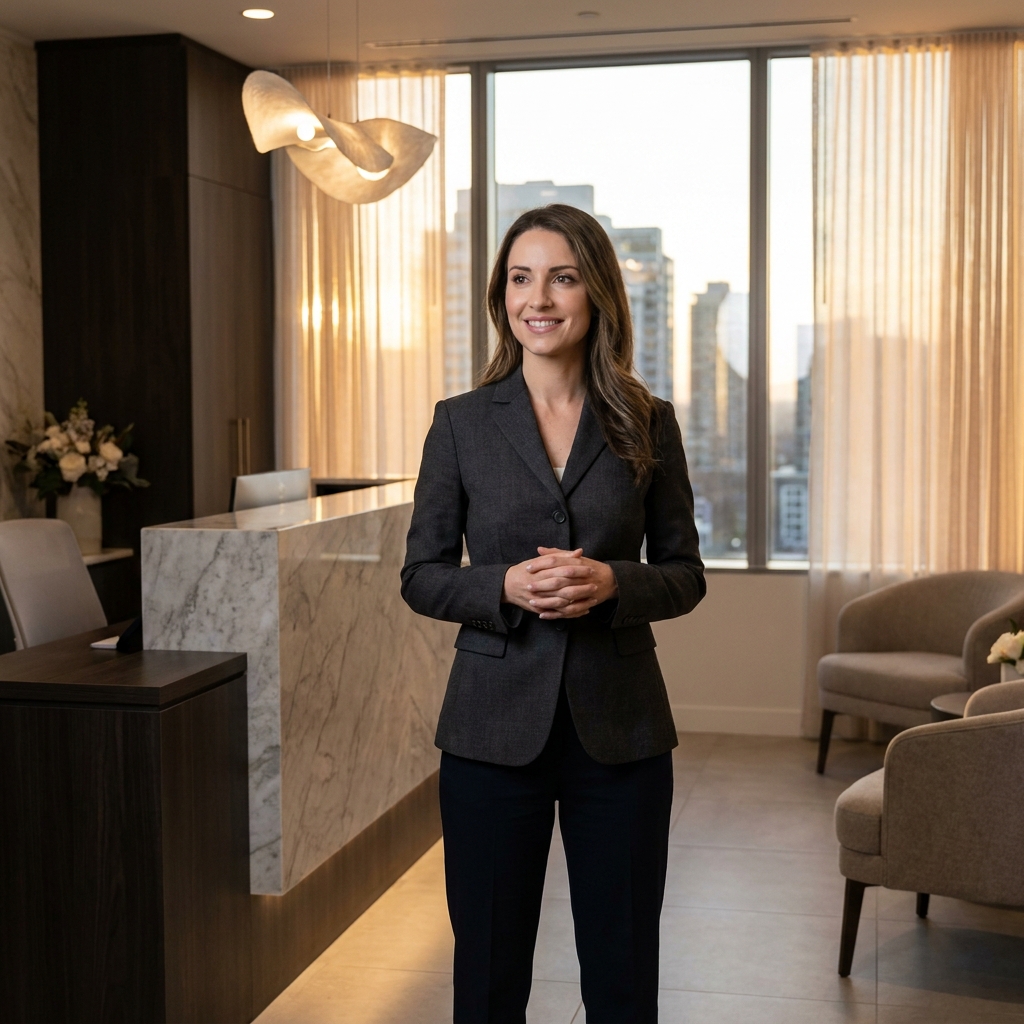
Reframe the geography entirely. For anyone in Manhattan, Brooklyn, Queens, the Bronx, Staten Island, New Jersey, or Westchester, Hair Doctor NYC’s Madison Avenue location is not a compromise on convenience. It is accessible from across the metro area via multiple transit options and represents, at most, a 30 to 60 minute commute for a journey that involves only a handful of appointments.
Applying the five-standard framework directly, Hair Doctor NYC features multiple double board-certified facial plastic surgeons. Its lead physician, Dr. Roy B. Stoller, brings more than 25 years of experience, has performed over 6,000 successful hair transplant procedures, and is recognized as a global leader in the field. Dr. Christopher Pawlinga has spent 18 years dedicated exclusively to hair transplantation.
The team depth is a structural advantage. Unlike single-practitioner clinics, where one surgeon’s availability and fatigue govern every outcome, the multi-surgeon model of Dr. Stoller, Dr. Louis Mariotti, Dr. Pawlinga, and Michael Ferranti, P.A., provides genuine specialization and redundancy. Ferranti, a licensed scalp micropigmentation specialist with more than 25 years in aesthetic dermatology and plastic surgery, extends the practice into non-surgical territory.
That range is exactly what the combination-therapy standard demands: FUE, FUT, SMP, and facial hair restoration coordinated under one roof, with the medical depth to build a comprehensive protocol rather than sell an isolated surgery.
The Madison Avenue setting should be read as a clinical signal, not merely a luxury one. A state-of-the-art facility on one of the world’s most prestigious medical corridors reflects the investment in infrastructure, equipment, and oversight that serious clinical practice requires.
What to Expect: The Hair Doctor NYC Patient Experience
Understanding the journey demystifies the process and clarifies how a surgeon-led practice differs from the commodity model. It begins with a personalized consultation and individualized treatment planning based on the patient’s Norwood stage and rate of progression. The procedure itself is surgeon-performed, followed by structured follow-up care.
A transparent practice also prepares patients for the “ugly duckling phase,” the predictable two to four month window after surgery when transplanted hair sheds and the scalp may temporarily look worse before improvement begins. This is sometimes called hair transplant shock loss, and clinics that omit this reality erode trust the moment it occurs. Setting the expectation in advance is a mark of clinical honesty.
Recovery is designed around real lives. Most patients at Hair Doctor NYC return to normal professional life within days, a critical consideration for professionals who cannot absorb extended downtime.
Discretion is built into the experience. The practice explicitly serves patients who value privacy and highly personalized care, recognizing that for many men the decision to pursue restoration is a private one. The results reflect the surgical team’s facial plastic surgery background: the combination of surgical expertise and artistic precision produces undetectable hair transplant results — hairlines and density patterns that are genuinely undetectable, not merely improved.
Conclusion: Redefine “Near Me” as “Near Excellence”
The core argument is straightforward. The “near me” search is a logical starting point and a dangerous ending point. With black-market clinics, ghost surgery, and unqualified technicians documented across the NYC metro, proximity without vetting is a patient-safety risk masquerading as a convenience.
The right filter is the five-standard framework: surgeon credentials and ABHRS certification, documented surgical volume, graft survival and transection transparency, combination therapy protocols, and facility accreditation. Each is a non-negotiable minimum.
The irreversibility argument closes the case. This is a permanent decision made with a finite, non-renewable resource of roughly 6,000 lifetime grafts. The 30 to 60 minutes required to reach Madison Avenue from anywhere in the NYC metro is not a sacrifice. It is an investment in getting this right the first time, when it is the only time that counts.
Hair Doctor NYC satisfies both the convenience and the clinical standard: genuinely accessible to the entire metro area, uncompromising across every dimension of the framework, and operating at the intersection of surgical excellence and aesthetic artistry. For men who hold themselves to a high standard in every other domain of their lives, the choice of a hair restoration clinic should reflect that same standard. That standard has an address on Madison Avenue.
Take the First Step Toward a Permanent, Natural Result
The next move is a personalized hair transplant consultation with the Hair Doctor NYC team at their Madison Avenue clinic. A consultation is an information-gathering conversation, not a surgical commitment. It is, however, the step that separates patients who make an informed decision from those who default to the nearest available option.
It is also a two-way evaluation. The patient assesses the clinic’s credentials, approach, and transparency. The clinical team assesses the patient’s candidacy, donor supply, and treatment goals. Both parties deserve that clarity before anything permanent is decided.
The depth is there to draw on: multiple board-certified surgeons, more than 25 years of specialized experience, over 6,000 successful procedures, and a Madison Avenue location serving the entire NYC metro area.
Excellence Meets Elegance. Schedule the consultation that turns a permanent decision into a confident one.