

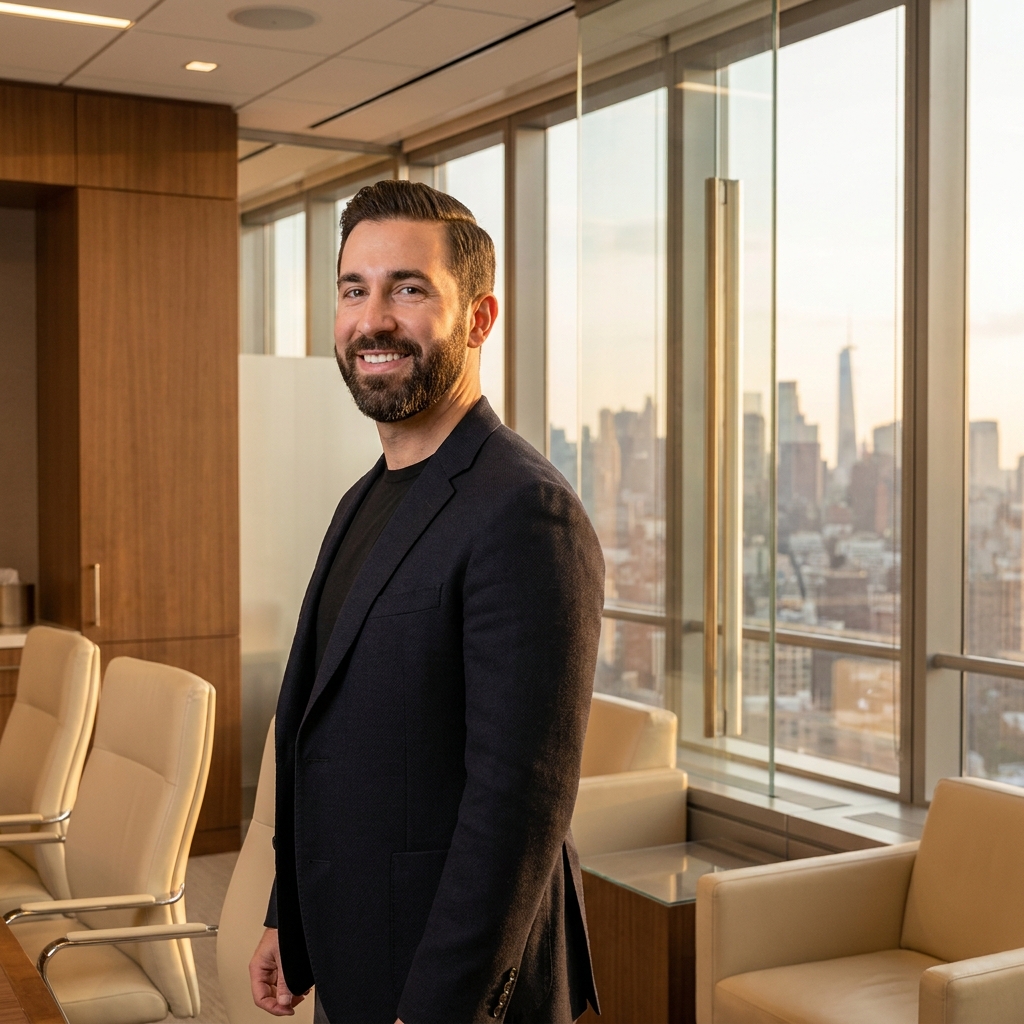
Facial Hair Transplant Surgeon NYC: The Facial Plastic Surgery Advantage
Introduction: Why Surgeon Selection Is the Most Important Decision in Facial Hair Transplantation
Not all hair transplant surgeons are equally equipped to perform facial hair work. The face demands a fundamentally different skill set than the scalp, and the difference between a natural, undetectable result and a “pluggy,” obviously transplanted one comes down almost entirely to the credentials and training of the person holding the instruments.
For the high-achieving man in New York City, this is not an abstract concern. The men who pursue beard, mustache, and jawline transplants expect precision, discretion, and a natural outcome from every professional they engage, whether that is a tailor, an attorney, or a surgeon. A facial hair transplant is permanent. It sits at the center of the face, visible at conversational distance, and there is no margin for error.
The central argument of this article is straightforward: a surgeon’s foundational training in facial plastic surgery, not merely hair restoration, is the decisive clinical differentiator for facial hair transplantation. Facial anatomy, proportion theory, and aesthetic design are core to facial plastic surgery training and peripheral to general hair restoration.
The demand signal is unmistakable. According to the 2025 ISHRS Practice Census, men seeking non-scalp procedures rose from 13% in 2021 to 18% in 2024, with beard and mustache transplants ranking as the number one non-scalp procedure for males. This guide provides a surgeon-selection framework for evaluating credentials, technique, and anatomical expertise, so that any man considering the procedure can choose a facial hair transplant surgeon in NYC with confidence.
Facial Hair Transplantation Is Not Scalp Transplantation: Understanding the Clinical Distinction
Facial hair transplantation is a recognized surgical subspecialty within hair restoration. It is not simply a variation of scalp work performed on a different part of the body.
The anatomical differences are significant. Facial skin is thinner, more vascular, and far more mechanically dynamic than scalp tissue. The face moves constantly with jaw motion and expression, which places unique demands on graft placement and healing. A technique that works on the relatively static, thick skin of the scalp does not translate directly to the cheek, jawline, or upper lip.
Graft composition differs as well. Facial hair transplantation relies overwhelmingly on single-hair follicular units, particularly at the perimeter zones, to replicate the natural gradient of facial hair density. This contrasts sharply with scalp transplantation, where multi-hair grafts are standard. A study of scar alopecia restoration published in the World Journal of Plastic Surgery found that one-hair grafts were used in 88 to 100% of facial zone cases specifically to achieve natural results.
Peer-reviewed research confirms this distinction. Foundational work published in Facial Plastic Surgery Clinics of North America establishes that facial hair transplantation requires distinct technique protocols and zone-specific expertise. As research by Dr. Anthony Bared notes, modern techniques allow for natural-appearing results, but only when applied with subspecialty knowledge.
Each facial zone carries its own graft requirements:
- Full beard: 2,000 to 4,000 grafts
- Mustache: 500 to 800 grafts
- Sideburns: approximately 200 to 250 grafts per side
- Cheek beard areas: 350 to 550 grafts per side
Each of these zones demands different angulation and density protocols. Errors in graft angulation are the most common cause of unnatural outcomes, per ISHRS repair data. This reality underscores the central case: facial anatomy training matters enormously. Our beard density zone guide covers these graft requirements in greater detail.
The Facial Plastic Surgery Advantage: Why Foundational Training Changes Everything
Facial plastic surgery residency training entails years of deep study in facial anatomy, soft tissue behavior, proportion theory, aesthetic harmony, and zone-specific surgical technique across the entire face. This is the same body of knowledge applied to rhinoplasty, facial contouring, and reconstructive work.
This training creates a complementary skill set that general hair restoration clinics and dermatologists offering transplants as an ancillary service cannot replicate. A surgeon who understands the three-dimensional architecture of the face, including muscle insertions, skin tension lines, and vascular supply, makes fundamentally better graft placement decisions than one who treats the face as another donor or recipient surface.
Proportion theory is a critical differentiator. Facial plastic surgeons are trained to evaluate the face as a unified aesthetic unit. A beard or mustache design must harmonize with the patient’s jawline structure, facial width, and existing features rather than existing in isolation. A beard that looks dense in a photograph but ignores the underlying facial geometry will never look right in person.
The artistic dimension cannot be overstated. Designing a natural-looking beard hairline requires the same aesthetic judgment used in rhinoplasty or facial contouring. These disciplines are core to facial plastic surgery training and only peripheral to general hair restoration. The work is as much sculpture as it is surgery.
For this reason, double board certification in facial plastic surgery and hair restoration represents the gold standard of dual-training credentials for this specific procedure.
Zone-by-Zone Angulation: The Technical Skill That Separates Exceptional Results from Detectable Ones
Graft angulation, the precise angle and direction at which each follicle is implanted, is the single most technically demanding element of facial hair transplantation.
Facial hair grows at dramatically different angles across zones. Mustache hairs grow nearly parallel to the skin surface, at angles as low as 10 to 15 degrees. Cheek beard hairs grow at steeper angles. Hairs along the sub-jawline follow a downward trajectory. A surgeon must understand and reproduce each of these vectors precisely.
The consequence of getting this wrong is severe. Grafts placed at incorrect angles create a “pluggy,” unnatural appearance that is immediately detectable at conversational distance. This is the most common complaint in repair cases.
The stakes are rising. The 2025 ISHRS Practice Census full report reported that repair cases due to previous procedures, including those from black-market and under-credentialed clinics, rose to 10% in 2025, up from 6% in 2021. Nearly 60% of ISHRS members report black-market clinics operating in their cities. The real-world cost of choosing the wrong surgeon is documented in the data.
This is precisely where facial plastic surgery training proves directly relevant. Surgeons trained in facial anatomy understand the directional vectors of facial musculature and skin tension, which directly inform correct graft angulation across all zones.
One principle is non-negotiable: direct surgeon involvement, not technician delegation, must govern angulation decisions. Patients should ask explicitly during consultation who performs each step of the procedure.
FUE as the Gold Standard for Facial Hair Transplantation
Follicular Unit Extraction (FUE) is the dominant technique for facial hair transplants. It accounts for approximately 80 to 85% of all surgical hair restoration procedures globally, according to 2026 hair transplant statistics drawing on ISHRS census data.
FUE is particularly well-suited to facial work for several reasons. It leaves no linear scarring at the donor site, healing on the face is faster, and the technique provides the precision required to extract and place single-hair grafts without damaging delicate follicular units.
The procedure timeline is manageable for working professionals. Most cases take 4 to 8 hours under local anesthesia, depending on graft count, and most patients return to normal activities within days. A social downtime of approximately one week is recommended.
Patients should understand shock loss as a normal biological process. Within 2 to 4 weeks after surgery, transplanted hairs temporarily shed. The follicle root remains intact, and regrowth begins on its own schedule. Final results are visible within 9 to 12 months, with graft survival rates at accredited clinics using modern FUE techniques ranging from 90 to 97%.
Some elite practices also offer Platelet-Rich Plasma (PRP) as an adjunct. Several studies suggest it can improve graft survival outcomes, making it a valuable addition at sophisticated facilities.
Who Is a Candidate for Facial Hair Transplantation in NYC?
Identifying as a candidate is the first practical step. The following profiles describe the men who most often benefit from the procedure.
Men with patchy or sparse beard growth. Whether due to genetics, scarring, or alopecia, men who desire a fuller, more defined beard or mustache represent the primary candidate group. Understanding the causes and solutions for a patchy beard is a useful starting point for these patients.
Post-laser regret patients. A growing and underserved population consists of men who underwent laser hair removal on the beard area and now wish to restore facial hair. Laser treatment permanently destroys follicles, which makes transplantation the only viable restoration option for these patients.
Scar revision candidates. Men with facial scarring from accidents, surgery, or burns, where hair no longer grows, can use facial hair transplantation to restore coverage and camouflage scarring. As the International Journal of Trichology confirms, beard and mustache reconstruction accounts for the maximum non-scalp procedures in males.
FTM transgender patients. Beard and mustache transplants rank among the most impactful gender-affirming procedures available. Hormonal therapy should be stabilized first, typically requiring 12 months of testosterone therapy, before proceeding. Working with a surgeon experienced in this patient population is essential.
The demographic context is relevant. Per the 2025 ISHRS Practice Census, 95% of first-time hair restoration surgery patients in 2024 were between ages 20 and 35, reflecting a significant shift toward younger patients and early intervention.
How to Evaluate a Facial Hair Transplant Surgeon in NYC: A Decision Framework
The following criteria are presented in order of importance for facial-specific work. They form the practical core of the surgeon-selection process.
Credential Verification: What Board Certifications Actually Mean
There are meaningful differences between a facial plastic surgeon, a general plastic surgeon, a dermatologist, and a general hair restoration specialist. For facial hair work specifically, facial anatomy expertise is the deciding factor.
Double board certification, such as in facial plastic surgery combined with hair restoration, is the gold standard credential combination for this procedure. Patients should verify board certifications independently through official board registries, not solely through clinic marketing materials. ISHRS membership and fellowship credentials further indicate a surgeon who has committed to ongoing education in hair restoration specifically.
Assessing Surgical Volume and Case Specificity
There is a critical distinction between total procedure volume and facial hair-specific case volume. A surgeon with thousands of total procedures who has personally performed hundreds of beard and mustache transplants is categorically different from one who performs facial hair work only occasionally.
Patients should ask directly: “How many beard transplants have you performed?” and “Can I see before-and-after photographs of beard and mustache cases specifically?” A photographic portfolio should demonstrate natural hairline design, appropriate density gradients, and zone-specific angulation, not just graft survival. Reviewing beard transplant before and after results is an essential step in evaluating any surgeon’s work. As peer-reviewed research by Dr. Jeffrey Epstein, based on more than 700 primary beard hair transplant cases, illustrates, meaningful surgical volume at the academic level is substantial.
Direct Surgeon Involvement: Who Actually Performs the Procedure
In some hair restoration clinics, technicians perform the majority of extraction and implantation steps, with the surgeon present only for the initial incision design. This delegation model is particularly problematic for facial hair transplantation, where angulation decisions, density gradient calibration, and hairline design require real-time surgical judgment that cannot be safely delegated to non-physician technicians.
Patients should ask explicitly: “Who performs each step of my procedure?” and “Will you personally be making all graft placement decisions?” Surgeons trained in facial plastic surgery are accustomed to performing technically demanding, detail-intensive facial procedures personally. It is the standard of care in their specialty.
Consultation Quality as a Diagnostic Signal
A high-quality consultation for a facial hair transplant should include facial proportion analysis, zone-by-zone graft planning, discussion of donor site characteristics, and a clear explanation of the expected timeline and results.
A surgeon who approaches the consultation as an aesthetic design session, evaluating how a beard or mustache design will harmonize with the patient’s overall facial structure, is demonstrating the facial plastic surgery mindset. By contrast, a consultation that focuses primarily on graft counts and procedure logistics without addressing aesthetic design signals that the surgeon may lack facial proportion training.
Patients should be cautious of any surgeon who does not discuss shock loss, realistic timelines of 9 to 12 months for final results, or the possibility of a touch-up session. Knowing what to expect at your hair restoration consultation can help patients prepare the right questions.
Hair Doctor NYC: The Facial Plastic Surgery Advantage in Practice
Hair Doctor NYC, operating as Stoller Medical Group, embodies the dual-training standard described throughout this article.
Dr. Roy B. Stoller is a double board-certified facial plastic surgeon with more than 25 years in the field and recognition as a globally recognized leader. He has performed over 6,000 successful hair transplant procedures, a surgical volume that reflects both depth of experience and consistent demand.
Dr. Louis Mariotti is a double board-certified facial plastic surgeon with a specific focus on surgical detail and facial harmony. This focus aligns directly with the proportion theory and zone-specific design principles that determine natural outcomes.
The practice operates a team-based model featuring multiple double board-certified facial plastic surgeons, which is uncommon in the NYC hair restoration market and represents a structural advantage in clinical oversight and expertise. Dr. Christopher Pawlinga has spent 18 years dedicated exclusively to hair transplantation, and Michael Ferranti, P.A., brings more than 25 years in aesthetic dermatology as a licensed Scalp Micropigmentation specialist.
The Madison Avenue location in Midtown Manhattan reflects the premium, discreet experience the target patient expects. The practice’s emphasis on natural-looking, undetectable results connects directly to the technical principles outlined here: proper angulation, single-hair graft protocols at perimeter zones, and aesthetic design rooted in facial proportion theory.
What to Expect: The Facial Hair Transplant Process at a Facial Plastic Surgery Practice
Consultation and design. The process begins with facial proportion analysis, zone mapping, hairline design, graft count estimation by zone, donor site assessment, and candidacy evaluation.
Procedure day. Local anesthesia is administered, followed by FUE extraction from the donor site, typically the occipital scalp. Grafts are prepared and then implanted zone by zone with surgeon-directed angulation and density calibration. The procedure typically takes 4 to 8 hours.
Immediate post-procedure. Mild swelling and redness are expected. Soft foods are recommended for 2 to 3 days to minimize jaw movement and protect newly placed grafts, along with specific aftercare instructions for facial skin. Detailed hair transplant post-operative care guidance is provided to every patient.
Recovery timeline. Most patients return to normal activities within days. A social downtime of approximately one week is recommended for working professionals in NYC. Shock loss occurs at 2 to 4 weeks and is a normal part of the healing process.
Results timeline. Initial regrowth becomes visible at 3 to 4 months, significant density at 6 months, and final results are fully visible at 9 to 12 months. Understanding the hair transplant natural growth timeline helps patients set realistic expectations. Graft survival rates at accredited clinics using modern FUE techniques run 90 to 97%, with elite practices reporting up to 95 to 98%.
Conclusion: The Standard of Care for Facial Hair Transplantation in NYC
For facial hair transplantation, a surgeon’s foundational training in facial plastic surgery is not a marketing credential. It is a clinical prerequisite that directly determines the naturalness and permanence of the outcome.
Facial anatomy mastery, proportion theory, zone-specific angulation expertise, and direct surgeon involvement are skills forged through facial plastic surgery residency. General hair restoration practitioners cannot replicate them. With beard and mustache transplants now the number one non-scalp procedure for males, and repair cases rising to 10% of ISHRS member caseloads, the cost of choosing the wrong surgeon has never been higher.
Men who hold themselves to a high standard in every professional and personal domain should apply the same rigor to surgeon selection. Credentials, training, and surgical volume are the metrics that matter. A well-executed facial hair transplant is a permanent, natural-looking enhancement that requires no ongoing maintenance, which makes the initial decision to choose the right surgeon the most important investment in the entire process.
Schedule Your Consultation with Hair Doctor NYC
Men considering a facial hair transplant are invited to schedule a beard transplant appointment with Hair Doctor NYC (Stoller Medical Group) on Madison Avenue in Midtown Manhattan.
The practice’s team of double board-certified facial plastic surgeons brings the full complement of facial anatomy expertise, proportion theory, and hair restoration technique to every facial hair transplant case. Each patient receives an individualized facial proportion analysis and a zone-by-zone treatment plan, not a generic procedure recommendation.
In keeping with the practice’s commitment to natural, undetectable results and its guiding principle that excellence meets elegance, every consultation is designed to deliver clarity, discretion, and a realistic path to the result the patient seeks.
To learn more or request a consultation, visit hairdoctornyc.com.