

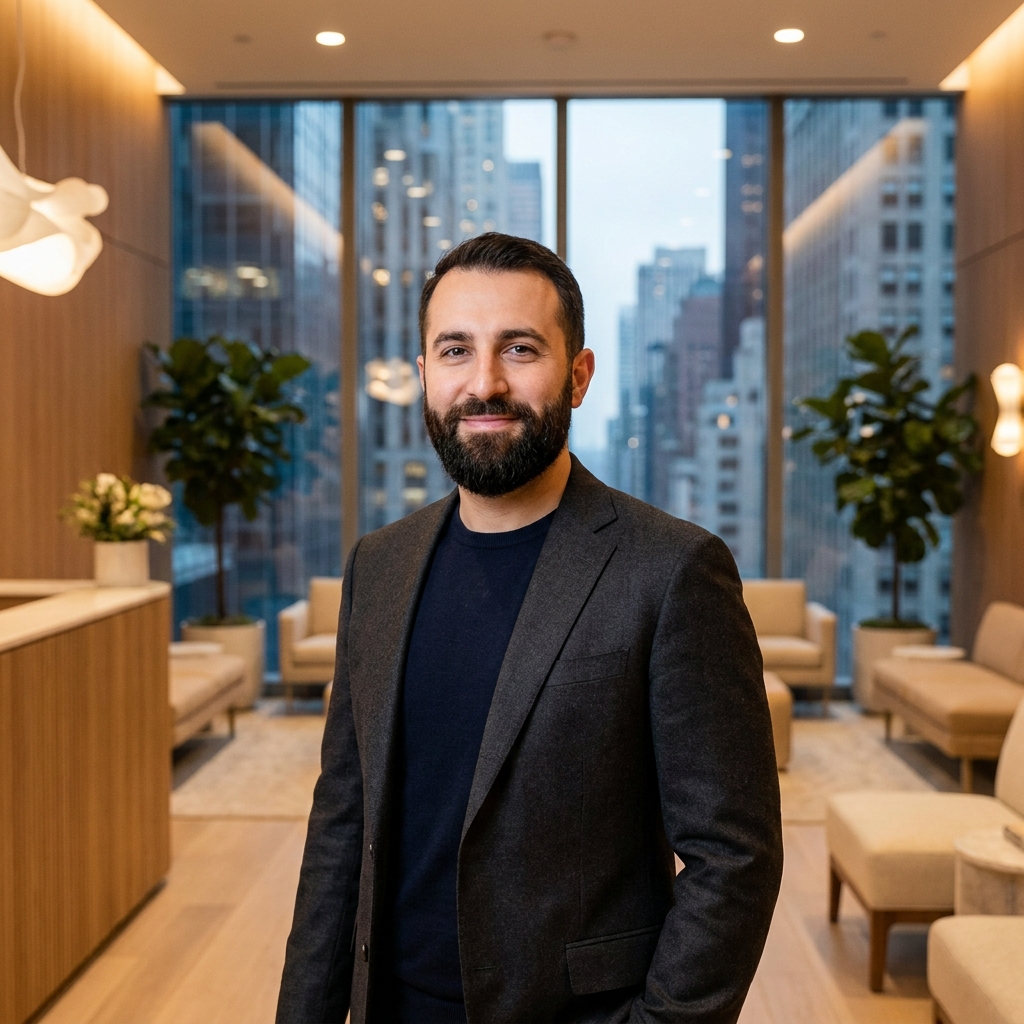
Beard Hair Transplant Near Me: Why Manhattan Is Your Answer
Introduction: The Question Behind the Search
By the time a man types “beard hair transplant near me” into a search engine, the decision has already been made. He is not weighing whether to proceed. He is asking a far more consequential question: who can he trust to do it correctly.
That single search phrase carries a hidden paradox. “Near me” implies that geographic convenience is the priority. But for a procedure as anatomically demanding as a beard transplant, the only proximity that matters is proximity to the right credentials. A shorter commute means nothing if it leads to a surgeon operating outside their expertise.
The stakes are not abstract. The face is irreversible real estate. A beard transplant is not a haircut that grows out or a treatment that can be reversed. It is a permanent alteration to the most visible part of the human body. A poorly executed procedure is not a minor inconvenience. It is a lifelong, visible consequence a man carries every time he looks in a mirror.
This is the core argument for any patient in the greater New York metropolitan area, whether in Brooklyn, the Bronx, Long Island, New Jersey, or Connecticut: Midtown Manhattan is not merely a convenient option. It is the answer. What follows is not a generic provider checklist. It is a credential-first framework for the discerning man who understands that quality and proximity are not the same variable.
Why the Beard Transplant Market Is Surging, and Why That Creates Risk
The demand for beard transplants is not a passing trend. The global beard hair transplant market was estimated at $1.5 billion in 2025 and is projected to reach approximately $4.2 billion by 2033, growing at a compound annual rate of 12%, driven by the adoption of FUE and the broader men’s grooming movement.
That movement is enormous. The men’s grooming market was valued at $62.5 billion in 2025 and is projected to reach $85.2 billion by 2030, fueled by rising disposable incomes, shifting cultural perceptions of masculinity, and the influence of social media, according to Franchising Magazine USA. Fuller beards have been identified as a dominant grooming trend for 2026, with industry experts noting a decisive swing toward larger, denser facial hair.
The clinical data confirms the shift. According to the 2025 ISHRS Practice Census, beard and mustache transplants now rank as the number one non-scalp procedure for men, accounting for 5% of all male hair restoration surgeries in 2024, up from 4% in 2021, a 28% relative increase.
Rapid growth in an under-regulated market, however, creates a serious risk dimension. The same ISHRS census found that 59.4% of members identified black-market hair transplant clinics operating in their cities in 2024. Repair procedures rose to 6.9% of all hair transplants in 2024, up from 5.4% in 2021, itself a 28% relative increase in corrective cases.
Here is the regulatory reality that makes credentials non-negotiable: in the United States, any licensed physician can legally perform hair transplant surgery with zero specialized training. Board certification is not legally required, yet it remains the patient’s only reliable quality filter. In a market this large, this fast-growing, and this loosely regulated, the “near me” question must be reframed before it can be answered correctly.
Reframing “Near Me”: The Facial Plastic Surgery Credential Radius
The concept that should replace the map pin is the Facial Plastic Surgery Credential Radius: the geographic zone within which a patient can access a surgeon whose training is specifically rooted in facial anatomy, not general hair restoration and not general plastic surgery.
This radius matters more than a map pin because a beard transplant operates on five distinct anatomical zones of the face, each requiring precise angulation, caliber matching, density calibration, and a growth-direction protocol. This is not scalp work performed lower on the body. It is a fundamentally different surgical discipline.
The distinction between a facial plastic surgeon and a general plastic surgeon is critical. As Dr. Philip Miller’s NYC practice explains, a facial plastic surgeon’s training is focused solely on the face, head, and neck, developing deep knowledge of bones, muscles, tendons, cartilage, and skin. A general plastic surgeon divides training across six body areas, with only a fraction devoted to the face.
For a beard transplant specifically, the relevant credential radius in the New York metro area converges on one address: Midtown Manhattan, where double board-certified facial plastic surgeons with decades of dedicated experience practice. The commute reframes accordingly. Whether a patient travels from Brooklyn, Long Island, New Jersey, or Connecticut, the distance to Madison Avenue is the same journey to the only category of surgeon for whom the face is the entire career.
The Anatomy of a Beard Transplant: Why Facial Expertise Is Non-Negotiable
The technical complexity that separates beard transplantation from scalp restoration is precisely what justifies a credential-first framework. Understanding that complexity is how a discerning patient distinguishes marketing from medicine.
Five Zones, Five Sets of Rules
The face is not a single canvas. It is five distinct anatomical zones, each with its own set of rules. According to peer-reviewed gender-affirming surgery literature published on ScienceDirect, graft counts vary sharply by zone: 250 to 300 grafts per sideburn, 400 to 1,000 grafts for the mustache and goatee, and 300 to 600 grafts per cheek.
Each zone demands its own angulation protocol. Facial skin is thinner and more mobile than scalp tissue, requiring the surgeon to place grafts at 30 to 45 degrees with a precision that cannot be delegated. The occipital zone accounts for 91.7% of the donor hair used in beard transplants, and caliber selection within that zone requires specialized surgical judgment, not a technician’s hand.
A full beard transplant typically requires 1,500 to 3,500 grafts. A miscalculation in any single zone produces asymmetry, unnatural density, or directional inconsistency that is immediately visible on the face. There is no hiding a mistake made on the jawline.
FUE: The Gold Standard for Facial Work
FUE (Follicular Unit Extraction) is the dominant technique for beard transplants, accounting for approximately 80 to 85% of all surgical hair transplant procedures globally, per the ISHRS 2025 Practice Census. It leaves no linear scarring, a critical consideration for facial aesthetics, and it allows precise individual graft placement, enabling the surgeon to honor the directional and density requirements of each facial zone.
DHI using the Choi Implanter Pen is an advanced alternative for beard work. It allows simultaneous extraction and implantation, enabling higher density placement and reducing the time grafts spend outside the body, a meaningful clinical advantage for facial restoration.
The results validate the technique. Graft survival rates at accredited clinics with experienced surgeons reach 90 to 97% at 12-month follow-up. Beard hair specifically achieves a 95% one-year graft survival rate, the highest of all donor types.
The 2026 Standard: AI-Assisted Facial Mapping
Leading practices in 2026 now incorporate AI-assisted graft distribution planning and facial mapping into their pre-operative preparation. This has become the current standard at credential-first clinics.
The technology, however, is only as valuable as the surgeon reading its output. AI-assisted mapping requires both the infrastructure to deploy it and the surgical judgment to interpret it correctly, a combination that exists only at practices where facial anatomy is the surgeon’s entire domain. This is the differentiator that separates credential-first practices from volume-driven clinics.
What Can Go Wrong, and Why It Usually Does
The risk profile deserves direct discussion, without alarm. A beard transplant complication rate of just 1.2% is achievable with experienced surgical teams, according to research led by Alfonso Barrera at Baylor College of Medicine, with keloid scarring, poor hair growth, and donor-site hair loss each occurring at roughly 0.4% in expert hands.
The ISHRS identifies the specific failure modes of poorly executed beard transplants: poor graft exit angles, abnormal hairlines, poor scalp-to-beard hair matching, and rare infection risks.
Each of these errors is a direct consequence of operating on facial anatomy without facial-specific training. They are not random outcomes. They are predictable results of mismatched expertise. A surgeon who does not understand the 30-to-45-degree angulation requirement of facial skin will produce grafts that grow at the wrong angle. A surgeon who cannot match caliber across zones will produce an unnatural hairline.
The repair data underscores the point. That 6.9% of all hair transplants in 2024 were corrective procedures represents patients who chose a provider based on convenience or price and are now paying a second time, on their face, to fix what should have been done correctly the first time.
Who Is Getting Beard Transplants in 2026, and What They Have in Common
The dominant demographic is striking: 95% of first-time beard transplant patients are between ages 20 and 35, per the ISHRS 2025 Practice Census. This makes them the most active group in the market and the group with the most to lose from a poor outcome, given the decades they will spend living with the result.
The broader reality reflects the New York market directly. Men aged 25 to 54 in high-income professional environments, where appearance intersects with career advancement, represent the core patient base for a Manhattan practice.
The FTM transgender patient segment is a clinically distinct and often underserved population. Peer-reviewed research in Facial Plastic Surgery Clinics of North America confirms that FTM patients can attain a much fuller beard through transplantation than is typically achievable with hormonal supplementation alone. Research published in JAMA Surgery demonstrates a clear association between gender-affirming surgery and improved mental health outcomes, reinforcing that these procedures serve therapeutic purposes well beyond appearance. For a deeper look at this specific patient population, beard transplant for transgender men is a subject the practice addresses directly.
There is also a long-term planning dimension. Because so many first-time patients are in their 20s and 30s, they also face future scalp hair loss risk. A surgeon who understands donor supply planning, preserving follicular reserves for potential future scalp restoration, is not a luxury. It is a clinical necessity.
What unifies every one of these profiles is a single shared truth: each patient is making a permanent decision about his face. The credential of the surgeon performing that procedure is the only variable he can control.
The Recovery Timeline: What to Expect After Your Procedure
A clear recovery roadmap builds confidence in the process.
- Days 7 to 10: The initial healing phase. Most patients return to normal professional life within days.
- Weeks 3 to 4: Shock loss, or temporary shedding, is normal and expected. This is a physiological response, not a complication or a sign of failure.
- Months 3 to 4: Visible regrowth begins. The face’s superior vascularity means beard transplants often show new regrowth slightly faster than scalp timelines.
- Months 12 to 18: Full density is achieved. Over 90% of patients report satisfactory results at five years post-procedure.
Approximately 30% of patients pursue a planned second session for additional density. This is an enhancement by design, not a corrective failure. Additionally, 42% of beard transplant procedures now include PRP (Platelet-Rich Plasma) therapy to support graft survival and accelerate healing. Clinics offering structured post-operative care see 43% better outcomes than those without formal aftercare programs.
The recovery experience is directly shaped by the quality of the procedure itself. A well-executed transplant with correct angulation and density heals predictably. A poorly executed one does not.
Why Hair Doctor NYC Is the Answer to Your “Near Me” Search
Having established what a beard transplant actually requires and what “near me” should truly mean, one practice satisfies both criteria simultaneously. Hair Doctor NYC, operating as Stoller Medical Group on Madison Avenue in Midtown Manhattan, was built for exactly this standard.
Double Board-Certified Facial Plastic Surgeons: Not a Credential, a Commitment
Dr. Roy B. Stoller is a globally recognized leader with more than 25 years in facial plastic surgery. He is double board-certified and has performed over 6,000 successful hair transplant procedures. His entire career has been built on the face.
Dr. Louis Mariotti is a double board-certified facial plastic surgeon whose focus on surgical detail and facial harmony reflects the zone-by-zone precision that beard transplantation demands.
Dr. Christopher Pawlinga has dedicated 18 years exclusively to hair transplantation, a career singularity that represents the deepest possible specialization in the field.
Michael Ferranti, P.A., is a licensed Scalp Micropigmentation specialist with more than 25 years in aesthetic dermatology and plastic surgery, providing non-surgical options within the same credentialed environment.
Unlike practices that rely on a single physician, Hair Doctor NYC deploys multiple specialists. This depth of expertise directly benefits complex cases and ensures continuity of care.
Madison Avenue: The Geography of Excellence
The Midtown Manhattan location is not a luxury amenity. It is a clinical statement. This is where the concentration of double board-certified facial plastic surgeons in the New York metro area resides.
For patients considering the commute, the argument is straightforward. Brooklyn, the Bronx, Long Island, New Jersey, and Connecticut all fall within the same credential radius. The journey to Madison Avenue is the journey to the only category of surgeon for whom facial anatomy is the entire professional focus.
The state-of-the-art facility is the physical infrastructure that supports this standard: advanced FUE and DHI capabilities and structured post-operative care protocols that are not available at every clinic within a five-mile radius. The practice’s tagline, “Excellence Meets Elegance,” is both a clinical and experiential promise, calibrated for the discerning man who expects surgical precision and a practice environment that respects his time and privacy.
The Credential Checklist: What to Verify Before Any Beard Transplant Consultation
Before any consultation, a discerning patient should verify the following:
- Is the surgeon double board-certified in facial plastic surgery? Not general plastic surgery. Facial plastic surgery, where the entire training is focused on the face, head, and neck.
- How many beard transplant procedures has the surgeon performed? Can they demonstrate zone-specific results, not just before-and-after scalp photos?
- Does the practice offer personalized graft distribution planning as part of the pre-operative process?
- Is FUE or DHI available, and does the surgeon personally perform the procedure, or is it delegated to technicians?
- Does the practice have a structured post-operative care program? Clinics with formal aftercare see 43% better outcomes.
- Is the surgeon’s training aligned with the standards documented in the ISHRS Practice Census, the gold-standard benchmark for credentialed experts?
This checklist has one purpose: to ensure a patient’s “near me” search ends at a practice that can actually deliver the result he is seeking, not simply the one closest to his zip code. For a deeper look at what hair transplant surgeon credentials actually mean in practice, the distinction between board certifications is worth understanding before any consultation.
Conclusion: Proximity Is a Convenience. Credentials Are a Standard.
The “beard hair transplant near me” search is not a geographic question. It is a credential question. For any patient in the greater New York metro area, the answer to that question is Midtown Manhattan.
The stakes justify the rigor. A beard transplant is a permanent procedure on the most visible part of the human body, performed across five anatomically distinct zones, each requiring surgical precision that only a facial plastic surgeon’s training can reliably deliver.
The market reality confirms the urgency. In a $1.5 billion global market growing at 12% annually, with 59.4% of ISHRS members reporting black-market clinics in their cities and repair cases rising 28% in three years, the credential of the surgeon is the only variable the patient controls.
The discerning man does not make permanent decisions about his face based on a map radius. He makes them based on a credential radius. For the New York metro area, that radius leads to Hair Doctor NYC.
Schedule Your Consultation at Hair Doctor NYC
The next step is not a generic inquiry. It is a personalized assessment of facial anatomy, donor supply, and beard design goals conducted by a team whose entire career is focused on the face.
At Hair Doctor NYC, the consultation is the first step in a process designed around each patient’s specific anatomy: zone-by-zone planning and a surgical team of double board-certified facial plastic surgeons and dedicated hair restoration specialists.
Whether a patient is in Manhattan, Brooklyn, Long Island, New Jersey, or Connecticut, the consultation at Hair Doctor NYC on Madison Avenue is the most important appointment he will make in this process. Visit hairdoctornyc.com or contact the practice directly to begin.
Excellence Meets Elegance, beginning with the conversation.