

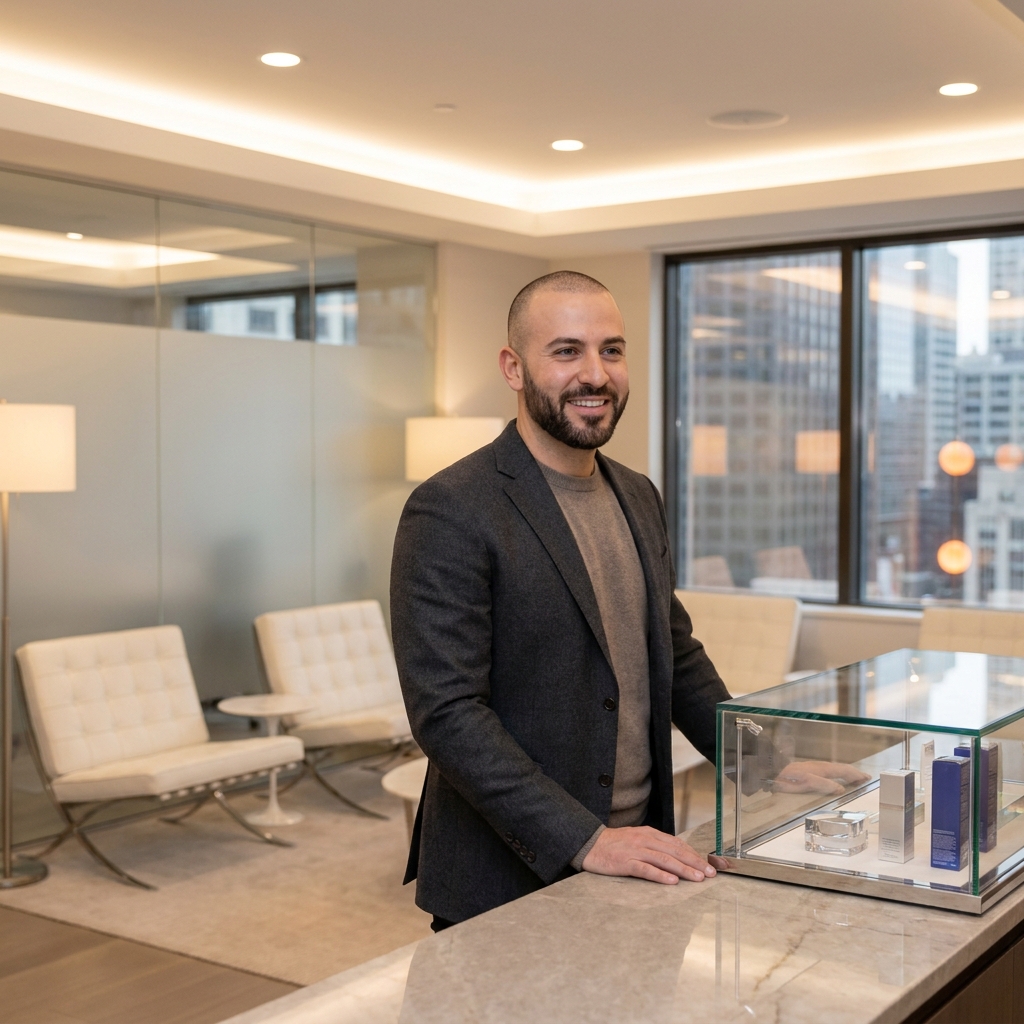
Scalp Micropigmentation: The Clinician’s Guide to Medical-Grade SMP
Introduction: Why the Provider You Choose Defines Everything
Scalp micropigmentation occupies a strange dual identity in modern hair restoration. It is simultaneously one of the most clinically sophisticated non-surgical procedures available and one of the most frequently botched. The entire difference between those two outcomes comes down to a single variable: who performs it.
The demand driving this procedure is enormous. According to a 2025 NIH “All of Us” cross-sectional study, androgenetic alopecia affects up to 80% of men and 50% of women by age 70, which translates to roughly 50 million men and 30 million women in the United States alone. That scale of demand has fueled an explosion of providers, and not all of them belong anywhere near a patient’s scalp.
The core thesis of this guide is straightforward. Medical-grade SMP performed by a licensed specialist is categorically different from what a cosmetic tattoo studio offers. That distinction determines whether the result is indistinguishable from a natural shaved head or a corrective case waiting to happen. This piece introduces a three-tier provider hierarchy that matters more than any other decision a patient will make, and it grounds every claim in current peer-reviewed evidence and the positioning of the International Society of Hair Restoration Surgery (ISHRS). It is written from the perspective of a dual-modality practice that offers both surgical and non-surgical restoration, which allows for genuinely unbiased guidance.
What Scalp Micropigmentation Actually Is, and Is Not
Defined with clinical precision, SMP is the deposition of specialized pigment into the upper dermis at approximately 0.5 to 1.5mm depth, using ultra-fine micro-needles in a stippling (dot) pattern to replicate the visual appearance of individual hair follicles.
The critical point that responsible providers make clear: SMP does not grow hair, stimulate follicles, or reverse hair loss. It creates a sophisticated visual illusion of density and follicular presence. Each dot is placed to mimic the cross-sectional appearance of a shaved hair follicle, a task that demands both technical precision and genuine artistic judgment.
This is where SMP diverges from traditional tattooing at the biological level. SMP targets the upper dermis rather than the deeper dermis, uses a stippling pattern rather than line work, and requires a fundamentally different needle configuration and machine calibration. The ISHRS classifies SMP as “shallow, pointillistic, medical-grade tattooing,” a formal clinical identity that separates it from the casual framing of “head tattooing.” That framing badly undersells the procedure’s technical demands and misleads patients about the qualifications a provider actually needs.
The Clinical Use Cases: SMP Is Not a Single Procedure
Most content treats SMP as a binary fallback: the option for people who cannot or will not have a transplant. That framing is clinically inaccurate. SMP is a multi-use-case discipline with at least five distinct applications, each with its own indications.
Primary Non-Surgical Solution for Androgenetic Alopecia
SMP is ideal for patients at any Norwood stage who prefer a shaved-head aesthetic without surgery. It is particularly compelling for Norwood 5 to 7 patients, where transplant donor supply simply cannot cover the recipient area. SMP fills that gap with a convincing density illusion. For patients at these advanced stages, understanding the hair transplant options for advanced baldness alongside SMP is essential to making an informed decision.
The evidence here is strong. A 2025 study by Liu et al. in the Journal of Cosmetic Dermatology validated a standardized three-session protocol that achieved Visual Density Scores of 8.7/10 immediately post-treatment and 7.7/10 at six-month follow-up, with Patient Satisfaction Scores of 2.7/3. Notably, the study used a calibrated dot-density protocol: 40 dots/cm² in session one, 60 dots/cm² in session two, and 80 to 100 dots/cm² in session three. That progression illustrates the technical precision the procedure genuinely requires.
Density Illusion Complement to Hair Transplants
SMP and hair transplants are not mutually exclusive. For Norwood 4 to 7 patients, the combination approach often outperforms either modality alone. Transplanted hair provides three-dimensional texture and natural movement; SMP fills the visual gaps between grafts to create the appearance of fuller density.
This hybrid strategy is especially valuable for patients with limited donor supply who want maximum visual impact. It also requires a provider who understands both surgical restoration and SMP. A dual-modality practice is uniquely positioned to plan this kind of combination treatment, because the recommendation is driven by the patient’s anatomy rather than by whatever single service the provider happens to offer.
Post-Transplant Scar Camouflage
FUT (the strip method) leaves a linear donor scar; FUE leaves a pattern of small circular scars. Both are addressable with SMP. There is a critical clinical requirement, however: a 10 to 12 month healing window must be observed before SMP is applied to transplant scars, allowing full tissue maturation. Patients considering this approach should understand what an FUT strip method scar looks like before evaluating SMP as a camouflage option.
Scar tissue also holds pigment less predictably than normal scalp. A 2026 study in the Journal of Cutaneous and Aesthetic Surgery confirmed greater pigment fading in scarring cases at six-month follow-up (Δ=1.6) versus androgenetic alopecia (Δ=0.9, p=0.03), meaning additional maintenance sessions are often required. A generalist SMP artist without surgical knowledge cannot adequately assess scar maturity or plan treatment accordingly.
Corrective Treatment for Botched Procedures
This is a growing and underserved segment. ISHRS data shows botched SMP repair cases nearly doubled between 2021 and 2025. SMP can camouflage the irregularities of poorly executed transplants: pluggy hairlines, unnatural graft distribution, and visible scarring.
Corrective SMP itself demands the highest level of skill. A 2025 retrospective study of 120 corrective SMP patients found that improperly performed SMP is exceedingly challenging to correct and is associated with severe patient distress. That reality underscores why choosing the right provider the first time is not a preference; it is a clinical imperative.
Scarring Alopecia, Alopecia Areata, Burns, and Chemotherapy-Related Hair Loss
The 2026 JCAS study confirmed SMP as a viable aesthetic intervention in primary scarring alopecia, with good patient-reported outcomes. Burn scars, radiation-related alopecia, and chemotherapy-induced hair loss are additional indications where SMP can restore the appearance of a full scalp when follicular regrowth is impossible.
These cases require the highest clinical judgment. Results are diagnosis-dependent, so the provider must assess tissue quality, pigment retention capacity, and realistic outcome expectations before proceeding. The ISHRS explicitly identifies these as legitimate clinical applications, reinforcing SMP’s status as a medical-grade intervention rather than a cosmetic service.
The Three-Tier Provider Hierarchy: Why Not All SMP Is Equal
Here is the framework most content never addresses. Providers fall into three tiers, and the tier determines pigment chemistry, equipment calibration, clinical assessment capability, sterility standards, and ultimately the safety and longevity of the outcome.
The regulatory context makes this framework essential. In the United States, SMP regulation is handled at the state or county level with no nationwide standards. Some states classify it under tattooing, some treat it separately, and some areas remain entirely unregulated. In the absence of enforceable national standards, a patient’s own due diligence becomes the primary safeguard.
Tier One: Cosmetic Tattoo Parlors and Unregulated Studios
Practitioners at this tier typically hold a basic tattoo license, or none at all in unregulated jurisdictions, with no specialized SMP training and no medical oversight. The global explosion of training academies (approximately 3,800 active academies as of 2026, up 81% from 2021) has flooded this tier with undertrained providers.
The risks are specific: traditional tattoo inks rather than SMP-specific pigments (leading to color-shifting), incorrect needle depth targeting the deeper dermis, line-work technique rather than stippling, and inadequate sterility protocols. The Cleveland Clinic notes that infections, including hepatitis, HIV, and staph, are significantly more likely when procedures are performed in unregulated settings than in a trained cosmetic physician’s office. The single most compelling data point: 89.2% of patients requiring corrective SMP had originally been treated in non-medical settings.
Tier Two: Paramedical Tattooing and Dedicated SMP Studios
These practitioners have completed dedicated SMP-specific training and use appropriate equipment and pigments. They operate under paramedical or permanent cosmetics licensing frameworks where those exist, with greater attention to sterility and technique than Tier One.
The limitations are structural. No medical training means no capacity for clinical assessment of the underlying alopecia type, no scar tissue evaluation, and no management of complications. They cannot plan combination surgical and SMP treatments. This tier is appropriate for straightforward cosmetic cases in healthy patients with no complicating factors, but the patient must self-identify as low-complexity, which requires medical knowledge they typically do not possess. The absence of physician oversight means no differential diagnosis, no medical history review, and no capacity to identify contraindications such as active scalp conditions, bleeding disorders, or medications affecting healing.
Tier Three: Medical-Grade SMP from a Licensed Specialist
The highest tier is SMP performed by, or under the direct supervision of, a licensed physician or physician assistant with specialized training in both SMP technique and hair restoration medicine. Here, SMP is integrated into a comprehensive clinical framework: full medical history, scalp health assessment, differential diagnosis of alopecia type, and the ability to recommend or perform surgical alternatives when appropriate.
The ISHRS describes SMP as “an indispensable part of the comprehensive hair surgeon’s practice,” signaling that the gold standard is SMP delivered within a surgical hair restoration context. Michael Ferranti, P.A. at Hair Doctor NYC exemplifies this tier: a licensed SMP specialist with 25-plus years in aesthetic dermatology and plastic surgery, operating within a practice that includes double board-certified facial plastic surgeons with over 6,000 combined hair transplant procedures. The ISHRS underscores this parity by including SMP alongside FUE and FUT at its Triple Crown World Live Surgery Workshop.
The Science of Medical-Grade Pigments: Why Chemistry Determines Longevity
Pigment chemistry is one of the most consequential and least-discussed variables in SMP outcomes. Traditional tattoo inks are formulated for permanence in the deeper dermis. When placed in the upper dermis (the SMP target zone), they migrate, spread, and undergo chemical changes that cause color-shifting over time.
The result is the hallmark of non-medical SMP: dots that turn blue, green, or red on the scalp. Medical-grade SMP pigments are specifically engineered to resist this shift, maintain appropriate dot definition in the upper dermis, and fade gracefully rather than discolor as touch-up intervals approach.
Pigment selection must also account for the patient’s skin tone, existing hair color, and the specific scalp zone being treated. This is a clinical judgment requiring both technical knowledge and aesthetic training. Emerging AI-powered spectrophotometric pigment matching tools, identified in 2026 JCAD research, analyze skin undertones to optimize pigment selection, a technology available only in advanced medical-grade settings. A patient cannot evaluate pigment quality from a consultation alone, which is precisely why provider credentials and institutional affiliation serve as reliable proxies for it.
Needling Technique and Equipment: The Technical Precision Imperative
At the equipment and execution level, medical-grade SMP separates itself decisively from cosmetic tattooing.
- Needle configuration: SMP requires ultra-fine micro-needles (typically 1 to 3 needle configurations) designed to create precise, small dots, not the multi-needle setups used for shading and line work.
- Machine technology: Traditional coil machines cannot match the precision of digital rotary machines with computerized control of speed, needle depth, and vibration.
- Depth control: The target is the upper dermis at 0.5 to 1.5mm. Too shallow and pigment is lost during healing; too deep and dots spread, blur, and eventually resemble tattoo marks rather than follicles.
The calibrated protocol from the 2025 Liu et al. study (40, then 60, then 80 to 100 dots/cm² across three sessions) demonstrates that medical-grade SMP is not a single-session procedure but a progressive, calibrated plan requiring clinical judgment at each stage. Hairline design is the most artistically demanding component. It must account for facial structure, age-appropriate recession patterns, and long-term aesthetic stability as the patient ages. AI-powered hairline design tools are being integrated into SMP planning software in 2026 to analyze facial structure and simulate outcomes. The principles governing artistic hairline design apply equally to SMP planning, where dot size, spacing, and angle must vary across scalp zones to replicate natural follicular distribution; a uniform, mechanical approach produces an artificial result detectable to the trained eye.
Clinical Outcomes: What the 2025 to 2026 Evidence Shows
The Liu et al. 2025 Protocol Study
Published in the Journal of Cosmetic Dermatology (DOI: 10.1111/jocd.70375), this study validated a standardized three-session protocol across 10 patients with androgenetic and scarring alopecia. It reported immediate Visual Density Scores of 8.7/10 and Patient Satisfaction Scores of 2.7/3, with scores remaining high at six months (7.7/10). Its inclusion of both alopecia types provides evidence across the two primary SMP indications. This kind of standardized, outcomes-measured data is what distinguishes medical-grade SMP from anecdotal before-and-after galleries, and it is precisely what patients should ask their provider about.
The 2026 JCAS Scarring Alopecia Study
Published in the Journal of Cutaneous and Aesthetic Surgery (2026;19:158-64), this study confirmed SMP as a viable intervention in primary scarring alopecia. Its key finding was diagnosis-dependent: scarring cases show greater pigment fading at six months (Δ=1.6) than androgenetic cases (Δ=0.9, p=0.03). The clinical implication is that scar tissue holds pigment less predictably, requiring more maintenance and more conservative initial planning. This is a nuance only a medically trained provider can properly communicate and manage.
ISHRS Positioning and the Medical Legitimacy Framework
The ISHRS, the global authority in hair restoration medicine, formally describes SMP as indispensable to the comprehensive hair surgeon’s practice and places it in direct clinical parity with FUE and FUT. In November 2025, the society held its 5th annual World Hair Transplant Repair Day specifically to address the botched-procedure crisis; repair cases rose to 6.9% of all transplants in 2024, up from 5.4% in 2021, with 10% of member cases involving black-market procedures. ISHRS position statements establish that the surgical aspects of hair restoration must be performed by licensed physicians, and leading practitioners hold that the same institutional rigor should apply to SMP.
The Corrective SMP Crisis: What Happens When the Wrong Provider Is Chosen
The corrective SMP population is largely invisible in most content, despite being one of the most compelling arguments for medical-grade providers. Botched repair cases nearly doubled between 2021 and 2025, and 89.2% of those patients had originally been treated in non-medical settings.
Common corrective presentations include color-shifted dots (blue, green, or red tones from traditional inks), dot migration and blurring from incorrect depth, unnatural hairline design, asymmetry, and incorrect pigment matching for skin tone. Corrective options are limited and demanding. Laser removal (Q-switched Nd:YAG or picosecond lasers) can fade pigment but risks scarring and hypopigmentation; corrective over-SMP requires exceptional skill to blend and neutralize. Neither fully restores the pre-procedure baseline.
This crisis is a direct consequence of the unregulated academy explosion. This is not fear-mongering; it is informed patient advocacy. The data is clear, the risk is real, and the solution is simple: choose a medical-grade provider from the outset.
SMP Longevity, Maintenance, and Realistic Expectations
Accurate expectation-setting is a core component of informed consent that many providers underemphasize. Well-placed medical-grade SMP typically lasts 5 to 10 years (per ISHRS), with touch-ups recommended every 4 to 6 years depending on individual factors. Understanding scalp micropigmentation touch-up frequency in detail helps patients plan for the long-term maintenance their investment requires.
Factors that accelerate fading include UV exposure, oily skin, poor aftercare compliance in the weeks following treatment, and the specific scalp zone treated. The multi-session structure is a clinical requirement, not a commercial one. The progressive dot-density protocol allows the provider to assess healing, adjust depth and density, and achieve a layered, natural result that a single session cannot produce.
Aftercare matters. Sun protection is non-negotiable for long-term pigment preservation, and patients should be counseled on SPF use, avoiding pools and saunas during healing, and the expected settling of dots afterward. Honest disclosure about fading is a marker of a quality provider; anyone promising permanent, unchanging results without maintenance is either uninformed or misleading. The Liu et al. six-month data (7.7/10 versus 8.7/10) illustrates normal, expected fading and the value of the touch-up protocol.
Selecting a Medical-Grade SMP Provider: The Clinical Due Diligence Framework
The following functions as a vetting checklist to help distinguish Tier Three from Tiers One and Two.
Credentials and Medical Oversight
- Verify the practitioner holds a license appropriate to the jurisdiction, and understand what that license does and does not require.
- Determine whether the practitioner operates under physician supervision or within a physician-led practice. This is the single most important structural differentiator.
- Ask about SMP-specific training: where, how many hours, and whether it included supervised clinical casework rather than classroom instruction alone.
- In a medical-grade setting, the specialist should be able to discuss the patient’s alopecia type, scalp health, and whether SMP is optimal or a surgical consultation is warranted.
Hair Doctor NYC embodies this model. Michael Ferranti, P.A. is a licensed SMP specialist with 25-plus years in aesthetic dermatology and plastic surgery, operating within a practice that includes double board-certified facial plastic surgeons.
Pigment and Equipment Standards
- Ask directly what pigment formulation is used, and whether it is engineered specifically for SMP rather than adapted from tattoo inks or permanent makeup.
- Inquire about the machine: digital rotary machines with computerized depth and speed control are the standard. Coil machines are a red flag.
- Ask to see needle configurations. Ultra-fine single or triple-needle setups are appropriate; larger multi-needle configurations are not.
- A provider who cannot answer these questions in detail is not operating at the medical-grade tier. In advanced practices, the presence of AI-assisted hairline design and pigment matching signals investment in clinical precision.
Portfolio, Consultation, and Clinical Assessment
Review portfolios critically. Look for age-appropriate, irregular hairline design (not perfectly geometric), consistent dot definition, and appropriate tone matching across diverse skin tones. A thorough consultation should include scalp health assessment, discussion of alopecia type and stage, medical history and medication review, and a candid discussion of outcomes and maintenance. The provider should explain the session protocol and expected appearance at each healing stage, and speak to experience with cases similar to the patient’s own. Knowing the right questions to ask your surgeon or specialist during a hair restoration consultation is equally valuable when vetting an SMP provider. A 2025 Annals of Dermatology survey found strong patient preference for medically supervised SMP environments, especially among those with prior SMP experience.
The Psychological Dimension: Why Hair Restoration Is a Medical Decision, Not a Cosmetic One
The psychological burden of hair loss is well-documented: depression, anxiety, social withdrawal, and reduced self-esteem, particularly among younger patients. ISHRS 2025 Practice Census data shows 95% of first-time hair restoration surgery patients in 2024 were between ages 20 and 35.
The decision to pursue SMP is therefore a quality-of-life decision with measurable psychological stakes, not a vanity choice. This is exactly why a botched outcome is so damaging: the 2025 retrospective study found severe distress in corrective cases, meaning the procedure meant to resolve psychological burden instead compounds it. The psychological impact of hair restoration on confidence is well-established, and a medical-grade provider incorporates realistic expectation-setting, informed consent, and psychological readiness into the consultation. The Patient Satisfaction Scores from the Liu et al. study (2.7/3) reflect more than aesthetic satisfaction; they reflect a genuine quality-of-life impact. This is a legitimate medical issue deserving the same rigor as any other decision in aesthetic medicine.
The Future of Medical-Grade SMP: Technology, Standards, and Market Evolution
The global SMP services market is valued at approximately USD 3.10 billion in 2026 and projected to reach USD 4.91 billion by 2033 at a 6.8% CAGR. A rapidly expanding field will keep attracting both high- and low-quality providers, which makes tier selection more important, not less.
Technology is advancing quickly. AI-powered imaging tools are being integrated into planning software in 2026 to analyze facial structure for hairline design, assist with spectrophotometric pigment matching, and simulate outcomes before treatment begins. Industry structure is shifting as well: the October 2025 merger of Hair Restoration Institute of Minnesota with Good Look Ink reflects the broader move toward integrated surgical and SMP practices, validating the dual-modality model. The female SMP segment is projected to grow fastest through 2034, driven by awareness of SMP for diffuse thinning patterns (Ludwig I to III) where surgical options are often limited. Women exploring their options should also review the full range of hair restoration options for women in New York City to understand how SMP fits within a broader treatment landscape. Combined with the ISHRS’s continued advocacy for practitioner standards, the direction of travel is toward greater medical oversight. Patients who choose medical-grade SMP today are aligning with where the field is going, not where it has been.
Conclusion: The Standard You Deserve
SMP is a clinically sophisticated, artistically demanding discipline. The practitioner’s credentials, the pigment chemistry, and the needling technique are not secondary considerations; they are the primary determinants of the outcome. The three-tier hierarchy is the patient’s most important decision framework, because the gap between Tier One and Tier Three is not a matter of preference. It is the difference between clinical safety and risk, between a natural result and a corrective case, and between a result that lasts and one that must be undone.
Hair restoration is a quality-of-life investment, and it deserves the same due diligence as any significant medical decision. Medical-grade SMP, performed by a licensed specialist within a comprehensive practice, delivers outcomes that are clinically validated, aesthetically refined, and psychologically transformative. At Hair Doctor NYC, the integration of Michael Ferranti’s 25-plus years of aesthetic dermatology expertise with the surgical depth of Dr. Stoller, Dr. Mariotti, and Dr. Pawlinga represents exactly the dual-modality, medically supervised environment the clinical evidence supports.
Ready to Explore Medical-Grade SMP at Hair Doctor NYC?
Discerning patients are invited to schedule a consultation with the Hair Doctor NYC team on Madison Avenue in Midtown Manhattan. This is a clinical assessment, not a sales conversation. The team evaluates each patient’s specific alopecia type, scalp health, and whether SMP, a surgical procedure, or a combination approach is the optimal path forward.
The dual-modality advantage is decisive: because Hair Doctor NYC offers both surgical (FUE, FUT) and non-surgical (SMP) options under one roof, the recommendation is driven by what is genuinely best for the patient rather than by what a single-service provider is limited to offering. With Dr. Roy B. Stoller’s 25-plus years and more than 6,000 procedures, a double board-certified surgical team, and Michael Ferranti’s licensed SMP specialization, the practice reflects the Tier Three standard in full.